







7 Record-Breaking Facts About the Immortal Jellyfish
By Trivia Owl, Animals Desk — Published September 11, 2026
Table of Contents
- Key Takeaways
- Understanding the Record-Breaking Immortal Jellyfish's Unique Biology
- The Seven Record-Breaking Characteristics
- Comparing Longevity Champions
- Scientific Research and Future Applications
- Frequently Asked Questions
Imagine an animal that can turn back its biological clock and start life over again. The immortal jellyfish, scientifically known as Turritopsis dohrnii, does exactly that. This tiny creature holds one of nature's most extraordinary records: it's the only known animal capable of reverting to its juvenile state after reaching maturity. The record-breaking immortal jellyfish measures just a few millimeters across, yet its ability to essentially cheat death has captivated scientists and nature enthusiasts worldwide.
This remarkable species challenges everything we thought we knew about aging and mortality in the animal kingdom. Found in oceans around the globe, these translucent creatures continue to fascinate researchers studying longevity, cellular regeneration, and the limits of biological possibility.
Key Takeaways
- Turritopsis dohrnii can reverse its life cycle through a process called transdifferentiation, returning to its polyp stage after reaching sexual maturity.
- This jellyfish is the only known animal that can theoretically live forever, barring disease or predation.
- The species has spread from its original Caribbean habitat to oceans worldwide, likely through ballast water in ships.
- Individual cells can transform into completely different cell types during the rejuvenation process.
- Despite biological immortality, these jellyfish face the same environmental threats as other marine wildlife.
- The immortal jellyfish measures only about 4.5 millimeters in diameter when fully grown.
Understanding the Record-Breaking Immortal Jellyfish's Unique Biology
The immortal jellyfish belongs to the phylum Cnidaria, which includes all jellyfish, corals, and sea anemones. What sets this species apart is its extraordinary life cycle flexibility. Most jellyfish follow a one-way developmental path: they start as larvae, settle as polyps, transform into swimming medusae (the bell-shaped form we recognize), reproduce, and die. Turritopsis dohrnii breaks this rule entirely.
When faced with environmental stress, physical damage, or simply after reproducing, this creature can trigger a cellular transformation that scientists call transdifferentiation. The jellyfish literally reabsorbs its tentacles and bell, settles on the ocean floor, and reorganizes into a polyp colony. From there, new medusae bud off and the cycle begins anew. It's as if a butterfly could transform back into a caterpillar and start metamorphosis all over again.
This behavior represents the only documented case of a sexually mature animal reverting to a colonial, sexually immature stage. The process involves converting specialized cells back into stem cells, which then develop into entirely different cell types. A muscle cell might become a nerve cell, or a digestive cell might transform into part of the creature's outer layer.
The Seven Record-Breaking Characteristics
1. The Only Biologically Immortal Animal Species
No other animal on Earth possesses the verified ability to completely reverse its life cycle. While some creatures exhibit impressive longevity—certain tortoises live over 150 years, and some clams exceed 500—they still follow a linear path from birth to death. The immortal jellyfish stands alone in its capacity to reset its biological age indefinitely. In laboratory conditions, scientists have observed individual specimens completing this rejuvenation cycle multiple times, theoretically allowing them to bypass natural death from aging altogether.
2. Cellular Transformation Without Precedent
The transdifferentiation process employed by Turritopsis dohrnii operates at a cellular level rarely seen in nature. During transformation, the jellyfish's cells don't simply revert to an earlier developmental stage—they fundamentally change their identity. Specialized cells with specific functions reprogram themselves into completely different cell types. This phenomenon has significant implications for medical research into regenerative medicine and age-related diseases. Scientists studying this behavior hope to understand how cellular reprogramming might one day help treat human conditions.
3. Microscopic Size With Macroscopic Impact
Despite its groundbreaking abilities, the immortal jellyfish measures a mere 4.5 millimeters across when fully mature—roughly the size of a pencil eraser. Its bell is transparent, and it possesses up to 90 tentacles when fully developed (though younger specimens have fewer). This tiny size makes the species difficult to study in the wild, yet its impact on our understanding of biology is enormous. The creature proves that revolutionary adaptations don't require impressive physical dimensions.
4. Global Distribution From Humble Origins
Originally documented in the Mediterranean Sea and waters around Japan, Turritopsis dohrnii has now been found in temperate and tropical oceans worldwide. Scientists believe the species has hitchhiked across the globe in ship ballast water, which vessels take on in one port and discharge in another. This accidental distribution has created a truly global population, making it one of the most widespread jellyfish species despite its relatively recent scientific recognition. The animal's habitat now spans from the Caribbean to the Pacific, demonstrating remarkable adaptability.
5. Unlimited Regeneration Cycles
Laboratory observations have confirmed that individual immortal jellyfish can undergo the rejuvenation process repeatedly without apparent limit. Each time the creature transforms back to a polyp, it essentially gets a fresh start. The polyp stage can then produce multiple new jellyfish through budding, creating genetically identical clones. This means a single immortal jellyfish could theoretically populate an area with countless copies of itself, all sharing the same remarkable abilities. The behavior represents an unprecedented form of biological recycling.
6. Environmental Stress Triggers Transformation
The immortal jellyfish doesn't simply decide to rejuvenate on a whim. Research indicates that environmental stressors—temperature changes, reduced salinity, physical injury, or starvation—trigger the transformation process. This suggests the ability evolved as a survival mechanism, allowing the animal to escape unfavorable conditions by essentially starting over. When conditions improve, the polyp can produce new medusae better suited to the current environment. This adaptive strategy gives the species remarkable resilience in changing ocean conditions.
7. Predation Remains the Primary Threat
Despite biological immortality, Turritopsis dohrnii faces the same dangers as other small marine creatures. Fish, sea turtles, and other predators consume these jellyfish regularly, and disease can still kill them before they trigger transformation. Biological immortality doesn't mean invulnerability—it simply means aging itself won't cause death. In the wild, most immortal jellyfish likely don't survive long enough to undergo even one rejuvenation cycle. The species reminds us that even record-breaking adaptations can't overcome all of nature's challenges.
Comparing Longevity Champions
| Species | Maximum Lifespan | Longevity Strategy |
|---|---|---|
| Immortal Jellyfish | Potentially unlimited | Cellular rejuvenation and life cycle reversal |
| Ocean Quahog Clam | 500+ years | Extremely slow metabolism |
| Greenland Shark | 400+ years | Cold water habitat and slow growth |
| Galápagos Tortoise | 150-200 years | Large body size and slow metabolism |
| Bowhead Whale | 200+ years | DNA repair mechanisms and Arctic adaptation |
Scientific Research and Future Applications
The immortal jellyfish has become a subject of intense scientific scrutiny, particularly among researchers studying aging and cellular biology. Understanding how this creature's cells reprogram themselves could unlock insights into human health and longevity. Scientists have sequenced the genome of Turritopsis dohrnii, identifying genes associated with DNA repair, cellular maintenance, and protection against oxidative stress.
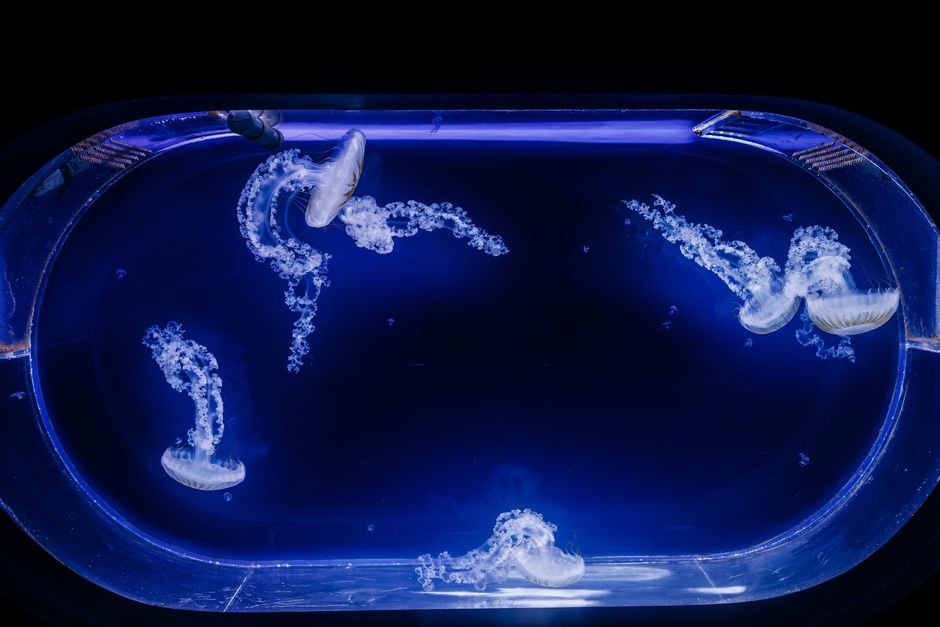
Research institutions worldwide maintain laboratory colonies of these jellyfish, though keeping them alive in captivity presents challenges. The creatures require specific water conditions, appropriate food sources (primarily zooplankton and small crustaceans), and careful monitoring. Despite these difficulties, the potential benefits of understanding their unique biology drive continued investigation.
The species also raises philosophical questions about the nature of individual identity. When a jellyfish transforms back to a polyp and then produces new medusae, are those new individuals or the same organism? This question touches on deeper issues about what defines an individual animal and how we understand continuity of life.
Frequently Asked Questions
Can the immortal jellyfish actually live forever?
Theoretically yes, but only in perfect conditions without predators or disease. In the wild, most are eaten or succumb to environmental hazards long before they could demonstrate true immortality. Laboratory specimens have completed multiple rejuvenation cycles, supporting the potential for unlimited lifespan.
Are there other animals with similar abilities?
No other species can completely reverse its life cycle after reaching sexual maturity. Some animals like salamanders can regenerate lost limbs, and certain flatworms can regrow entire bodies from fragments, but only Turritopsis dohrnii can revert from adult to juvenile form.
Could humans ever use this jellyfish's abilities?
Scientists are studying the cellular mechanisms involved, but human biology is vastly more complex. Understanding how jellyfish cells reprogram themselves might inform research into regenerative medicine and age-related diseases, though direct application to human aging remains highly speculative and distant.
Where can you find immortal jellyfish in the wild?
They inhabit temperate and tropical waters worldwide, though their small size makes them difficult to spot. They've been documented in the Mediterranean, Caribbean, Pacific, and Atlantic oceans, typically in coastal areas where they feed on small planktonic organisms.
The immortal jellyfish reminds us that evolution continues to surprise us with solutions we never imagined possible. This tiny, translucent creature has achieved something that once seemed to violate the fundamental rules of biology—and in doing so, it's opened entirely new avenues of scientific inquiry into the very nature of life and death.