
9 Record-Breaking Facts About Antarctica Being Driest Desert
By Trivia Daily, Staff Writer — Published November 25, 2026
Table of Contents
- Key Takeaways
- Record Breaking Antarctica Facts: Understanding Polar Deserts
- The Science Behind Antarctica’s Extreme Aridity
- Comparing Earth’s Major Deserts
- 9 Amazing Record-Breaking Facts
- Frequently Asked Questions
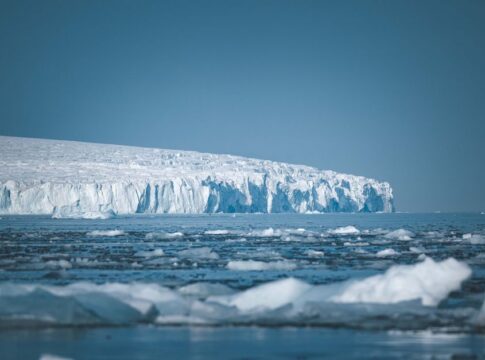
When you picture a desert, Antarctica probably doesn’t come to mind. Yet this frozen continent holds a surprising record: it’s officially the driest desert on Earth. With record breaking Antarctica trivia challenging everything you thought you knew about deserts, this icy wilderness receives less precipitation than the Sahara. The coldest place on the planet is also one of the most parched, creating a fascinating paradox that scientists have been exploring for decades.
Antarctica’s status as a desert isn’t just an interesting curiosity—it’s a geological reality that shapes everything from its ecosystem to its role in global climate. Discover how ice and aridity coexist in one of Earth’s most extreme environments.
Key Takeaways
- Antarctica receives less than two inches of precipitation annually in its interior, making it drier than the Sahara Desert.
- The Dry Valleys of Antarctica have not seen rainfall for nearly two million years, representing Earth’s most extreme desert conditions.
- Despite containing 70% of Earth’s freshwater, Antarctica qualifies as a desert due to extremely low precipitation rates.
- Temperatures in Antarctica have dropped to minus 128.6 degrees Fahrenheit, the coldest ever recorded on Earth.
- The continent’s unique desert conditions preserve organic materials for thousands of years, creating a natural time capsule.
- Antarctica’s desert climate makes it an ideal analog for studying Mars and other planetary environments.
Record Breaking Antarctica Facts: Understanding Polar Deserts
The definition of a desert surprises most people. A desert isn’t characterized by heat or sand—it’s defined purely by precipitation. Any region receiving less than ten inches of annual precipitation qualifies as a desert, regardless of temperature. Antarctica’s interior receives less than two inches per year, placing it firmly in the desert category and making it the driest continent on Earth.
This creates one of nature’s greatest paradoxes. Antarctica holds roughly 70% of Earth’s freshwater, locked away in ice sheets up to three miles thick. Yet the air above this frozen reservoir is so cold that it holds almost no moisture. Cold air simply cannot retain water vapor the way warm air can, resulting in extraordinarily low humidity and minimal snowfall across most of the continent.
The Antarctic desert isn’t uniform. Coastal regions receive more precipitation—sometimes up to eight inches annually—due to their proximity to open ocean. But venture inland, and you enter a hyper-arid environment where precipitation drops to nearly zero. This gradient creates distinct climate zones across the continent, each with unique characteristics.
The Science Behind Antarctica’s Extreme Aridity
Antarctica’s extreme dryness stems from a combination of factors that create a self-reinforcing cycle. The continent sits at high elevation—averaging around 7,500 feet above sea level—placing much of it above the moisture-bearing air masses that bring precipitation to other regions. High altitude means lower air pressure and temperature, both of which reduce atmospheric moisture capacity.
The polar vortex intensifies this effect. This massive cyclone of cold air circulates around Antarctica, effectively isolating the continent from warmer, moisture-laden air masses from lower latitudes. The vortex acts as an atmospheric barrier, keeping precipitation systems at bay and maintaining the continent’s desert conditions year-round.
Katabatic winds play a crucial role too. These powerful downslope winds form when dense, cold air flows from the high interior plateau toward the coast, reaching speeds exceeding 200 miles per hour. As the air descends, it compresses and warms slightly, reducing its relative humidity even further. These winds effectively strip any remaining moisture from the atmosphere, creating some of the driest air on Earth.
Comparing Earth’s Major Deserts
| Desert | Annual Precipitation | Area (square miles) | Type |
|---|---|---|---|
| Antarctica | Less than 2 inches (interior) | 5.5 million | Polar |
| Sahara | 3 inches | 3.6 million | Hot |
| Arabian | 3-4 inches | 1 million | Hot |
| Gobi | 7 inches | 500,000 | Cold |
| Atacama | 0.6 inches | 41,000 | Coastal |
9 Amazing Record-Breaking Facts
1. The Dry Valleys Haven’t Seen Rain in Two Million Years
The McMurdo Dry Valleys represent the most extreme desert conditions on Earth. These ice-free valleys cover roughly 1,800 square miles and receive virtually no precipitation. Scientists estimate that some areas haven’t experienced rainfall for approximately two million years. The valleys’ unique geography creates a rain shadow effect, while katabatic winds evaporate any moisture before it can accumulate. The landscape resembles Mars more than Earth, with exposed soil, scattered rocks, and absolutely no vegetation. NASA uses the Dry Valleys as a testing ground for Mars rovers specifically because the environmental conditions so closely mimic the Martian surface.
2. Antarctica Contains 90% of Earth’s Ice but Qualifies as a Desert
This stunning contradiction defines Antarctica’s unique character. The continent holds approximately 6.5 million cubic miles of ice—about 90% of all ice on Earth. If all this ice melted, global sea levels would rise roughly 200 feet. Yet despite this massive frozen water reserve, Antarctica remains a desert because precipitation rates determine desert classification, not water presence. The ice accumulated over millions of years when climate conditions differed, and existing ice sheets are remnants of that wetter past. Today’s Antarctic climate adds minimal new ice annually, with most coastal snowfall simply redistributing existing precipitation through wind action.
3. Temperatures Drop to Record-Breaking Lows
Antarctica holds the record for Earth’s coldest temperature: minus 128.6 degrees Fahrenheit, recorded at Vostok Station in July 1983. More recently, satellite data detected ground temperatures as low as minus 144 degrees Fahrenheit in certain high-altitude locations. These extreme temperatures directly contribute to desert conditions by creating air too cold to hold moisture. At such temperatures, water vapor content in the atmosphere becomes virtually zero, making precipitation physically impossible. The cold also affects how existing ice behaves, making it so hard that it essentially becomes rock-like in consistency.
4. Humidity Levels Rival Death Valley
Antarctica’s interior experiences relative humidity levels that frequently drop below 10%, comparable to Death Valley in summer. During winter, humidity can approach 0% in some locations—drier than any hot desert on Earth. This extreme aridity affects everything from human physiology to equipment function. Researchers stationed in Antarctica must combat constant dehydration, as their bodies lose moisture with every breath in the bone-dry air. The low humidity also creates static electricity problems, causes rapid skin chapping, and can damage sensitive scientific equipment through moisture removal from materials.
5. The Continent Acts as a Natural Freezer for Preservation
Antarctica’s desert conditions create remarkable preservation capabilities. Organic materials can survive for thousands of years with minimal degradation. Explorers’ huts from the early 1900s remain largely intact, with food supplies still recognizable after more than a century. The combination of extreme cold, low humidity, and minimal microbial activity essentially halts decomposition. Scientists have discovered perfectly preserved seal carcasses thousands of years old, and ancient ice cores reveal atmospheric conditions from 800,000 years ago. This natural preservation makes Antarctica invaluable for paleoclimate research and historical studies.
6. Antarctica Receives Less Snow Than You’d Think
Popular images show Antarctica buried under constant blizzards, but snowfall is actually rare in the interior. Most of the continent receives less snow annually than cities like Buffalo or Syracuse, New York. The snow that does fall is typically fine, dry, and powder-like—more similar to sand than the wet, heavy snow common in temperate regions. Wind constantly redistributes this minimal snowfall, creating the illusion of more precipitation than actually occurs. Coastal stations see more snow, but interior research stations might go weeks or months between snowfall events. The apparent abundance of snow comes from accumulation over millennia, not current precipitation rates.
7. Wind Speeds Exceed Hurricane Force Regularly
Antarctica experiences some of Earth’s strongest sustained winds, with katabatic winds regularly exceeding 100 miles per hour. Commonwealth Bay holds records for the windiest location on Earth, with average annual wind speeds around 50 miles per hour and gusts exceeding 200 miles per hour. These intense winds contribute to desert conditions by evaporating any surface moisture and preventing snow accumulation in many areas. The wind chill created by these speeds produces effective temperatures far below actual air temperature, making the environment even more hostile. Wind also sculpts the landscape, creating sastrugi—wave-like ridges in the snow surface—that can reach several feet in height.
8. The Desert Supports Surprisingly Resilient Life Forms
Despite extreme desert conditions, life persists in Antarctica. Microscopic organisms called extremophiles thrive in seemingly impossible environments, including within rocks, under ice, and in super-cooled lakes. The Dry Valleys host cryptoendolithic bacteria that live inside rock pores, deriving energy from mineral reactions and rare moisture. Some Antarctic lakes remain liquid beneath ice covers due to high salt concentrations, hosting unique microbial ecosystems. These organisms provide insights into how life might exist on other planets with similarly harsh desert conditions. Antarctica’s biological communities, though sparse, demonstrate life’s remarkable adaptability to extreme aridity and cold.
9. The Antarctic Desert Serves as a Mars Analog
Scientists use Antarctica as Earth’s best analog for Martian conditions. Both environments feature extreme cold, hyper-aridity, intense UV radiation, and similar soil chemistry. The Dry Valleys particularly resemble Martian valleys, with similar mineral compositions and weathering patterns. NASA, ESA, and other space agencies regularly test equipment and conduct research in Antarctica to prepare for Mars missions. The continent helps scientists understand how to detect life in extreme environments, how equipment performs under harsh conditions, and what challenges astronauts might face. Studies of Antarctic extremophiles guide the search for potential Martian life, as any organisms on Mars would need similar adaptations to survive.
Frequently Asked Questions
Why is Antarctica considered a desert if it’s covered in ice?
Deserts are defined by precipitation levels, not temperature or landscape. Antarctica receives less than two inches of annual precipitation in its interior, well below the ten-inch threshold that defines deserts. The existing ice accumulated over millions of years under different climate conditions.
Is Antarctica drier than the Sahara Desert?
Yes, Antarctica’s interior is significantly drier than the Sahara. The Sahara receives approximately three inches of precipitation annually, while Antarctica’s interior receives less than two inches. Some Antarctic regions receive virtually no precipitation at all.
Can humans survive in Antarctica’s desert environment?
Humans can survive in Antarctica with proper equipment and shelter, but cannot survive unprotected. Research stations house thousands of scientists and support staff seasonally. The extreme cold, aridity, and wind require specialized clothing, heated facilities, and careful medical monitoring.
Does it ever rain in Antarctica?
Rain is extremely rare in Antarctica and occurs only in coastal areas during summer when temperatures occasionally rise above freezing. The interior never experiences rainfall due to temperatures that remain well below freezing year-round. Most coastal precipitation falls as snow even in summer.
Antarctica challenges our assumptions about deserts, ice, and the limits of Earth’s climate extremes. This frozen desert reminds us that our planet still holds surprising contradictions—places where the driest and coldest conditions coexist with the world’s largest freshwater reserves, locked away in ancient ice that tells stories reaching back hundreds of thousands of years.