
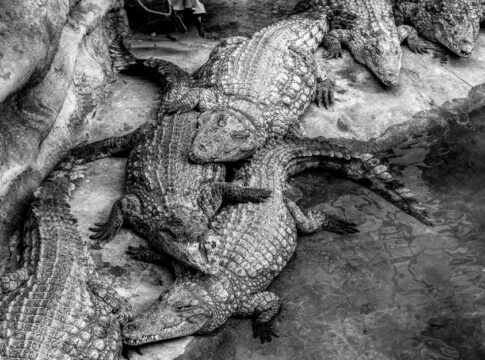
The Truth About Crocodiles: Can They Really Cry Tears
By Trivia Daily, Animals Desk — Published September 29, 2026
Table of Contents
- Key Takeaways
- The Truth About Crocodiles and Their Tear Production
- Why Crocodiles “Cry” While Eating
- Crocodilian Species and Their Shared Anatomy
- The Origin of the “Crocodile Tears” Metaphor
- How Crocodile Tears Differ from Human Emotional Crying
- Frequently Asked Questions
The phrase “crocodile tears” has slipped into everyday language as a way to describe fake sadness or insincere remorse. But here’s a question that might surprise you: do crocodiles actually cry? The truth about crocodiles and tears is both simpler and more fascinating than the ancient metaphor suggests. These ancient reptiles do produce tears—real, wet tears that flow from their eyes. They’re just not crying because they feel sorry for their prey.
Understanding this quirk of crocodilian behavior reveals something remarkable about how evolution shapes even the smallest details of animal physiology. From the swamps of Florida to the rivers of Africa, these formidable predators have been shedding tears for millions of years, and the reasons have nothing to do with emotion.
Key Takeaways
- Crocodiles do produce real tears from lacrimal glands, just like humans and many other animals.
- These tears serve a biological purpose: lubricating and protecting the eyes, especially when crocodiles spend time on land.
- Crocodiles may appear to “cry” while eating because the act of swallowing forces air through their sinuses, stimulating tear production.
- The phrase “crocodile tears” dates back centuries and refers to insincere displays of emotion, not actual crocodile behavior.
- All 24 species of crocodilians—including alligators, caimans, and gharials—possess functional tear ducts.
- Tears help keep crocodile eyes moist during long periods of basking in the sun or resting on riverbanks.
The Truth About Crocodiles and Their Tear Production
Crocodiles possess lacrimal glands, the same structures that produce tears in humans and most terrestrial vertebrates. These glands sit near the eyes and continuously produce a thin film of moisture that keeps the eye surface clean and protected. When a crocodile is on land, these glands work overtime.
Unlike fish, which live in water and don’t need tear production, crocodiles split their time between aquatic and terrestrial habitats. Their eyes need constant lubrication to function properly in air. Without tears, dust, debris, and the drying effects of sun and wind would damage the delicate corneal surface. Nature equipped these creatures with a straightforward solution: keep the eyes wet.
The tears themselves contain proteins, oils, and mucus—a complex mixture designed to coat the eye evenly and provide antimicrobial protection. This isn’t unique to crocodiles. Birds, mammals, and reptiles that spend time on land all produce similar secretions. What makes crocodiles notable is how visible their tears can become, especially during feeding.
Why Crocodiles “Cry” While Eating
Observers have long noted that crocodiles sometimes appear to weep while consuming prey. This phenomenon gave rise to the ancient myth that crocodiles cry hypocritical tears over their victims. The reality involves basic anatomy, not remorse.
When a crocodile swallows large chunks of food, the physical act of eating involves powerful jaw muscles and significant head movements. These actions can force air through the sinuses, which are connected to the spaces around the eyes. This air movement stimulates the lacrimal glands, causing them to produce excess tears that overflow and become visible.
Think of it as similar to how humans might tear up when yawning or when something irritates the nasal passages. The crocodile isn’t experiencing sadness or guilt. Its tear ducts are simply responding to physical pressure and stimulation. The timing—during a meal—is purely coincidental, though it certainly contributed to centuries of colorful folklore.
Crocodilian Species and Their Shared Anatomy
The crocodilian family includes diverse species spread across tropical and subtropical regions worldwide. Despite differences in size, habitat preference, and hunting strategies, all share this basic tear-producing anatomy.
| Species Group | Number of Species | Geographic Range | Typical Habitat |
|---|---|---|---|
| True Crocodiles | 14 | Africa, Asia, Australia, Americas | Rivers, estuaries, coastal waters |
| Alligators | 2 | Southeastern United States, China | Freshwater swamps, marshes, rivers |
| Caimans | 6 | Central and South America | Rivers, wetlands, flooded forests |
| Gharials | 2 | Indian subcontinent | Fast-flowing rivers |
From the massive saltwater crocodile of Australia to the critically endangered Chinese alligator, each species relies on functional tear production to maintain eye health. This shared trait reflects their common evolutionary ancestry, dating back more than 200 million years to the Mesozoic Era.
The Origin of the “Crocodile Tears” Metaphor
The phrase “crocodile tears” appears in texts dating back to medieval Europe and possibly earlier. Ancient travelers returned from Africa and Asia with tales of crocodiles that wept while devouring their prey—a behavior that seemed to symbolize false remorse or deceptive sorrow.
Writers and philosophers seized on this image. By the time Shakespeare was writing, “crocodile tears” had become shorthand for insincere emotional displays. The metaphor stuck because it captured something universal about human nature: the gap between appearance and reality, between what someone shows and what they actually feel.
What those ancient observers actually witnessed was the biological phenomenon described earlier—tears produced by mechanical stimulation during feeding. But without modern knowledge of animal physiology, they interpreted the behavior through a human lens, attributing emotional meaning where none existed. The crocodile became a symbol of hypocrisy, even though its tears were entirely genuine, if not emotionally motivated.
How Crocodile Tears Differ from Human Emotional Crying
Human tears come in three types: basal tears that constantly lubricate the eyes, reflex tears triggered by irritation, and emotional tears produced during strong feelings. That third category sets humans apart from most animals.
Crocodile tears fall squarely into the first two categories. They lubricate and protect. They respond to physical stimulation. But there’s no evidence that crocodiles produce tears in response to emotional states. The brain structures associated with complex emotions in mammals—particularly the limbic system components involved in emotional crying—differ significantly in reptiles.
This doesn’t mean crocodiles lack all emotion or behavioral complexity. These intelligent predators display sophisticated hunting strategies, social behaviors, and even maternal care. Female crocodiles guard their nests and gently carry hatchlings to water in their mouths. But the specific behavior of crying as an emotional response appears to be largely a mammalian trait, with humans as the most dramatic example.
Frequently Asked Questions
Do crocodiles feel emotions when they cry?
No, crocodile tears are a purely physiological response to keep eyes lubricated and protected, not a sign of emotional distress. The tears result from gland stimulation, particularly during eating, and don’t reflect feelings of sadness or remorse.
Why is fake crying called “crocodile tears”?
The phrase originates from ancient observations of crocodiles appearing to weep while eating prey, which seemed hypocritical or deceptive. Medieval writers adopted this as a metaphor for insincere displays of emotion, and the expression has persisted for centuries.
Do alligators cry tears like crocodiles?
Yes, alligators and all other crocodilians produce tears to lubricate their eyes, just like true crocodiles. The anatomy and function are essentially identical across all 24 species of crocodilians, from the smallest caimans to the largest saltwater crocodiles.
Can any animals cry emotional tears like humans?
Humans are the only species definitively known to produce tears in response to emotions. While some mammals like elephants and apes produce tears for eye lubrication, evidence that these tears result from emotional states remains inconclusive and debated among scientists.
The next time you hear someone accused of shedding crocodile tears, remember that real crocodiles are just trying to keep their eyes healthy. These ancient reptiles have survived mass extinctions and outlived the dinosaurs, thanks in part to simple adaptations like functional tear ducts. Nature rarely wastes effort on theatrics—but it’s remarkably good at practical solutions that happen to inspire our most enduring metaphors.