
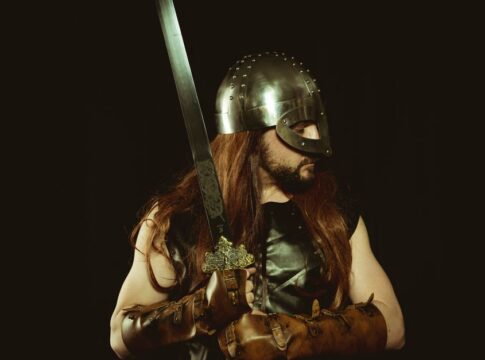
Did Vikings Really Wear Horned Helmets into Battle
By Trivia Daily, Staff Writer — Published September 27, 2026
Table of Contents
- Key Takeaways
- Why Vikings Wear Horned Helmets Became a Popular Myth
- What Real Viking Helmets Actually Looked Like
- The Real Origins of Horned Helmets in Scandinavia
- How Historical Myths Take Root and Persist
- Frequently Asked Questions
The image of a fierce Viking warrior charging into battle with a horned helmet is one of history’s most enduring icons. From Halloween costumes to sports team logos, the horned helmet has become synonymous with Norse raiders. Yet this iconic symbol is actually one of history’s most persistent myths. The surprising truth is that Vikings didn’t wear horned helmets into battle—in fact, there’s no archaeological evidence they wore them at all during the Viking Age.
This fascinating piece of historical trivia reveals how popular culture can reshape our understanding of the past. The real story behind this myth is far more interesting than the fiction, involving 19th-century opera productions, romantic nationalism, and the way we construct historical memory.
Key Takeaways
- No archaeological evidence supports the idea that Vikings wore horned helmets in combat during the Viking Age (roughly 793–1066 CE).
- The horned helmet myth gained popularity in the 1800s, particularly through Richard Wagner’s opera productions depicting Norse mythology.
- Real Viking helmets were simple, practical iron caps designed to protect warriors without hindering vision or balance in battle.
- Horned helmets did exist in pre-Viking Scandinavian cultures, but they were ceremonial objects used thousands of years before the Viking Age.
- The myth persists today in popular culture, from sports mascots to children’s toys, despite historians’ efforts to correct the record.
- This misconception demonstrates how artistic interpretations can become accepted as historical fact over time.
Why Vikings Wear Horned Helmets Became a Popular Myth
The horned helmet fantasy took root during the Romantic period of the 1800s, when Europeans became fascinated with their medieval past. Artists and writers of this era often prioritized dramatic effect over historical accuracy. They wanted their Vikings to look exotic, fearsome, and distinctly “barbaric” to contrast with contemporary civilization.
The myth received its biggest boost from costume designer Carl Emil Doepler, who created elaborate horned helmets for the premiere of Richard Wagner’s opera cycle “Der Ring des Nibelungen” in 1876. These striking designs captured public imagination. Soon, horned helmets appeared in paintings, illustrations, and popular histories throughout Europe and America. The image spread so effectively that it became the default visualization of Viking warriors.
Publishers loved the dramatic silhouette. A horned helmet instantly communicated “Viking” to readers, making it a convenient visual shorthand in everything from textbooks to comic strips. The more the image appeared, the more “true” it seemed to general audiences.
What Real Viking Helmets Actually Looked Like
Archaeological discoveries paint a very different picture of Viking headgear. Only a handful of Viking-era helmets have survived, and they’re remarkably practical in design. The most complete example, the Gjermundbu helmet discovered in Norway in 1943, is a simple rounded iron cap with a nose guard. No horns. No wings. Just functional protection.
These helmets were expensive to produce and likely worn only by wealthy warriors or chieftains. Most Viking fighters probably went into battle without any helmet at all, relying instead on leather caps or simply their own hair and courage. The helmets that did exist were designed with combat effectiveness in mind—smooth surfaces that could deflect blows rather than ornamental projections that could be grabbed or knocked.
Horns would have been a serious liability in combat. They’d add weight, throw off balance, provide easy handholds for opponents, and potentially trap weapons. Vikings were practical warriors who valued equipment that kept them alive, not theatrical accessories.
The Real Origins of Horned Helmets in Scandinavia
Interestingly, horned helmets do have ancient Scandinavian roots—just not Viking ones. Bronze Age artifacts from Scandinavia, dating to roughly 1500–500 BCE, include ceremonial horned helmets. These elaborate pieces were almost certainly used for religious rituals rather than warfare. They’re beautiful works of craftsmanship, but they predate the Viking Age by well over a thousand years.
These ceremonial helmets demonstrate that pre-Viking Nordic cultures did create horned headgear, but for spiritual purposes. When 19th-century artists conflated these ancient ritual objects with Viking warriors, they created a historical mashup that stuck in popular consciousness. The Vikings themselves would have viewed these Bronze Age artifacts as ancient relics from their distant ancestors.
How Historical Myths Take Root and Persist
The horned helmet myth illustrates a broader pattern in how historical misconceptions spread. Once an image becomes established in popular culture, it’s remarkably resistant to correction. Children learn the horned helmet image early. It appears in toys, cartoons, and casual references. By the time people encounter accurate historical information, the false image is already deeply embedded.
Museums and historians have worked for decades to debunk this myth, yet it persists. The Minnesota Vikings football team still features horned helmets in their logo. Viking-themed restaurants and attractions continue to use the imagery. The myth has become more powerful than the reality because it serves a cultural function—it gives us an instantly recognizable symbol for a complex historical culture.
This phenomenon isn’t unique to Vikings. Many popular historical images—from Columbus discovering a flat earth to medieval people being universally filthy—are similarly inaccurate but culturally entrenched. They reveal as much about our own time’s needs and assumptions as they do about the past we’re supposedly depicting.
Frequently Asked Questions
What did Vikings actually wear on their heads in battle?
Most Vikings likely fought without helmets, as they were expensive. Wealthy warriors wore simple iron caps, sometimes with nose guards or eye protection, made from iron plates riveted together. These practical designs prioritized protection and mobility over decoration.
Why do we associate horned helmets with Vikings if they never wore them?
The association comes from 19th-century Romantic art and opera, particularly costume designs for Wagner’s operas in the 1870s. These dramatic visualizations captured public imagination and spread through popular culture, eventually becoming the default image despite lacking historical basis.
Did any ancient warriors actually wear horned helmets into battle?
While ceremonial horned helmets existed in various cultures, wearing them in actual combat was extremely rare due to practical disadvantages. Horns add weight, unbalance the helmet, and provide opponents with something to grab—making them tactical liabilities rather than advantages.
How many actual Viking helmets have archaeologists found?
Remarkably few complete Viking helmets survive—only a handful from the entire Viking Age. The Gjermundbu helmet from Norway is the most complete example. This scarcity suggests helmets were rare, valuable items rather than standard equipment for all warriors.
The next time you see a horned helmet in a Viking costume or logo, you’ll know you’re looking at Victorian fantasy rather than medieval reality. This enduring myth reminds us that history is constantly being rewritten—not just by new discoveries, but by each generation’s imagination and needs. The real Vikings were remarkable enough without the horns.