
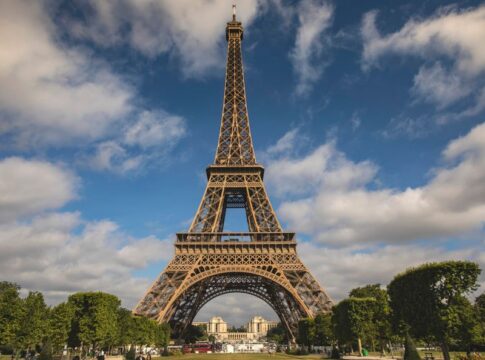
7 Surprising Facts About the Eiffel Tower Growing Taller
By Trivia Daily, Staff Writer — Published September 25, 2026
Table of Contents
- Key Takeaways
- Understanding Thermal Expansion in the Eiffel Tower Growing Process
- The Seven Surprising Facts
- Comparing the Eiffel Tower to Other Tall Structures
- Why This Matters for Modern Engineering
- Frequently Asked Questions
Standing tall over Paris, the Eiffel Tower isn’t quite as fixed in height as you might imagine. This iron lattice marvel actually grows and shrinks throughout the year, a fascinating phenomenon rooted in basic physics. The Eiffel Tower growing taller during summer months has captivated curious minds for decades, revealing how even the most solid-seeming structures respond to their environment in unexpected ways.
Built in 1889, Gustave Eiffel’s masterpiece contains roughly 18,000 metallic parts held together by 2.5 million rivets. But all that iron responds dramatically to temperature changes, creating measurable differences in the tower’s height that few visitors ever notice.
Key Takeaways
- The Eiffel Tower can grow up to 6 inches taller during hot summer days due to thermal expansion of its iron structure.
- Temperature fluctuations cause the tower to lean slightly away from the sun as the metal expands unevenly.
- The structure was specifically designed with expansion joints to accommodate these dramatic size changes safely.
- Cold winter temperatures cause the tower to contract, making it measurably shorter than during warmer months.
- Wind forces can also cause the tower to sway several inches, adding another dimension to its changing measurements.
- The tower’s color affects how much it absorbs heat, influencing the degree of thermal expansion.
Understanding Thermal Expansion in the Eiffel Tower Growing Process
When iron heats up, its atoms vibrate more energetically and push slightly farther apart. The Eiffel Tower growing taller isn’t magic—it’s thermal expansion in action. On a sweltering Parisian summer day, the sun-facing side of the tower can reach significantly higher temperatures than the shaded portions, causing the heated metal to expand.
This expansion is substantial. The tower can increase in height by approximately 15 centimeters (nearly 6 inches) when comparing cold winter mornings to hot summer afternoons. That’s enough to be noticeable if you were measuring precisely. The iron framework essentially stretches upward as molecules move farther apart, then contracts back down when temperatures drop.
Engineers have known about thermal expansion since ancient times, but the scale of the Eiffel Tower makes this phenomenon particularly dramatic. With roughly 10,000 tons of iron in the structure, even tiny changes at the molecular level add up to inches of movement at the top.
The Seven Surprising Facts
1. The Tower Leans Away From the Sun
The Eiffel Tower doesn’t just grow taller—it also leans. When the sun beats down on one side of the structure, that side heats up faster and expands more than the shaded portions. This uneven expansion causes the entire tower to tilt slightly away from the sun, sometimes by as much as 7 inches at the top. As the sun moves across the sky, the tower gradually shifts position, creating a subtle daily dance that most visitors never perceive. By evening, as temperatures equalize, the structure returns to its upright position.
2. Gustave Eiffel Built in Expansion Joints
Gustave Eiffel and his engineering team weren’t caught off guard by thermal expansion—they planned for it. The tower’s design incorporates expansion joints and flexible connections that allow the metal to grow and contract without causing structural damage. These clever engineering solutions let different sections move independently, preventing the buildup of dangerous internal stresses. Without these accommodations, the daily heating and cooling cycles could have cracked welds, loosened rivets, or caused catastrophic failures over the structure’s 130-plus year lifespan.
3. Paint Color Influences Height Changes
The Eiffel Tower has been repainted approximately 19 times since its construction, and the color choice matters more than aesthetics. Darker colors absorb more solar radiation, leading to greater temperature increases and more dramatic expansion. Lighter colors reflect more sunlight, keeping the metal cooler and reducing growth. The tower’s current “Eiffel Tower Brown” color was specifically chosen to harmonize with Paris’s landscape, but it also represents a compromise between heat absorption and visibility. Engineers must consider thermal properties whenever they select a new paint scheme for the massive structure.
4. Winter Contraction Is Just as Dramatic
While summer growth captures the imagination, the Eiffel Tower’s winter shrinkage is equally impressive. During cold snaps, when temperatures plummet below freezing, the iron contracts significantly. The tower can lose those same 6 inches of height, becoming noticeably shorter than its summer peak. This means the structure experiences an annual height variation of up to 12 inches between seasonal extremes—roughly the length of a standard ruler. Maintenance crews must account for these changes when performing repairs or installing equipment at precise heights.
5. Wind Sway Adds Another Dimension
Temperature isn’t the only force changing the tower’s position. Strong winds can cause the top of the Eiffel Tower to sway by 2 to 3 inches in any direction. During particularly violent storms, this movement can increase even more. The lattice design that makes the tower iconic also makes it remarkably resistant to wind damage—the open framework lets air pass through rather than creating a solid surface for wind to push against. This flexibility is a feature, not a flaw, allowing the structure to bend without breaking under extreme conditions.
6. Lightning Strikes Heat the Tower Rapidly
The Eiffel Tower serves as a giant lightning rod for Paris, struck by lightning approximately 5 times per year on average. When lightning hits, it delivers enormous energy in a fraction of a second, causing localized heating along the strike path. These rapid temperature spikes create momentary expansion in the affected metal sections. While the overall height change from a single strike is negligible and temporary, it demonstrates yet another way the tower responds dynamically to its environment. A sophisticated lightning protection system safely channels these strikes to the ground.
7. Modern Sensors Track Every Millimeter
Today’s Eiffel Tower is equipped with sophisticated monitoring systems that track its movements in real time. Sensors measure temperature, wind speed, structural stress, and precise positioning throughout the day and night. This data helps engineers understand exactly how the tower responds to different conditions and predict maintenance needs before problems develop. The monitoring system has revealed patterns invisible to earlier generations, including subtle vibrations from nearby traffic and microscopic movements during temperature transitions. This constant surveillance ensures the tower remains safe for the millions of annual visitors who ascend its heights.
Comparing the Eiffel Tower to Other Tall Structures
| Structure | Primary Material | Typical Height Variation | Main Cause |
|---|---|---|---|
| Eiffel Tower | Iron | Up to 6 inches | Thermal expansion |
| Empire State Building | Steel and concrete | Up to 6 inches | Thermal expansion |
| Burj Khalifa | Steel and concrete | Up to 6 inches | Thermal expansion and wind |
| CN Tower | Concrete | Up to 9 inches | Thermal expansion |
Why This Matters for Modern Engineering
The lessons learned from observing the Eiffel Tower have influenced skyscraper design worldwide. Every tall structure must account for thermal expansion, wind loads, and material properties. Modern buildings incorporate expansion joints, flexible connections, and materials chosen specifically for their thermal characteristics.
Concrete expands and contracts differently than steel. Glass curtain walls move independently from structural frames. Engineers must calculate these movements precisely to prevent cracks, leaks, or structural failures. The Eiffel Tower served as an early, highly visible demonstration of these principles in action.
Climate change adds new complexity to these calculations. As cities experience more extreme temperature swings and more frequent heat waves, structures must withstand greater thermal stress. The Eiffel Tower’s 130-year track record provides valuable data for predicting how buildings will perform under changing conditions.
Frequently Asked Questions
How much does the Eiffel Tower actually grow in summer?
The Eiffel Tower can grow up to 15 centimeters (approximately 6 inches) taller during hot summer days compared to cold winter conditions. This change results from thermal expansion of the iron structure as temperatures rise.
Does the Eiffel Tower’s height change every day?
Yes, the tower’s height fluctuates daily based on temperature variations between morning and afternoon. The difference is typically smaller than the seasonal variation but still measurable, often amounting to several centimeters throughout a single day.
Can visitors feel the Eiffel Tower moving?
Most visitors cannot feel the thermal expansion, as it happens gradually over hours. However, on very windy days, people at the top may notice slight swaying motion, which is a normal and safe response to wind forces.
Do other famous towers grow and shrink like the Eiffel Tower?
Yes, all tall metal and concrete structures experience thermal expansion and contraction. The Empire State Building, Burj Khalifa, and other skyscrapers all change height with temperature, though the amount varies based on materials, color, and design.
The Eiffel Tower’s seasonal growth reminds us that even the most permanent-seeming landmarks are in constant conversation with their environment. Every sunrise brings new temperatures, every season a new height. Perhaps that’s part of its enduring charm—a monument that refuses to stand completely still.