
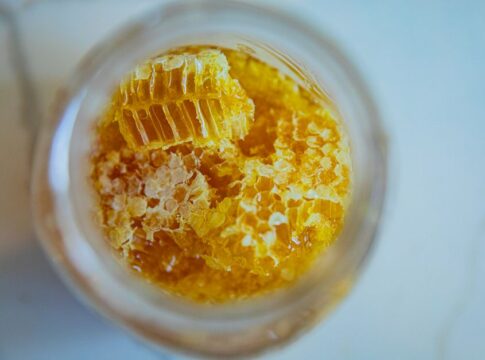
Why Honey Never Spoils: Ancient Egyptian Tombs Prove It
By Trivia Daily, Staff Writer — Published September 22, 2026
Table of Contents
- Key Takeaways
- Why Honey Never Spoils: The Science Behind Nature’s Preservative
- The Ancient Egyptian Connection: More Than Just Interesting Trivia
- How Bees Create This Immortal Food
- When Honey Does Go “Bad”: Common Misconceptions
- Comparing Honey to Other “Long-Lasting” Foods
- Frequently Asked Questions
Archaeologists excavating Egyptian tombs have discovered pots of honey thousands of years old—still perfectly edible. This astonishing find isn’t just a curious footnote in history; it reveals one of nature’s most remarkable preservation secrets. Honey never spoils, and the science behind this amazing fact involves a perfect storm of chemistry, biology, and physics that makes this golden liquid virtually immortal.
The discovery of intact honey in ancient burial chambers has sparked fascination among scientists and trivia enthusiasts alike. What makes honey so different from nearly every other food on Earth?
Key Takeaways
- Honey found in Egyptian tombs dating back over 3,000 years remains edible due to its unique chemical properties
- Honey’s extremely low moisture content and high acidity create an environment where bacteria and microorganisms cannot survive
- Bees add an enzyme that produces hydrogen peroxide, giving honey natural antimicrobial properties
- Honey’s hygroscopic nature means it absorbs moisture from anything it touches, including bacterial cells, causing them to dehydrate
- Proper storage is still important—honey can ferment if exposed to high humidity or contamination
- Commercial honey is often pasteurized not for safety, but to prevent crystallization and extend shelf appeal
Why Honey Never Spoils: The Science Behind Nature’s Preservative
Three key factors work together to make honey virtually indestructible. First, honey contains almost no water. Most bacteria and microorganisms need moisture to grow and reproduce. With a water content typically below 18 percent, honey creates a hostile environment where these organisms simply cannot thrive. This low moisture level isn’t accidental—bees fan their wings inside the hive to evaporate excess water from nectar, concentrating the sugars and creating the thick consistency we recognize.
Second, honey is remarkably acidic. With a pH between 3 and 4.5, it’s acidic enough to kill most bacteria that might attempt to colonize it. This acidity comes from gluconic acid, which forms when bees add an enzyme called glucose oxidase to the nectar. This same enzyme produces hydrogen peroxide as a byproduct, giving honey additional antimicrobial properties.
Third, honey is hygroscopic—it absorbs moisture from its surroundings. If bacteria somehow land in honey, the honey draws water out of the bacterial cells through osmosis. This dehydration kills the bacteria before they can multiply. It’s the same principle behind preserving meat with salt or sugar.
The Ancient Egyptian Connection: More Than Just Interesting Trivia
The Egyptians understood honey’s preservative powers long before modern science could explain them. They used honey not just as a sweetener but as a medicine, a wound dressing, and a preservation agent for the dead. Honey appeared in burial chambers for two reasons: as food for the afterlife and as an embalming ingredient.
Archaeological excavations have uncovered sealed jars of honey in tombs of pharaohs and nobles. When opened, this ancient honey appeared darker and more crystallized than fresh honey, but analysis showed it remained chemically stable and theoretically edible. These discoveries aren’t isolated incidents—they’ve occurred in multiple tomb sites across Egypt, providing consistent evidence of honey’s extraordinary longevity.
The Egyptians also documented medicinal uses for honey in the Ebers Papyrus, one of the oldest preserved medical texts, dating to approximately 1550 BCE. They recognized what modern research has confirmed: honey’s antibacterial properties make it effective for treating wounds and preventing infection.
How Bees Create This Immortal Food
The transformation from nectar to honey involves remarkable biological engineering. When forager bees collect nectar—which contains about 70 to 80 percent water—they store it in a special honey stomach separate from their digestive stomach. During the flight back to the hive, enzymes begin breaking down complex sugars into simpler ones.
Back at the hive, bees pass the nectar to house bees, who chew it for about 30 minutes. This chewing process adds more enzymes and further breaks down the sugars. The bees then deposit the nectar into honeycomb cells and begin the crucial dehydration process. By fanning their wings to create airflow and carefully controlling hive temperature, bees reduce the water content to that magic number below 18 percent.
Once the honey reaches the proper consistency, bees seal the cells with wax caps. These sealed cells create individual preservation chambers where honey can remain stable indefinitely. The bees have essentially created thousands of tiny, sterile storage containers.
When Honey Does Go “Bad”: Common Misconceptions
While honey never truly spoils in the sense of becoming unsafe to eat, it can change in ways that alarm consumers. Crystallization is the most common issue. Over time, glucose in honey separates from water and forms crystals. This is a natural process and doesn’t indicate spoilage. Crystallized honey can be returned to liquid form by gently warming the container in warm water.
Honey can ferment if it absorbs too much moisture from humid air or if it’s harvested before bees have reduced the water content sufficiently. Fermented honey develops an off smell, visible bubbles, and a slightly alcoholic taste. This typically only happens when honey is stored improperly in humid conditions or when the original water content exceeded 19 percent.
Some people mistake color changes for spoilage. Honey naturally darkens with age as chemical compounds slowly react. This darkening doesn’t affect safety or nutritional value, though it may alter flavor slightly.
Comparing Honey to Other “Long-Lasting” Foods
| Food | Shelf Life | Why It Lasts |
|---|---|---|
| Honey | Indefinite | Low moisture, high acidity, antimicrobial enzymes |
| Salt | Indefinite | Mineral compound, no water, no nutrients for bacteria |
| White Rice | 30+ years (if stored properly) | Low moisture, minimal oils that can go rancid |
| Dried Beans | 30+ years (if stored properly) | Low moisture content prevents microbial growth |
| Pure Vanilla Extract | Indefinite | High alcohol content acts as preservative |
Frequently Asked Questions
Can honey really last thousands of years?
Yes, properly sealed honey can remain stable for thousands of years. Archaeological evidence from Egyptian tombs confirms honey’s extraordinary longevity, with samples remaining chemically stable after more than 3,000 years.
Does honey need to be refrigerated?
No, honey should be stored at room temperature in a sealed container. Refrigeration actually accelerates crystallization and makes honey harder to pour, though it doesn’t harm the honey’s quality or safety.
Is crystallized honey still good to eat?
Absolutely. Crystallization is a natural process that doesn’t affect honey’s safety, nutritional value, or taste. Many people actually prefer the spreadable texture of crystallized honey.
Why do some honey containers have expiration dates?
Expiration dates on honey are typically required by food labeling regulations, not because honey spoils. These dates usually indicate when the producer guarantees optimal quality, texture, and flavor—not safety concerns.
The next time you drizzle honey into your tea or spread it on toast, consider that you’re enjoying a food essentially unchanged since ancient times. Those Egyptian pharaohs knew something special when they packed honey for eternity—they just didn’t know the chemistry that made their intuition correct.