
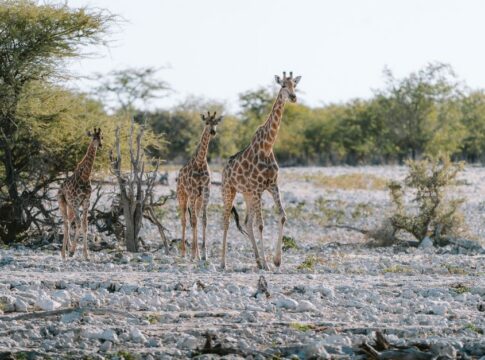
9 Bizarre Facts About How Giraffes Sleep Standing Up
By TriviaOwl, Staff Writer — Published August 14, 2026
Table of Contents
- Key Takeaways
- Why Bizarre Giraffes Sleep So Little Compared to Other Mammals
- The Remarkable Anatomy Behind Standing Sleep
- Frequently Asked Questions
When you picture the world’s tallest mammal catching some rest, you might imagine these towering creatures sprawled out like oversized house cats. The reality is far stranger. Giraffes have evolved one of the most unusual sleep patterns in the animal kingdom, and their bizarre approach to rest reveals fascinating adaptations that help them survive in the African savanna. These amazing animals sleep less than almost any other mammal, and when they do, their methods are nothing short of extraordinary.
The curious truth about how these gentle giants manage sleep while standing upright involves surprising facts about their anatomy, behavior, and the constant dangers they face. Let’s explore the remarkable world of giraffe sleep habits and discover why evolution shaped such an odd solution to a universal need.
Key Takeaways
- Giraffes sleep only about 30 minutes to two hours per day in total, making them one of the shortest-sleeping mammals on Earth.
- They can sleep standing up using a unique leg-locking mechanism, but they do occasionally lie down for deep REM sleep.
- When lying down, giraffes fold their impossibly long necks backward and rest their heads on their own rumps.
- Standing sleep allows for instant escape from predators like lions and hyenas that hunt during nighttime hours.
- Their sleep occurs in extremely short bursts, often lasting just a few minutes at a time throughout the day and night.
- The act of lying down and standing back up is so physically taxing for adult giraffes that they avoid it whenever possible.
Why Bizarre Giraffes Sleep So Little Compared to Other Mammals
Giraffes hold the record as one of nature’s most sleep-deprived creatures. While humans need roughly eight hours and domestic cats can snooze for sixteen, giraffes function on a shockingly small amount of rest. Their total daily sleep typically ranges from 30 minutes to just over two hours, broken into tiny fragments throughout the day and night.
This extreme sleep deprivation isn’t a disorder—it’s an evolutionary adaptation. Giraffes are prey animals living in environments where predators never rest. Lions, leopards, and hyenas all view giraffes as potential meals, though taking down such a large animal requires strategy and often occurs when the giraffe is vulnerable. Standing upright and remaining alert keeps them ready to flee at the first sign of danger.
The interesting aspect of their minimal sleep requirement relates to their size and metabolism. Large herbivores generally sleep less than smaller animals because they must spend enormous amounts of time eating. A single giraffe can consume up to 75 pounds of leaves daily, requiring nearly constant foraging. Sleep becomes a luxury they simply cannot afford for long periods.
The Remarkable Anatomy Behind Standing Sleep
How does a two-ton animal weighing as much as a small car manage to sleep while remaining upright? The answer lies in specialized anatomical features that humans and most other mammals lack entirely.
Giraffes possess what scientists call a “stay apparatus”—a system of tendons, ligaments, and muscles that lock their legs in place without requiring conscious muscular effort. This biological mechanism allows the joints to stabilize in a standing position, effectively turning the legs into passive support columns. The giraffe can doze while standing because its skeletal structure holds the weight without active muscle engagement.
Their cardiovascular system also plays a role in making standing sleep possible. Giraffes have extraordinarily high blood pressure—roughly twice that of humans—to pump blood all the way up their six-foot necks to their brains. Special valves in their neck veins prevent blood from rushing backward when they lower their heads to drink. This same system keeps them from fainting when they shift positions during brief standing naps.
1. They Experience REM Sleep for Only Minutes Per Day
Rapid eye movement sleep, or REM sleep, is the phase when most mammals dream and when crucial neural processing occurs. Humans spend about two hours in REM sleep each night. Giraffes? They might get five to ten minutes total if they’re lucky.
This minimal REM sleep represents one of the lowest amounts recorded in any mammal. To achieve REM sleep, giraffes must lie down completely—standing sleep only provides light, non-REM rest. Because lying down is risky and physically demanding, they postpone deep sleep until absolutely necessary. Scientists studying giraffe behavior have observed that some individuals may go days without entering REM sleep at all, though the long-term effects of this deprivation remain poorly understood.
2. The Lying Down Position Looks Anatomically Impossible
When giraffes do commit to lying down for deeper sleep, they adopt a position that seems to defy their body structure. They fold their incredibly long legs beneath their bodies, then curve their necks backward in an elegant arc, resting their heads on their own hindquarters or rumps.
This contorted sleeping posture serves multiple purposes beyond comfort. By keeping their heads elevated even while lying down, they maintain better awareness of their surroundings through scent and sound. The position also allows for a slightly faster escape response compared to lying with the neck extended on the ground. Young calves lie down more frequently than adults because they’re more flexible and face fewer consequences if caught off-guard by predators.
3. Standing Up Takes Tremendous Physical Effort
The most bizarre aspect of giraffe sleep might be why they avoid lying down in the first place: getting back up is exhaustingly difficult. The process of rising from a lying position requires a complex, multi-stage maneuver that takes several seconds and leaves the animal temporarily vulnerable.
First, the giraffe must extend its front legs while its rear remains folded. Then it rocks its massive body weight forward, using momentum to help straighten the back legs. The entire sequence demands significant energy expenditure and coordination. For an animal that might need to run from a predator at any moment, those crucial seconds of awkward rising could mean the difference between life and death. This physical reality makes standing sleep the far more practical option despite its limitations.
4. They Sleep in Brief Bursts Rather Than Long Sessions
Unlike humans who consolidate sleep into one long nighttime block, giraffes practice what scientists call polyphasic sleep—many short sleep episodes scattered throughout the 24-hour cycle. A typical giraffe might doze for three to five minutes, wake up, remain alert for a while, then doze again.
These micro-naps add up to their meager daily total, but the fragmented nature means giraffes never experience the deep, restorative sleep that most mammals need. Their brains have adapted to function efficiently on this fractured rest schedule, though researchers still debate whether giraffes experience the same sleep pressure and recovery mechanisms that drive other animals to seek longer, uninterrupted rest periods.
5. Herd Dynamics Influence Who Sleeps and When
Giraffes are social animals that live in loose, flexible herds. Within these groups, an interesting pattern emerges: they rarely all sleep simultaneously. While one or two individuals rest, others remain vigilant, creating an informal watch system that benefits the entire group.
This coordinated vigilance isn’t consciously organized like human guard duty, but rather emerges from individual giraffes making risk assessments based on the alertness of nearby herd members. When a giraffe sees others relaxed and standing casually, it may feel safe enough to doze briefly. The presence of alert companions reduces each individual’s predation risk, allowing for slightly longer or deeper rest periods than a solitary giraffe could safely achieve.
6. Baby Giraffes Sleep Dramatically More Than Adults
Newborn and juvenile giraffes haven’t yet learned the harsh lesson that sleep equals danger. Young calves may sleep up to twelve hours per day during their first few weeks of life, lying down frequently for extended periods. They need this extra rest for growth and development, and their mothers stand guard while they sleep.
As giraffes mature and gain height, their sleep duration steadily decreases. By the time they reach full adult size—up to 18 feet tall—they’ve transitioned to the minimal sleep pattern that characterizes adult giraffes. This ontogenetic shift reflects the changing risk profile: larger giraffes make more conspicuous targets and have more to lose from being caught in a vulnerable position, but they’re also more capable of defending themselves and running at speeds up to 35 miles per hour.
7. Captive Giraffes Sleep More Than Wild Ones
Giraffes living in zoos and wildlife parks demonstrate a fascinating behavioral shift: they sleep significantly more than their wild counterparts. Without predation pressure, captive giraffes may sleep four to five hours per day, nearly tripling the wild average. They also lie down more frequently and for longer durations.
This difference reveals that the extreme sleep restriction observed in wild populations is indeed a response to environmental dangers rather than a biological limitation. When safety is guaranteed, giraffes apparently prefer more sleep and readily take advantage of the opportunity. The discovery has implications for understanding the baseline sleep needs of the species and highlights how profoundly environmental pressures shape behavior.
8. Their Eyes Remain Partially Open During Light Sleep
Even during standing sleep, giraffes maintain a remarkable level of environmental awareness. Their large, dark eyes often remain partially open, and their ears continue to swivel and track sounds. This semi-conscious state allows them to process potential threats without fully waking.
The ability to monitor surroundings while sleeping represents a form of unihemispheric slow-wave sleep, where one half of the brain remains more active than the other. While this phenomenon is most famous in dolphins and some bird species, giraffes show evidence of maintaining enhanced vigilance during rest periods. Their nervous systems never fully disengage from threat detection, creating a perpetual state of light alertness that blurs the line between sleeping and waking.
9. Evolution Favored Alertness Over Rest Quality
The bizarre sleep habits of giraffes ultimately represent an evolutionary trade-off between the universal need for sleep and the immediate survival requirement of avoiding predation. Natural selection has repeatedly favored giraffes that slept less, slept lighter, and maintained the ability to flee quickly.
Over millions of years, this selective pressure has produced an animal that functions remarkably well on sleep amounts that would devastate most mammals. Scientists continue to study how giraffe brains compensate for chronic sleep restriction without apparent cognitive decline. Understanding their adaptations might eventually inform human sleep research, particularly for people who must function on limited rest due to medical conditions or occupational demands.
Frequently Asked Questions
Do giraffes ever sleep lying down in the wild?
Yes, wild giraffes do occasionally lie down for brief periods of deep REM sleep, typically for just a few minutes at a time. However, they do this far less frequently than captive giraffes because lying down and standing back up is physically taxing and leaves them vulnerable to predators.
How long can a giraffe go without any sleep?
While the exact maximum duration remains uncertain, giraffes can apparently go several days with only the lightest standing rest and no REM sleep. Their minimal sleep requirements make them one of the most sleep-resistant mammals known to science.
Why don’t giraffes fall over when they sleep standing up?
Giraffes have a specialized “stay apparatus” of ligaments and tendons that locks their leg joints in place without requiring active muscle engagement. This biological mechanism allows them to remain upright while dozing without conscious effort or risk of collapse.
Do all tall animals sleep standing up like giraffes?
Many large herbivores including horses, elephants, and cattle can sleep standing up, though most also lie down regularly for deeper sleep. Giraffes are unusual in how rarely they lie down and how little total sleep they require compared to other large mammals.
The next time you see a giraffe at a zoo standing peacefully with half-closed eyes, you’re witnessing one of nature’s most peculiar adaptations in action. These towering creatures have essentially traded the luxury of deep, restorative sleep for the survival advantage of constant vigilance—a biological compromise that has served them well for millions of years across the African landscape.