
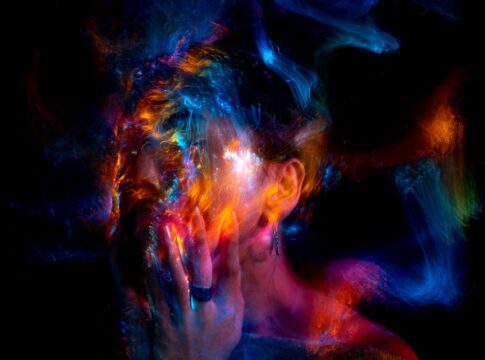
7 Bizarre Facts About Humans Glowing in the Dark
By Trivia Daily, Staff Writer — Published September 15, 2026
Table of Contents
- Key Takeaways
- Why Bizarre Humans Glowing Happens at All
- The Daily Rhythm of Human Radiance
- Where Your Body Shines Brightest
- Frequently Asked Questions
You probably think of fireflies or deep-sea creatures when you imagine bioluminescence, but here’s a surprising truth: humans glow in the dark too. The light we emit is far too faint for our eyes to detect without specialized equipment, yet it’s real and measurable. This bizarre phenomenon reveals fascinating facts about our biology, metabolism, and the invisible light show happening on our skin every single moment. Discover the amazing science behind why humans are literally radiant beings.
Scientists have documented this curious glow using ultra-sensitive cameras capable of detecting photons a thousand times dimmer than what the human eye can perceive. What they found was both interesting and unexpected: our bodies pulse with light that changes throughout the day, concentrated in specific areas, and influenced by what we eat and how we live.
Key Takeaways
- All humans emit visible light through bioluminescence, though it’s about 1,000 times weaker than our eyes can detect without equipment.
- Your face glows brighter than the rest of your body, with the brightest emission around your cheeks, forehead, and neck.
- Human glow follows a daily rhythm, peaking in late afternoon and dimming to its lowest point late at night.
- The light we emit is a byproduct of metabolic reactions, particularly from free radicals interacting with proteins and fats.
- This phenomenon is completely separate from body heat or infrared radiation, which thermal cameras detect.
- Scientists have explored using this natural glow as a non-invasive medical diagnostic tool.
Why Bizarre Humans Glowing Happens at All
The human body’s glow isn’t magic or science fiction. It’s biochemistry in action. When our cells metabolize energy, they produce highly reactive molecules called free radicals. These unstable molecules interact with lipids and proteins in our cells, and during certain chemical reactions, they release tiny amounts of visible light as a byproduct. Think of it as the body’s exhaust fumes, except instead of smoke, we emit photons.
This process differs completely from bioluminescence in fireflies or jellyfish, which produce light through specialized enzymes and dedicated light-producing organs. Human glow is unintentional, a side effect of being alive and burning fuel. Yet it’s remarkably consistent and measurable. Japanese researchers using cameras sensitive enough to detect individual photons have mapped this glow across the entire human body, confirming that we all shine, all the time, whether we realize it or not.
The Daily Rhythm of Human Radiance
Your glow isn’t constant. It pulses and dims throughout a 24-hour cycle, following your circadian rhythm. Research has shown that human bioluminescence reaches its peak in the late afternoon, around 4 PM, and drops to its lowest intensity around 10 PM. This pattern mirrors our metabolic activity: when our bodies are most active in processing energy, we shine brightest.
The rhythm suggests that our glow is tightly linked to our cellular metabolism and overall energy expenditure. During sleep, when metabolic processes slow down, the light dims accordingly. Morning brings a gradual increase as our bodies wake and rev up their chemical engines. This daily fluctuation happens whether you’re aware of it or not, a silent testament to the biological clock ticking inside every cell.
Where Your Body Shines Brightest
Not all parts of your body glow equally. Your face is the star of the show, emitting significantly more light than your arms, legs, or torso. The forehead, cheeks, and neck produce the most intense glow, while areas with less sun exposure tend to be dimmer. Scientists believe this pattern relates to sun exposure and metabolic activity in the skin.
Interestingly, the areas that glow brightest don’t necessarily correlate with where you have the most skin or the most blood flow. Instead, they seem to reflect where free radical production is highest, possibly due to greater exposure to environmental factors like ultraviolet radiation. Your hands and face, constantly exposed to the elements, become inadvertent lighthouses of metabolic activity.
| Body Part | Relative Glow Intensity | Peak Time |
|---|---|---|
| Face (cheeks, forehead) | Highest | Late afternoon |
| Neck and throat | High | Late afternoon |
| Hands | Moderate | Afternoon |
| Torso | Lower | Afternoon |
| Legs and feet | Lowest | Afternoon |
1. Your Face Glows Brighter Than Any Other Body Part
The human face emits more visible light than any other region of the body, with the forehead and cheeks leading the charge. This isn’t because facial skin is fundamentally different in structure, but because it receives more environmental exposure throughout a lifetime. Ultraviolet radiation from the sun accelerates metabolic reactions in skin cells, leading to increased free radical production and, consequently, more photon emission. Even people who use sunscreen regularly show this pattern, suggesting it’s a cumulative effect of daily sun exposure over years.
2. The Glow Is Completely Invisible to the Naked Eye
Human bioluminescence operates at approximately one-thousandth the intensity required for human vision to detect it. Our eyes evolved to see in daylight and moderate indoor lighting, not to pick up on the incredibly faint glow produced by metabolic processes. To capture this phenomenon, scientists use cameras cooled to extremely low temperatures to reduce electronic noise, coupled with photomultiplier tubes that amplify individual photons. Even in complete darkness, you cannot see your own glow or anyone else’s without this specialized equipment. The light exists in the visible spectrum—it’s not infrared or ultraviolet—but it’s simply too dim for biological eyes to register.
3. This Glow Is Different from the Heat Your Body Radiates
Many people confuse human bioluminescence with the infrared radiation our bodies emit as heat. They’re entirely separate phenomena. Thermal cameras detect infrared radiation, which has a longer wavelength than visible light and is produced by the kinetic energy of warm molecules. Bioluminescence, in contrast, occurs in the visible light spectrum and results from specific chemical reactions. You could theoretically be the same temperature as your surroundings and still emit this faint visible glow, though in practice, our bodies are almost always warmer than the environment. The two types of emission coexist but arise from fundamentally different physical processes.
4. What You Eat Can Influence How Brightly You Glow
Diet affects your metabolic glow. Foods rich in antioxidants can reduce free radical production, potentially dimming the light your body emits. Conversely, diets high in fats and sugars that increase metabolic stress may boost free radical activity and intensify the glow. While no one has demonstrated dramatic visible changes from dietary shifts, laboratory studies suggest that metabolic state directly influences bioluminescent output. This connection has led some researchers to explore whether measuring skin glow could someday serve as a non-invasive indicator of metabolic health, oxidative stress, or even early disease detection.
5. Scientists First Documented Human Glow in Japan
Japanese researchers made headlines when they successfully photographed the faint light emanating from human volunteers in controlled laboratory conditions. Using extraordinarily sensitive cameras in completely darkened rooms, they captured images showing the distribution and intensity of light across the human body. The experiments confirmed what biochemists had long suspected: that the metabolic processes producing free radicals would inevitably generate photon emission as a byproduct. These images revealed the daily rhythm and spatial patterns of human bioluminescence, transforming theoretical chemistry into visual, measurable reality.
6. The Color of Your Glow Shifts Throughout the Day
Human bioluminescence isn’t just one color. The spectrum shifts subtly throughout the day, with different wavelengths dominating at different times. Generally, the light falls in the green to red portion of the visible spectrum, similar to the faint glow from certain chemical reactions. The exact color at any given moment depends on which specific metabolic reactions are most active and which molecules are producing photons. While these color shifts are measurable with spectroscopic equipment, they’re far too subtle and dim for any practical observation without laboratory-grade instruments.
7. This Phenomenon Could Lead to Medical Breakthroughs
Researchers are investigating whether human bioluminescence patterns could serve as diagnostic tools. Since the glow reflects metabolic activity and oxidative stress, abnormal patterns might indicate disease states before other symptoms appear. Cancerous tissues, which have altered metabolism, might glow differently than healthy cells. Inflammatory conditions could produce distinctive light signatures. While this application remains experimental, the potential is intriguing: a completely non-invasive way to monitor health by simply measuring the light our bodies naturally produce. Some studies have already shown correlations between skin glow intensity and markers of oxidative damage, suggesting this bizarre quirk of human biology might one day inform medical practice.
Frequently Asked Questions
Can I see my own glow in a completely dark room?
No, human bioluminescence is approximately 1,000 times too faint for the human eye to detect, even in total darkness. Only specialized scientific cameras can capture this light.
Is human glow the same as phosphorescence on glow-in-the-dark items?
No, phosphorescent materials absorb light and then slowly release it, while human bioluminescence is actively produced by ongoing metabolic chemical reactions. The mechanisms are completely different.
Do all humans glow with the same intensity?
No, glow intensity varies based on metabolic rate, diet, sun exposure, age, and overall health. However, everyone produces some measurable bioluminescence as a natural consequence of being alive.
Does human glow serve any biological purpose?
Not that scientists have identified. Unlike fireflies that use bioluminescence for communication, human glow appears to be an unintended byproduct of metabolic processes rather than an evolved function.
The next time you look in a mirror, remember that you’re not just seeing reflected light. Your face is also producing its own faint glow, invisible yet real, a constant reminder that even in darkness, the chemistry of life shines on.