
The Hidden Story of Peanuts Actually Being Legumes
By Trivia Daily, Staff Writer — Published October 26, 2026
Table of Contents
- Key Takeaways
- The Hidden Story of Peanuts and What Makes a True Nut
- How Peanuts Compare to Their Relatives
- Why We Call Them Nuts Anyway
- The Allergy Puzzle and Protein Differences
- What Other “Nuts” Aren’t Really Nuts
- Frequently Asked Questions
You reach for a bag of peanuts at the ballpark, toss a handful into your mouth, and never question what you’re eating. But here’s a surprising fact that might change how you see this beloved snack: peanuts aren’t nuts at all. Despite their name and the way we use them, peanuts are legumes—members of the same plant family as beans, lentils, and peas. The hidden story of peanuts reveals a fascinating case of botanical mistaken identity that has persisted for centuries, fooling consumers and confusing gardeners who wonder why their “nut trees” grow underground.
This mix-up isn’t just trivia for plant nerds. Understanding what peanuts really are helps explain their unique growing habits, nutritional profile, and even why some people with tree nut allergies can safely eat peanuts while others cannot. The truth hiding in plain sight makes peanuts one of nature’s most interesting imposters.
Key Takeaways
- Peanuts are legumes belonging to the Fabaceae family, the same group that includes beans, peas, and lentils, not true nuts like almonds or walnuts.
- Unlike tree nuts that grow on branches, peanuts develop underground after the plant’s flower stem bends down and pushes the developing pods into the soil.
- True botanical nuts are hard-shelled fruits that don’t split open naturally, while legume pods split along two seams when mature.
- Peanuts share more nutritional similarities with legumes than tree nuts, including higher protein content and the presence of specific plant compounds.
- The confusion stems from culinary tradition rather than botanical classification—we treat peanuts like nuts in cooking despite their biological differences.
- People with peanut allergies react to different proteins than those allergic to tree nuts, which is why the allergies don’t always overlap.
The Hidden Story of Peanuts and What Makes a True Nut
Botanically speaking, true nuts have specific characteristics that peanuts simply don’t possess. A genuine nut is a hard-shelled fruit that contains a single seed and doesn’t open naturally when ripe. Acorns, hazelnuts, and chestnuts fit this definition perfectly. Their tough outer shells protect the seed inside, and you need to crack them open to reach the edible portion.
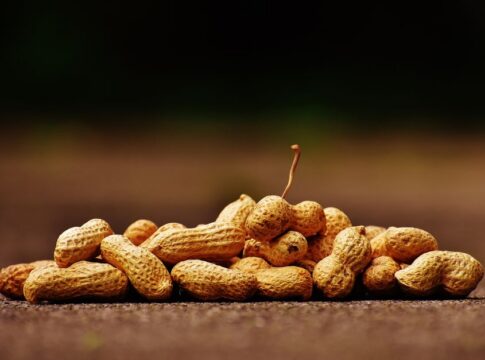
Peanuts, by contrast, grow in pods that contain multiple seeds. These pods naturally split along two seams when they mature—a defining characteristic of legumes. Open a peanut shell and you’ll typically find two or three individual peanuts inside, each one a separate seed. That shell isn’t a nut casing at all; it’s a legume pod, structurally identical to a pea pod or bean pod, just drier and harder.
The scientific name for the peanut plant, Arachis hypogaea, offers a clue to its unusual nature. The species name “hypogaea” means “under the earth,” referring to the plant’s remarkable underground fruiting behavior. After peanut flowers are pollinated, the flower stalk elongates and grows downward, pushing the developing pod several inches into the soil where it matures. This subterranean development is virtually unique among legumes and adds to the confusion about peanuts’ true identity.
How Peanuts Compare to Their Relatives
| Characteristic | Peanuts (Legumes) | Tree Nuts | Other Legumes |
|---|---|---|---|
| Plant Family | Fabaceae | Various (Juglandaceae, Betulaceae, etc.) | Fabaceae |
| Growing Location | Underground | On tree branches | Above ground on vines or bushes |
| Shell Structure | Pod that splits naturally | Hard shell that doesn’t split | Pod that splits naturally |
| Seeds Per Pod | 2-3 typically | Usually 1 | Multiple |
| Protein Content | About 25-30% | About 15-20% | About 20-25% |
Why We Call Them Nuts Anyway
The peanut naming confusion dates back centuries and stems from culinary use rather than botanical accuracy. When European colonizers encountered peanuts in South America, they noted the seeds’ rich, oily texture and nutty flavor. The foods were eaten roasted and salted, just like tree nuts. The name stuck, even though botanists knew better.
In grocery stores and kitchens worldwide, peanuts occupy the nut section. They’re processed like nuts, priced like nuts, and eaten like nuts. Peanut butter sits alongside almond butter and cashew butter. This culinary classification has become so entrenched that correcting it feels pedantic to most people. After all, when you’re enjoying a spoonful of peanut butter, does it really matter that you’re eating a legume paste?
From a nutritional standpoint, however, the distinction matters. Peanuts contain higher levels of protein than most tree nuts, similar to beans and lentils. They’re also rich in resveratrol, a plant compound more commonly associated with legumes. While tree nuts boast healthy fats and vitamin E, peanuts offer a different nutritional package that reflects their legume heritage.
The Allergy Puzzle and Protein Differences
One of the most important practical distinctions between peanuts and tree nuts lies in allergies. Peanut allergies and tree nut allergies are separate conditions caused by different proteins. Someone allergic to peanuts might tolerate almonds, walnuts, and pecans perfectly well because the immune system reacts to specific proteins unique to each food.
Peanut allergies affect roughly 1-2% of children in Western countries, making them one of the most common food allergies. The body mistakes certain peanut proteins—particularly ones called Ara h 1, Ara h 2, and Ara h 3—as dangerous invaders and launches an immune response. Tree nuts contain entirely different proteins, which is why someone can be allergic to one category but not the other.
That said, some people do have allergies to both peanuts and tree nuts, but this represents overlapping separate allergies rather than a single condition. Medical professionals treat peanut allergies distinctly from tree nut allergies, and food labels in many countries must identify peanuts separately from tree nuts for this very reason.
What Other “Nuts” Aren’t Really Nuts
Peanuts aren’t alone in their botanical deception. Many foods we call nuts fail the scientific definition:
- Almonds are actually seeds from drupes (stone fruits), making them cousins of peaches and cherries rather than true nuts.
- Cashews grow as seeds attached to the bottom of cashew apples, technically making them drupe seeds as well.
- Brazil nuts are seeds that grow inside a large capsule, not true nuts by botanical standards.
- Pine nuts are gymnosperm seeds from pine cones, completely unrelated to flowering plant nuts.
- Walnuts and pecans are also drupe seeds, though their family (Juglandaceae) is sometimes called the “true nut family” despite the technicality.
Meanwhile, some actual botanical nuts surprise people. Acorns qualify as true nuts, though few modern humans eat them regularly. Hazelnuts legitimately earn their name, being among the few commercially popular foods that meet the strict botanical definition.
Frequently Asked Questions
Are peanuts healthier than tree nuts?
Neither is definitively healthier—they offer different nutritional benefits. Peanuts provide more protein and folate, while many tree nuts contain more omega-3 fatty acids and vitamin E. Both are nutritious when eaten in moderation as part of a balanced diet.
Can you grow peanuts in a regular garden?
Yes, peanuts can grow in home gardens in warm climates with loose, sandy soil. The plants need about 120-150 frost-free days and require space for their unusual underground fruiting process. Gardeners often loosen soil around plants to make it easier for the flower stalks to penetrate downward.
Why do peanuts grow underground?
After pollination, the peanut plant’s flower stalk (called a peg) grows downward and pushes the developing pod into the soil, where it matures in darkness. Scientists believe this evolved as protection from predators and harsh weather, giving developing seeds a safer environment than exposed pods on stems.
If peanuts are legumes, can they fix nitrogen like other beans?
Yes, peanut plants form symbiotic relationships with nitrogen-fixing bacteria in root nodules, just like peas and beans. This allows them to convert atmospheric nitrogen into usable compounds, enriching soil and reducing fertilizer needs—a trait shared across the legume family.
The next time you crack open a peanut shell, take a moment to appreciate the botanical trickster in your hand. This underground legume has masqueraded as a nut so successfully that entire industries, cuisines, and languages have accepted the disguise. Yet knowing the truth makes peanuts even more remarkable—a plant that defied easy categorization and carved out its own unique niche in both nature and human culture.