
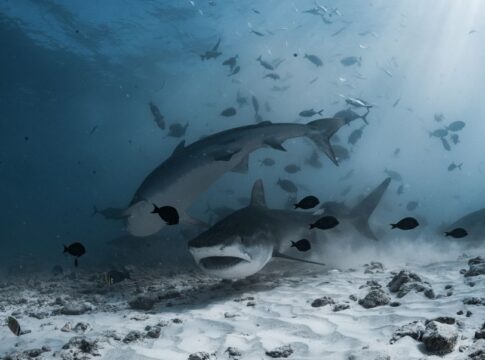
Why Sharks Must Keep Swimming or They Die: The Truth
By Trivia Daily, Staff Writer — Published July 29, 2026
Table of Contents
- Key Takeaways
- Why Sharks Must Keep Swimming: The Breathing Connection
- The Buoyancy Problem All Sharks Share
- How Different Shark Species Compare
- The Evolutionary Split: Why Two Breathing Strategies?
- What Happens When Ram Ventilators Stop Swimming?
- Frequently Asked Questions
You’ve probably heard the claim that sharks must keep swimming or they’ll die. It sounds like one of those amazing ocean facts that’s almost too dramatic to be true. But here’s the surprising twist: it’s only partly accurate. Some sharks do need to swim constantly to breathe, while others can rest comfortably on the seafloor. This fascinating divide reveals one of the ocean’s most interesting trivia stories about how different species have evolved wildly different survival strategies.
The truth behind this myth is more nuanced than most people realize. Understanding why some sharks must keep moving while others don’t requires a quick dive into shark anatomy and the clever ways these ancient predators have adapted to their environments over millions of years.
Key Takeaways
- Only certain shark species must swim continuously to breathe, while others can pump water over their gills while stationary.
- Obligate ram ventilators like great white sharks, mako sharks, and whale sharks rely on forward motion to force water through their gills.
- Buccal pumping sharks, including nurse sharks and leopard sharks, can actively draw water into their mouths and push it over their gills without swimming.
- All sharks lack swim bladders, so those that stop swimming will sink—but sinking doesn’t necessarily mean dying.
- The “keep swimming or die” rule applies to breathing for some species, but buoyancy is a separate challenge all sharks face.
- Some sharks enter periods of rest by finding ocean currents that flow over their gills or by resting in caves where water circulation is strong.
Why Sharks Must Keep Swimming: The Breathing Connection
The core of this trivia question lies in how sharks breathe. Like all fish, sharks extract oxygen from water using gills. Water enters through the mouth, passes over the gill filaments where oxygen is absorbed into the bloodstream, and exits through gill slits on the sides of the head. Simple enough. But the method sharks use to move that water varies dramatically.
Obligate ram ventilators are shark species that must swim forward with their mouths open to force water over their gills. This process, called ram ventilation, is passive—the shark’s forward motion does the work. Great white sharks, mako sharks, whale sharks, and hammerhead sharks fall into this category. If these sharks stop swimming, water stops flowing over their gills, oxygen intake drops, and they can suffocate. For these species, the myth is essentially fact.
But many shark species use buccal pumping, a technique that lets them actively draw water into their mouths using specialized cheek muscles. They can sit motionless on the ocean floor and still breathe perfectly well. Nurse sharks, angel sharks, leopard sharks, and wobbegongs are champion buccal pumpers. Watch a nurse shark resting in a cave, and you’ll see its mouth rhythmically opening and closing as it pumps water over its gills.
The Buoyancy Problem All Sharks Share
Even sharks that can breathe while stationary face another challenge: they sink. Unlike bony fish, sharks lack swim bladders—the gas-filled organs that provide neutral buoyancy. This means every shark is denser than seawater and will descend if it stops swimming. But sinking isn’t the same as dying.
Sharks have evolved several clever adaptations to manage buoyancy. Their massive, oil-rich livers provide some lift—shark liver oil is less dense than water. Some species have evolved lighter skeletons and hydrodynamic body shapes that generate lift as they swim, much like airplane wings. The key discovery here is that sharks don’t need to maintain a specific depth to survive. Many species are perfectly comfortable resting on the bottom between hunting excursions.
Great white sharks and other obligate ram ventilators face a real dilemma: they must keep moving to breathe, which means they can never fully rest. Scientists have documented that these sharks enter periods of reduced activity where they swim more slowly, possibly allowing portions of their brain to rest while maintaining enough forward motion to breathe—a strategy similar to how dolphins sleep.
How Different Shark Species Compare
| Shark Species | Breathing Method | Can Rest on Bottom? | Typical Habitat |
|---|---|---|---|
| Great White Shark | Ram ventilation | No | Open ocean, coastal waters |
| Nurse Shark | Buccal pumping | Yes | Seafloor, caves, reefs |
| Mako Shark | Ram ventilation | No | Open ocean |
| Leopard Shark | Buccal pumping | Yes | Shallow coastal waters |
| Whale Shark | Ram ventilation | No | Open ocean, tropical waters |
| Wobbegong Shark | Buccal pumping | Yes | Seafloor, coral reefs |
The Evolutionary Split: Why Two Breathing Strategies?
Why did some sharks evolve to be perpetual swimmers while others became bottom-dwellers? The answer lies in lifestyle and hunting strategy. Fast, pelagic sharks that chase down prey in open water benefit from ram ventilation. They’re already swimming constantly while hunting, so using that forward motion to breathe is efficient. These species also tend to have higher metabolic rates and oxygen demands.
Bottom-dwelling sharks that ambush prey or feed on slower-moving animals evolved buccal pumping because it lets them stay hidden and motionless. A nurse shark waiting in a reef crevice for a lobster can’t afford to keep circling—it would scare away dinner. The ability to breathe while stationary is a huge advantage for these hunters.
Some sharks can actually do both. Whitetip reef sharks, for example, primarily use ram ventilation while cruising but can switch to buccal pumping when they find a comfortable resting spot. This flexibility represents an evolutionary middle ground.
What Happens When Ram Ventilators Stop Swimming?
Scientists have studied what occurs when obligate ram ventilators are prevented from swimming. The results confirm the myth: oxygen levels in their blood drop rapidly. Within minutes, the shark enters respiratory distress. If swimming doesn’t resume, the shark will eventually suffocate, though the exact timeline varies by species, water temperature, and the shark’s activity level before stopping.
This has practical implications for shark conservation. When large pelagic sharks are caught in fishing nets or on lines, time is critical. If removed from the water or prevented from swimming for too long, even released sharks may die from oxygen deprivation. Some fisheries have adopted techniques to keep captured sharks moving through the water during handling to maintain gill flow.
Frequently Asked Questions
Do all sharks die if they stop swimming?
No. Only obligate ram ventilators like great whites and makos must swim continuously to breathe. Species that use buccal pumping, such as nurse sharks and leopard sharks, can rest motionless on the ocean floor and breathe normally.
How do sharks sleep if they can’t stop swimming?
Obligate ram ventilators likely experience periods of reduced activity rather than true sleep, maintaining slow forward motion while portions of their brain rest. Buccal pumping sharks can rest fully on the seafloor, though whether they experience sleep as mammals do remains an active area of research.
Why don’t sharks have swim bladders like other fish?
Sharks are cartilaginous fish, an ancient lineage that diverged from bony fish hundreds of millions of years ago before swim bladders evolved. Instead, sharks rely on large, oil-rich livers and hydrodynamic body shapes to manage buoyancy.
Can a shark drown?
Yes, sharks can suffocate if water doesn’t flow over their gills. For ram ventilators, being held motionless underwater can cause drowning. Even buccal pumpers can suffocate if their gills are damaged or if they’re in water with extremely low oxygen levels.
The next time someone tells you sharks must keep swimming or die, you’ll know the real story is far more interesting than the myth. Evolution equipped different sharks with different tools, creating a spectrum of survival strategies that reflect millions of years of adaptation to every corner of the ocean. Some sharks are indeed prisoners of motion, while their cousins nap peacefully on the sand below.