
Unicorn Myth: What Medieval Scrolls Really Described
By TriviaOwl, Staff Writer — Published August 11, 2026
Table of Contents
- Key Takeaways
- The Unicorn Myth Medieval Scholars Actually Recorded
- The Narwhal Connection: Arctic Gold
- Real Animals Behind the Legend
- Why the Myth Endured So Long
- Frequently Asked Questions
The unicorn myth medieval scholars obsessed over wasn’t quite the rainbow-maned fantasy creature of modern imagination. Medieval manuscripts described a fierce, untamable beast with a single spiraling horn—and many of these “unicorn” accounts were actually documenting real animals. When European traders brought narwhal tusks back from Arctic waters, physicians and nobility believed they possessed genuine unicorn horns with miraculous healing properties. The disconnect between myth and reality reveals fascinating truths about how medieval people interpreted the natural world.
These interesting artifacts sold for ten times their weight in gold. Royalty drank from cups carved from “unicorn horn” to detect poison. What makes this trivia even more surprising: the confusion persisted for centuries, blending biblical symbolism, traveler tales, and genuine zoological observations into a single legendary creature.
Key Takeaways
- Medieval unicorn descriptions often matched real animals like the Indian rhinoceros and Arabian oryx, which European scholars knew only from secondhand accounts.
- Narwhal tusks were sold throughout Europe as genuine unicorn horns, valued as antidotes to poison and cures for various ailments.
- The unicorn appears in ancient Greek natural history texts, not as mythology but as zoology—writers like Ctesias described it as a wild ass from India.
- Medieval bestiaries portrayed unicorns as symbols of purity that could only be tamed by virgins, blending Christian allegory with natural history.
- The confusion between myth and reality wasn’t resolved until Arctic exploration in the 17th century revealed the true source of “unicorn horns.”
- Unicorn horn powder remained a luxury pharmaceutical item into the 18th century despite growing scientific skepticism.
The Unicorn Myth Medieval Scholars Actually Recorded
Ancient Greek physician Ctesias wrote the first detailed Western account of unicorns around 400 BCE after visiting Persia. He described wild asses in India with white bodies, purple heads, and a single horn. His account mixed genuine observations of Indian rhinoceroses with exaggerated traveler tales. The Roman scholar Pliny the Elder later catalogued the unicorn alongside elephants and tigers in his encyclopedic Natural History—as a real animal, not a fantasy.
Medieval bestiaries transformed these classical descriptions into Christian allegory. The unicorn became a symbol of Christ, fierce and untamable except by a virgin’s touch. Monks illustrated manuscripts with unicorns laying their heads in maidens’ laps, representing the Incarnation. But these same texts still treated unicorns as actual creatures inhabiting distant lands. The boundary between natural history and spiritual symbolism barely existed.
Arabic and Persian texts described similar one-horned creatures, often based on sightings of the Arabian oryx. When viewed in profile, this antelope appears to have a single straight horn. Marco Polo encountered what he called unicorns in Sumatra—almost certainly Javan rhinoceroses—and expressed disappointment that they looked nothing like the elegant creatures of legend.
The Narwhal Connection: Arctic Gold
Viking traders discovered the real money-maker in Arctic waters. Narwhals, small Arctic whales, possess a single spiraling tusk that can grow up to ten feet long. These tusks are actually elongated teeth that protrude through the whale’s upper lip. Norse merchants brought them south, selling them as unicorn horns to European buyers who had no way to verify their origin.
The trade became spectacularly lucrative. A single narwhal tusk could purchase a castle. The crown jewels of multiple European nations included unicorn horn scepters and drinking vessels. England’s royal throne incorporated what was believed to be unicorn horn. The Danish throne, built around 1662, features narwhal tusks as supporting posts—though by then, some scholars suspected the truth.
Pharmacies stocked powdered unicorn horn as an antidote to poison and cure for epilepsy, plague, and various ailments. Wealthy nobles kept whole horns in their homes, dipping them in drinks to detect poisoning. The medical theory held that unicorn horn would sweat or change color in the presence of toxins. This belief persisted despite zero evidence of efficacy.
Real Animals Behind the Legend
Several genuine species contributed to unicorn mythology. The confusion reveals how medieval Europeans struggled to categorize animals they’d never seen firsthand.
| Animal | Geographic Origin | Unicorn-Like Features |
|---|---|---|
| Indian Rhinoceros | Indian subcontinent | Single horn, gray body, fierce temperament |
| Arabian Oryx | Arabian Peninsula | Two horns appear as one in profile, white coat |
| Narwhal | Arctic waters | Spiraling tusk, source of “unicorn horns” |
| Aurochs | Europe (extinct 1627) | Sometimes depicted with single horn in ancient art |
The Indian rhinoceros matches Ctesias’s description remarkably well: a horse-sized animal with a single horn, aggressive nature, and habitat in India. Ancient artists who’d never seen one relied on verbal descriptions, gradually transforming the bulky rhinoceros into the graceful horse-like creature of medieval art.
When Myth Met Science
The 17th century brought increasing skepticism. Danish physician Ole Worm demonstrated in 1638 that “unicorn horns” came from narwhals, not mythical land animals. He dissected narwhal heads and published illustrations showing the tusk’s origin. Yet the pharmaceutical trade continued for another century—profit trumped evidence.
Scientific expeditions to India and Africa catalogued rhinoceroses and other exotic fauna, slowly filling the knowledge gaps that had enabled unicorn belief. The Royal Society in London collected specimens and challenged supernatural explanations. By the 18th century, educated Europeans understood unicorns as mythological rather than zoological.
Why the Myth Endured So Long
Distance and communication barriers allowed unicorn belief to persist. A medieval European had no way to verify claims about Asian animals. Written accounts took months or years to circulate, and illustrations varied wildly in accuracy. Each retelling added embellishments or misinterpretations.
Economic incentives reinforced the myth. Too many fortunes depended on unicorn horn authenticity. Merchants, physicians, and nobility all benefited from maintaining the fiction. Admitting deception meant financial ruin and public humiliation. The narwhal tusk trade represented enormous wealth—estimated at millions in modern currency annually during peak demand.
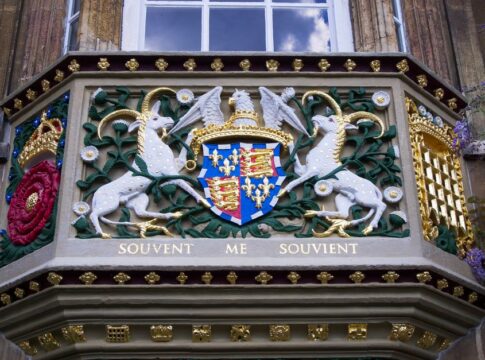
Religious symbolism gave the unicorn cultural staying power beyond mere zoology. The creature appeared in church art, tapestries, and heraldry as a sacred symbol. Questioning unicorn existence felt like challenging religious truth itself. This spiritual dimension insulated the myth from rational scrutiny far longer than purely secular beliefs.
Frequently Asked Questions
Did medieval people really believe unicorns existed?
Yes, medieval scholars and common people alike considered unicorns real animals living in distant lands like India and Africa. They appeared in bestiaries alongside elephants, lions, and other genuine creatures, with no distinction made between myth and reality.
What were “unicorn horns” actually made from?
Nearly all unicorn horns sold in medieval and Renaissance Europe were narwhal tusks from Arctic whales. Some may have been rhinoceros horns or carved ivory, but narwhal tusks with their distinctive spiral pattern were the most prized and common.
When did people discover unicorns weren’t real?
Scientific skepticism grew in the 17th century, with Ole Worm’s 1638 demonstration that “unicorn horns” came from narwhals marking a turning point. However, widespread public acceptance that unicorns were purely mythological didn’t solidify until the 18th and 19th centuries as zoological knowledge expanded.
Why is the unicorn Scotland’s national animal?
Scotland adopted the unicorn as a heraldic symbol in the 12th century, representing purity, strength, and untamable spirit. The choice reflected medieval symbolism rather than belief in literal unicorns, similar to how England uses the lion despite having no native lions.
The medieval unicorn myth demonstrates how humans construct understanding from incomplete information. Those spiraling narwhal tusks sitting in museum collections once commanded kingdoms’ ransoms, protected against imaginary poisons, and bridged the gap between what people knew and what they desperately wanted to believe about the world’s hidden wonders.