
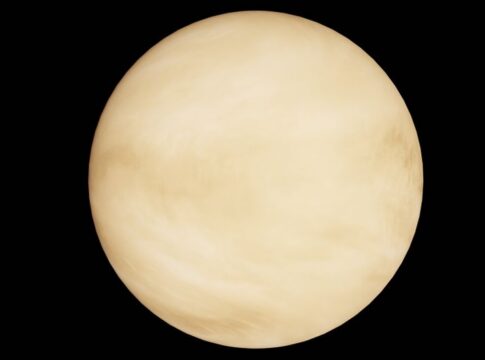
The Truth About Venus Spinning Backwards in Our Solar System
By Trivia Daily, Staff Writer — Published October 30, 2026
Table of Contents
- Key Takeaways
- Why the Truth About Venus Spinning Backwards Matters
- How Venus Compares to Other Planets
- Theories Behind the Backward Spin
- What Venus’s Rotation Reveals About Planetary Science
- Observing Venus from Earth
- Frequently Asked Questions
Among the eight planets orbiting our Sun, one stands out for its stubborn refusal to follow the cosmic crowd. Venus rotates on its axis in the opposite direction from most other planets—a phenomenon astronomers call retrograde rotation. While Earth and six of its planetary siblings spin counterclockwise when viewed from above the Sun’s north pole, Venus turns clockwise. This surprising truth about Venus spinning has fascinated scientists for decades, prompting questions about what violent event or slow process could flip an entire world on its head.
The story gets even stranger. Venus takes longer to complete one rotation than it does to orbit the Sun. A single Venusian day lasts about 243 Earth days, while its year clocks in at just 225 Earth days. If you could stand on Venus’s scorching surface—not recommended—you’d experience only about two sunrises during an entire Venusian year.
Key Takeaways
- Venus rotates clockwise (retrograde), opposite to most planets in our solar system including Earth
- One Venusian day (243 Earth days) is longer than one Venusian year (225 Earth days)
- Only Venus and Uranus exhibit retrograde rotation among the eight planets
- Scientists theorize massive collisions or atmospheric tidal effects may have caused Venus’s backward spin
- Venus’s slow rotation contributes to its extreme greenhouse effect and uniform temperature distribution
- The Sun rises in the west and sets in the east on Venus—if you could see it through the thick clouds
Why the Truth About Venus Spinning Backwards Matters
Understanding Venus’s unusual rotation isn’t just cosmic trivia—it reveals fundamental truths about planetary formation and evolution. When our solar system formed roughly 4.6 billion years ago, a spinning disk of gas and dust coalesced into the Sun and planets. The original angular momentum of that disk should have set all planets spinning in the same direction. Venus breaks this pattern.
The retrograde rotation tells scientists that something dramatic happened after Venus formed. Perhaps a massive object slammed into the young planet with enough force to reverse its spin. Or maybe Venus’s incredibly dense atmosphere—about 90 times thicker than Earth’s—created tidal forces strong enough to gradually flip the planet over millions of years. NASA and other space agencies have studied Venus extensively, yet the exact cause remains one of planetary science’s enduring mysteries.
Venus’s backward spin also affects its climate in unexpected ways. The slow rotation means the planet’s day-night cycle doesn’t create the temperature variations we experience on Earth. Combined with its runaway greenhouse effect, this produces surface temperatures around 900 degrees Fahrenheit—hot enough to melt lead—that remain constant whether you’re on the day side or night side.
How Venus Compares to Other Planets
| Planet | Rotation Direction | Day Length (Earth days) | Year Length (Earth days) |
|---|---|---|---|
| Mercury | Prograde (normal) | 59 | 88 |
| Venus | Retrograde (backward) | 243 | 225 |
| Earth | Prograde (normal) | 1 | 365 |
| Mars | Prograde (normal) | 1.03 | 687 |
| Jupiter | Prograde (normal) | 0.41 | 4,333 |
| Uranus | Retrograde (backward) | 0.72 | 30,687 |
This comparison reveals just how unusual Venus truly is. Only Uranus joins Venus in retrograde rotation, though Uranus’s situation differs—it spins on its side, likely due to a massive collision that knocked it over. Venus remains upright but spins the wrong way, a unique configuration in our solar system.
Theories Behind the Backward Spin
Scientists have proposed several explanations for Venus’s retrograde rotation. The collision theory suggests one or more large objects struck Venus during the solar system’s chaotic early years. These impacts could have slowed the planet’s original rotation, stopped it entirely, and then reversed its direction. Computer simulations show this is physically possible, though it would require extraordinarily precise collision angles and energies.
The atmospheric tidal theory presents a gentler alternative. Venus’s thick atmosphere creates massive tidal bulges as it interacts with the Sun’s gravity. Over billions of years, these atmospheric tides could have acted like brakes on the planet’s rotation, eventually reversing it. This process would happen incredibly slowly—but Venus has had four billion years to work with.
A third possibility involves core-mantle interactions. The boundary between Venus’s molten core and solid mantle might generate friction that affected the planet’s rotation over geological timescales. Some researchers also wonder whether Venus originally rotated much faster and in the normal direction, but gradually slowed and reversed through a combination of these effects.
What Venus’s Rotation Reveals About Planetary Science
The fascinating case of Venus demonstrates that planets aren’t static objects frozen since formation. They evolve, sometimes dramatically. Venus and Earth formed at similar times from similar materials in neighboring orbits. Yet today they couldn’t be more different—one a hellish hothouse spinning backward, the other a water-rich world teeming with life spinning normally.
This divergence teaches astronomers important lessons about exoplanets orbiting distant stars. When scientists discover Earth-sized planets in other solar systems, they can’t assume those worlds resemble Earth. Venus proves that small differences in initial conditions or subsequent events can produce radically different outcomes. A planet’s rotation rate and direction influence its magnetic field, atmospheric circulation, and climate—all factors that determine whether a world could harbor life.
Venus also challenges our understanding of planetary magnetism. Earth’s relatively fast rotation helps generate its protective magnetic field through dynamo action in its liquid core. Venus lacks a significant magnetic field, possibly because its slow rotation prevents effective dynamo generation. This leaves Venus vulnerable to solar wind, which strips away atmospheric particles and may have contributed to the loss of any water Venus once possessed.
Observing Venus from Earth
You don’t need a telescope to appreciate Venus’s brightness in our sky. As Earth’s closest planetary neighbor, Venus appears as the brilliant “evening star” or “morning star” depending on its position relative to Earth and the Sun. Ancient civilizations tracked Venus carefully, though they couldn’t have known about its peculiar rotation without modern instruments.
The planet’s slow backward spin means that if you could somehow survive on Venus’s surface and see through its perpetual cloud cover, you’d witness the Sun rising in the west and setting in the east. The Sun would creep across the sky at a glacial pace, taking months to complete its journey from horizon to horizon. Sunrise would occur only once every 117 Earth days—the time it takes for Venus to rotate halfway around its axis.
Frequently Asked Questions
Does Venus really spin backwards?
Yes, Venus rotates clockwise when viewed from above the Sun’s north pole, opposite to Earth and most other planets. This retrograde rotation is one of Venus’s most distinctive characteristics.
Why is a day on Venus longer than its year?
Venus rotates extremely slowly on its axis, taking 243 Earth days to complete one rotation, while orbiting the Sun in just 225 Earth days. This makes Venus the only planet where a day exceeds a year in length.
Which planets spin backwards?
Only Venus and Uranus exhibit retrograde rotation among the eight planets. Uranus also tilts dramatically on its side, making its rotation unique in a different way from Venus.
Could Venus’s backward spin be reversed again?
Theoretically yes, but it would require another massive collision or billions more years of atmospheric tidal effects. Neither scenario is likely in the foreseeable future, so Venus will continue its slow backward spin for the rest of the solar system’s lifetime.
Venus reminds us that our solar system still holds mysteries despite centuries of observation. This scorching world spinning slowly in the wrong direction continues to puzzle scientists and spark curiosity. Every time you spot Venus shining brilliantly in the twilight sky, you’re looking at a planet that refused to follow the rules—and scientists are still trying to figure out why.