
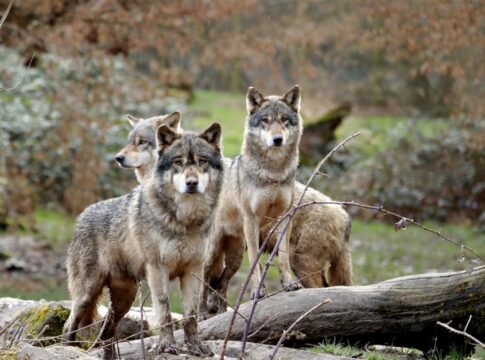
How Wolves Change Rivers by Controlling Prey Behavior
By Trivia Daily, Animals Desk — Published October 31, 2026
Table of Contents
- Key Takeaways
- How Wolves Change Rivers Through the Landscape of Fear
- From Stable Banks to Changed River Channels
- The Cascade Effect on Other Wildlife Species
- Comparing Ecosystems With and Without Apex Predators
- The Science Behind Trophic Cascades
- Frequently Asked Questions
When gray wolves were reintroduced to Yellowstone National Park in 1995, scientists expected them to reduce elk populations. What they didn’t anticipate was how profoundly wolves would reshape the park’s rivers, forests, and entire ecosystem. This phenomenon, known as a trophic cascade, demonstrates how a single apex predator can transform landscapes not just by killing prey, but by changing how those animals behave. The wolves change rivers indirectly through a fascinating chain reaction that begins with fear and ends with flowing water.
The story reveals one of nature’s most elegant feedback loops. Predators don’t just control prey numbers—they control where prey animals dare to go, what they eat, and how landscapes recover.
Key Takeaways
- Wolves alter prey behavior through what scientists call the “landscape of fear,” causing elk to avoid vulnerable areas like river valleys and open meadows.
- When elk stop overgrazing riverbanks, willow, aspen, and cottonwood trees regenerate, stabilizing soil and changing river courses.
- The return of vegetation along waterways reduces erosion, narrows river channels, and creates more pools and habitat complexity.
- This trophic cascade benefits dozens of species, from songbirds nesting in recovered trees to beavers building dams with newly available wood.
- The Yellowstone wolf reintroduction is one of the most documented examples of how apex predators structure entire ecosystems.
- Wolves killed in Yellowstone’s Northern Range reduced elk by roughly 50 percent, but behavioral changes had even broader ecological impacts.
How Wolves Change Rivers Through the Landscape of Fear
Before wolves returned to Yellowstone, elk populations had grown unchecked for nearly 70 years. Without predators, these herbivores grazed wherever they pleased, spending long periods in river valleys where tender willows and young trees provided easy meals. The constant browsing prevented woody plants from growing tall enough to reproduce. Riverbanks became barren, exposed to erosion.
Wolves changed this equation immediately. Elk didn’t just become fewer—they became warier. The “landscape of fear” concept explains how prey animals assess risk across different terrain types. Open valleys near rivers offer poor escape routes and limited visibility. Dense forest provides cover. Rational prey avoids the danger zones.
This behavioral shift mattered more than the direct kills. Elk began spending less time near streams and more time in safer, higher-elevation forests. They moved more frequently, browsed less intensively in any single spot, and gave riparian vegetation room to recover. Young willows, no longer chewed to stubs, grew into saplings. Aspens sent up shoots that survived past the vulnerable seedling stage.
The Vegetation Recovery Process
Riparian vegetation recovery happened in stages. Within five years of wolf reintroduction, willow height in some areas increased substantially. By ten years, aspen groves that had been failing to regenerate for decades showed new growth. Cottonwoods, another species heavily impacted by elk browsing, began establishing seedlings along stream banks.
These trees do more than look pretty. Their roots bind soil, preventing it from washing into streams during spring runoff and heavy rains. The canopy shades water, keeping it cooler for fish. Fallen leaves provide nutrients for aquatic insects. The physical presence of trees and shrubs slows water velocity during floods, reducing the cutting power of the current.
From Stable Banks to Changed River Channels
Rivers are dynamic systems, constantly adjusting their shape based on the balance between water flow and bank stability. When vegetation disappeared under heavy elk browsing, Yellowstone’s streams widened and became shallower. Water spread across broad, exposed channels. Banks collapsed. The rivers behaved like they were flowing through a desert rather than a temperate forest.
As vegetation returned, the physics changed. Stabilized banks resist erosion. The river’s energy, unable to widen its channel, instead digs deeper. Deeper, narrower channels create different flow patterns—faster currents in some spots, quiet pools in others. This habitat complexity benefits fish, amphibians, and aquatic invertebrates that require varied conditions.
Researchers documented these changes through aerial photography, ground surveys, and hydrological measurements. Some stream sections showed measurable narrowing and deepening. Pools became more frequent. The sinuosity—the amount of meandering—increased in certain reaches as stable banks allowed the river to maintain tighter curves rather than cutting straight paths.
The Cascade Effect on Other Wildlife Species
The changes rippled through the ecosystem. Beavers, North America’s second-greatest ecosystem engineers after humans, returned to streams where they’d been scarce. They need willows and aspens both for food and building material. As these trees recovered, beaver populations rebounded. Their dams create wetlands, slow water flow, and raise water tables—amplifying the stabilizing effects wolves initiated.
Songbirds diversified. Species that nest in willows and riparian shrubs had lost habitat during the elk-dominated years. As the vegetation structure recovered, bird surveys documented increases in several species. Small mammals benefited from denser cover. Berries from recovered shrubs fed bears and other omnivores.
Even scavengers gained. Wolf kills provide carrion for ravens, eagles, magpies, and bears. This food source is especially valuable in winter and early spring when other resources are scarce. Beetles and other decomposers recycle nutrients from carcasses. The presence of an apex predator creates opportunities throughout the food web.
Comparing Ecosystems With and Without Apex Predators
| Ecosystem Feature | Without Wolves (pre-1995) | With Wolves (post-reintroduction) |
|---|---|---|
| Elk Behavior | Concentrated in river valleys, intensive browsing | More vigilant, mobile, avoid risky terrain |
| Riparian Vegetation | Suppressed, unable to regenerate | Recovering height and density |
| River Channels | Wide, shallow, unstable banks | Narrower, deeper, more pools |
| Beaver Colonies | Declining, limited habitat | Increasing with vegetation recovery |
| Songbird Diversity | Reduced in riparian zones | Increased species richness |
The Science Behind Trophic Cascades
Trophic cascades occur when predators at the top of the food web influence organisms two or more levels below them. Wolves affect elk (one level down), which affects plants (two levels down), which affects rivers and soil (three levels down). The concept emerged from aquatic ecology but applies across ecosystems.
Not all ecosystems show strong trophic cascades. They’re most pronounced where a single predator exerts strong control over a single dominant herbivore. Yellowstone’s relatively simple large-mammal community—wolves, elk, and recovering vegetation—created ideal conditions for dramatic effects. More complex systems with multiple predators and prey species often show weaker or more diffuse cascades.
Critics note that other factors also influenced Yellowstone’s recovery. Climate variation affects vegetation growth. Grizzly bear populations increased, also preying on elk calves. Human hunting outside the park removes elk. Disentangling wolf effects from these variables requires careful analysis, but long-term studies consistently show that wolf predation and the behavioral responses it triggers are major drivers of ecosystem change.
Frequently Asked Questions
How quickly did rivers change after wolves returned to Yellowstone?
Vegetation recovery began within a few years, but significant changes to river morphology took longer—typically a decade or more. Rivers respond slowly to landscape changes because reshaping channels requires multiple flood cycles and sustained bank stability.
Do wolves change rivers everywhere they live?
Not necessarily. The effect depends on ecosystem characteristics including prey density, vegetation types, and whether herbivores were previously overabundant. Yellowstone’s case is particularly dramatic because elk populations had been very high and predator-free for decades.
What other animals create trophic cascades?
Sea otters control sea urchins, protecting kelp forests. Sharks influence reef fish behavior, affecting coral health. Large carnivores including lions, tigers, and bears can structure ecosystems, though the strength of cascades varies widely depending on local conditions.
How many wolves were reintroduced to Yellowstone?
Thirty-one gray wolves from Canada were released in 1995 and 1996. The population grew to over 170 by the mid-2000s before stabilizing at lower numbers as the ecosystem reached a new equilibrium.
The Yellowstone wolves remind us that ecosystems are woven together by invisible threads of behavior and consequence. A predator’s howl echoes through valleys, changes where an elk grazes, allows a willow to grow, and ultimately guides the path of a river. Nature’s complexity humbles our attempts to manage it, yet understanding these connections offers hope for restoration elsewhere.