
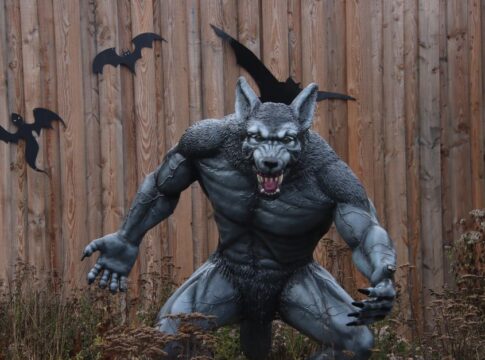
The Truth About Werewolf Legends: Full Moon Myths Busted
By Trivia Daily, Staff Writer — Published October 13, 2026
Table of Contents
- Key Takeaways
- The Truth About Werewolf Legends and Lunar Connections
- Medical Conditions Behind the Monster Myths
- Werewolf Trials: When Legend Became Legal Reality
- Global Werewolf Variations
- Why Werewolf Legends Persist
- Frequently Asked Questions
For centuries, the full moon has been blamed for transforming ordinary humans into bloodthirsty wolves. But the truth about werewolf legends is far more interesting than Hollywood would have you believe. These myths didn’t spring from actual lycanthropy—they emerged from a fascinating blend of medical misunderstanding, criminal psychology, and cultural storytelling that reveals surprising facts about how our ancestors made sense of the world.
The connection between werewolves and full moons is actually a relatively modern invention. Medieval werewolf trials rarely mentioned lunar phases at all, focusing instead on pacts with the devil and shape-shifting ointments. Discover how this iconic monster evolved from ancient folklore into the silver-screen creature we recognize today.
Key Takeaways
- The full moon association with werewolves became popular primarily through 20th-century films, not ancient folklore
- Medieval Europe experienced genuine werewolf trials where real people were executed for alleged lycanthropy
- Clinical lycanthropy is a documented psychiatric condition where patients believe they transform into animals
- The word “werewolf” comes from Old English “wer” (man) and “wulf” (wolf), literally meaning “man-wolf”
- Ancient werewolf legends appear in cultures worldwide, from Greek mythology to Norse sagas
- Rabies symptoms may have contributed to werewolf folklore, including aggression, hydrophobia, and biting behavior
The Truth About Werewolf Legends and Lunar Connections
The full moon’s role in werewolf transformation is largely a cinematic creation. Early werewolf stories from Greece, Rome, and medieval Europe featured transformations triggered by curses, magical belts, or special ointments—but rarely the moon itself. The 1941 film “The Wolf Man” cemented the full moon trope in popular culture, creating a connection that now feels ancient but is actually quite recent.
Ancient Greek mythology featured King Lycaon, whom Zeus transformed into a wolf as punishment for serving human flesh. This tale, recorded by the Roman poet Ovid, required no lunar trigger. Similarly, Norse legends spoke of warriors wearing wolf pelts to channel animal ferocity in battle—berserkers who transformed through ritual, not celestial timing.
Medieval werewolf accusations followed patterns similar to witch trials. Between the 15th and 17th centuries, European courts prosecuted thousands for alleged lycanthropy. These trials documented confessions of transformation, but the methods varied wildly: some claimed to use wolf-skin belts, others spoke of demonic pacts, and still others described magical salves. The moon rarely appeared in trial records.
Medical Conditions Behind the Monster Myths
Several real medical conditions may have fueled werewolf legends, offering amazing insights into how folklore develops from observed phenomena. Hypertrichosis, an extremely rare genetic condition causing excessive hair growth across the entire body, affected perhaps dozens of documented individuals throughout history. People with this condition faced severe social stigma and may have been labeled as wolf-men.
Rabies presents an even more compelling explanation. The disease causes aggression, hypersensitivity to light and water, foaming at the mouth, and a compulsion to bite—symptoms that align eerily well with werewolf descriptions. Rabies epidemics in medieval Europe coincided geographically and temporally with werewolf panic. The disease spreads through animal bites, particularly from wolves and dogs, creating a logical connection in pre-scientific minds.
Clinical lycanthropy, recognized in modern psychiatry, involves patients genuinely believing they transform into animals. This rare delusional disorder has been documented in medical literature, with patients reporting the sensation of growing fur, developing enhanced senses, and experiencing animal urges. While not actual transformation, the psychological reality for sufferers is intense and disturbing.
Werewolf Trials: When Legend Became Legal Reality
European courts treated werewolf accusations with deadly seriousness. France alone recorded over 30,000 werewolf cases between 1520 and 1630. These weren’t symbolic trials—real people faced torture and execution for alleged shape-shifting.
Peter Stumpp, executed in Germany in 1589, remains one of history’s most documented werewolf cases. Accused of serial murder and cannibalism spanning 25 years, Stumpp confessed under torture to possessing a magical belt that enabled wolf transformation. His execution was particularly brutal, designed to match the perceived monstrosity of his crimes. Modern historians suggest he may have been a serial killer whose crimes were interpreted through the werewolf lens available to 16th-century understanding.
These trials reveal how communities explained violent crime and mental illness before modern forensic science and psychology. The werewolf framework provided a comprehensible narrative for incomprehensible acts, blending criminal behavior with supernatural explanation.
Global Werewolf Variations
Shape-shifting legends transcend European borders, appearing in remarkably similar forms across disconnected cultures. This worldwide distribution suggests these myths address universal human fears and questions about the boundary between civilization and wildness.
| Culture | Creature | Characteristics |
|---|---|---|
| European | Werewolf | Human-to-wolf transformation, often through curse or bite |
| Japanese | Kitsune | Fox spirits capable of human transformation |
| Native American | Skinwalker | Shamans who transform using animal pelts |
| African | Werehyena | Humans becoming hyenas, often associated with grave robbery |
| South American | Lobizón | Seventh son transforms into wolf-like creature |
Each culture’s version reflects local predators and fears. Europeans feared wolves that threatened livestock and occasionally humans. African traditions featured hyenas, actual scavengers associated with death. The underlying psychological pattern—humans becoming predatory animals—remains constant across vast geographical and cultural distances.
Why Werewolf Legends Persist
Modern werewolf fascination says something curious about human psychology. These legends explore the tension between civilization and wildness, reason and instinct, control and chaos. The transformation narrative speaks to fears about losing human identity and reverting to animal nature.
Contemporary fiction has reimagined werewolves dramatically. Modern portrayals often feature werewolves as misunderstood antiheroes struggling with their dual nature rather than pure monsters. This evolution reflects changing cultural anxieties—less about external threats from wilderness, more about internal struggles with identity and belonging.
The full moon connection, though historically inaccurate, serves powerful narrative purposes. It creates predictability and rhythm, transforming random violence into cyclical inevitability. The moon’s visibility makes the invisible (mental illness, violent impulses, social deviance) observable and somewhat controllable through calendar awareness.
Frequently Asked Questions
Did people really believe in werewolves in medieval times?
Yes, werewolf belief was widespread and legally recognized in medieval Europe. Courts conducted formal trials and executions for lycanthropy, treating it as seriously as witchcraft. Thousands were prosecuted between the 15th and 17th centuries.
When did the full moon become associated with werewolves?
The full moon connection became popular primarily through 20th-century cinema, particularly the 1941 film “The Wolf Man.” Earlier folklore rarely mentioned lunar phases as transformation triggers, focusing instead on curses, magical objects, or demonic pacts.
Is clinical lycanthropy a real medical condition?
Yes, clinical lycanthropy is a documented psychiatric disorder where patients believe they transform into animals, most commonly wolves. It’s extremely rare and typically occurs alongside other mental health conditions like schizophrenia or bipolar disorder.
Could rabies explain werewolf legends?
Rabies likely contributed significantly to werewolf folklore. The disease causes aggression, hydrophobia, hypersensitivity, foaming at the mouth, and biting behavior—symptoms remarkably similar to werewolf descriptions. Medieval rabies outbreaks coincided with werewolf panic in several European regions.
The next time a full moon rises and someone jokes about werewolves, you’ll know the real story runs deeper and stranger than any Hollywood script. These legends preserve centuries of human attempts to explain violence, mental illness, and the unsettling question of what separates us from the animals we once feared in the dark.