
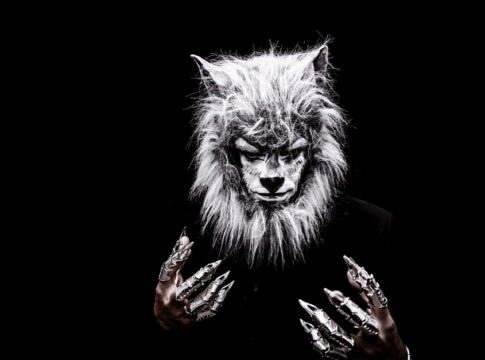
Werewolf Myths: How Hypertrichosis Created the Legend
By Trivia Daily, Staff Writer — Published August 23, 2026
Table of Contents
- Key Takeaways
- Werewolf Myths Hypertrichosis Connection: The Medical Reality
- Types and Causes: Beyond the Genetic Lottery
- From Fear to Fame: Historical Cases That Shaped Perception
- Why Werewolf Legends Stuck: Psychology Meets Biology
- Modern Understanding and Treatment
- Frequently Asked Questions
Imagine seeing someone covered in thick hair from head to toe in medieval Europe, when science couldn’t explain genetic anomalies. Terrified villagers might assume the worst: werewolf. The connection between werewolf myths hypertrichosis and ancient folklore reveals a surprisingly medical explanation for one of history’s most enduring monster legends. This rare genetic condition, which causes excessive hair growth across the body and face, likely inspired countless tales of humans transforming into beasts under the full moon.
The facts behind these myths are both amazing and sobering. People born with hypertrichosis faced persecution, exile, and sometimes execution because their appearance seemed to confirm supernatural fears. Yet this curiosity of nature also allowed some individuals to discover fame in traveling shows, turning a genetic difference into a livelihood during less enlightened times.
Key Takeaways
- Hypertrichosis is an extremely rare genetic condition causing abnormal hair growth across the body, affecting roughly one in a billion people for the most severe forms.
- Historical records document individuals with hypertrichosis being displayed in royal courts and accused of lycanthropy during the Middle Ages and Renaissance.
- The condition comes in two main types: congenital (present from birth) and acquired (developing later in life from various causes).
- Scientific understanding of hypertrichosis didn’t emerge until the 19th century, meaning centuries of sufferers faced superstition instead of medical care.
- Several famous cases throughout history helped transform public perception from fear to fascination, though stigma persisted well into modern times.
- Werewolf legends predate documented hypertrichosis cases, but the condition likely reinforced and spread existing folklore across cultures.
Werewolf Myths Hypertrichosis Connection: The Medical Reality
Hypertrichosis causes hair to grow in places and patterns not typical for age, sex, or ethnicity. The most dramatic form, congenital generalized hypertrichosis, covers nearly the entire body in thick hair, leaving only the palms and soles bare. This isn’t the fine, barely-visible vellus hair most people have on their bodies. We’re talking about terminal hair—the thick, pigmented type that grows on your scalp.
The genetic mutation responsible occurs on the X chromosome in many cases, though researchers have identified multiple genetic causes. Some forms run in families. Others appear spontaneously. The condition doesn’t affect intelligence, lifespan, or physical capabilities beyond the cosmetic impact of excessive hair growth. Yet throughout history, people with hypertrichosis faced assumptions that their appearance reflected an inner beast.
During the 16th and 17th centuries, European courts collected individuals with unusual physical traits. People with hypertrichosis were sometimes presented as “wild men” or living proof of transformation legends. The Gonzales family, documented in Renaissance portraits, traveled European courts for generations. Their distinctive appearance fascinated nobility while reinforcing werewolf folklore in the popular imagination.
Types and Causes: Beyond the Genetic Lottery
Not all hypertrichosis stems from genetics. Acquired forms can develop from various triggers, creating a spectrum of hair growth patterns and severity.
| Type | Cause | Characteristics |
|---|---|---|
| Congenital Generalized | Genetic mutation | Thick hair covering most of the body from birth |
| Congenital Localized | Genetic or developmental | Excessive hair in specific body regions |
| Acquired Generalized | Medications, illness, malnutrition | Develops later in life, may be reversible |
| Acquired Localized | Injury, inflammation, friction | Hair growth at specific sites of trauma |
Certain medications can trigger acquired hypertrichosis as a side effect. Drugs used to treat high blood pressure, immune disorders, and other conditions sometimes stimulate unexpected hair growth. Malnutrition, particularly anorexia nervosa, can paradoxically cause fine hair growth across the body as a protective response. These acquired forms usually reverse when the underlying cause is addressed.
From Fear to Fame: Historical Cases That Shaped Perception
The 19th century saw a shift in how people with hypertrichosis were perceived, at least in some circles. Rather than being hunted as monsters, some individuals found opportunities in entertainment, though this came with its own ethical complications.
Fedor Jeftichew, known professionally as Jo-Jo the Dog-Faced Boy, toured with P.T. Barnum’s circus in the late 1800s. Born in Russia with congenital hypertrichosis, he became one of the era’s most famous performers. While these exhibitions exploited physical differences, they also introduced the public to real people behind the hair, slowly eroding werewolf associations.
The Aceves family from Mexico represents one of the most documented modern cases. Multiple family members across several generations have been born with the condition, providing geneticists with valuable research opportunities. Their willingness to participate in studies has advanced scientific understanding considerably.
Why Werewolf Legends Stuck: Psychology Meets Biology
Werewolf mythology existed long before documented cases of hypertrichosis, appearing in ancient Greek, Roman, and Norse traditions. So why did this medical condition become so closely linked with the legends?
Human psychology plays a crucial role. Our brains are wired to recognize faces and human forms. When someone’s features are obscured by excessive hair, it triggers an uncanny valley response—they look almost human, but something seems wrong. In eras when supernatural explanations dominated, this discomfort translated into fear of the monstrous.
The full moon connection, while medically baseless, created narrative symmetry. Just as the moon transforms from crescent to full, werewolves supposedly transformed from human to beast. People with hypertrichosis didn’t actually change, but their constant “transformed” appearance fit the legend’s visual imagery perfectly.
Clinical lycanthropy, a separate psychiatric condition where patients believe they’re transforming into animals, may have also contributed to werewolf reports. This rare delusion has no connection to hypertrichosis but could have occurred in the same communities, blending distinct phenomena into a single legend.
Modern Understanding and Treatment
Today’s medical community recognizes hypertrichosis as a manageable condition rather than a curse. Treatment options focus on hair removal, since no cure exists for genetic forms. Laser hair removal, electrolysis, and depilatory creams offer varying degrees of success, though the hair typically returns.
Genetic counseling helps families understand inheritance patterns. For X-linked forms, affected fathers cannot pass the condition to sons, but all daughters will carry the gene. Female carriers may show mild symptoms or none at all. This knowledge allows families to make informed decisions, though the condition’s rarity means limited research funding.
Social acceptance has improved dramatically, though challenges remain. Internet connectivity has allowed people with rare conditions to find community and support. Organizations dedicated to rare diseases provide resources that weren’t available even a generation ago. The werewolf association, while not entirely gone from popular culture, no longer carries the same stigma or danger it once did.
Frequently Asked Questions
Is hypertrichosis the same as hirsutism?
No, they’re different conditions. Hirsutism causes excess hair growth in women following a male pattern (face, chest, back) due to hormonal imbalances, while hypertrichosis causes hair growth anywhere on the body regardless of sex and isn’t hormone-related.
Can hypertrichosis be cured?
Genetic forms have no cure, though hair can be temporarily removed through various methods. Acquired hypertrichosis may resolve if the underlying cause (medication, illness) is addressed, but this depends on the specific trigger and individual response.
How many people have hypertrichosis worldwide?
Congenital generalized hypertrichosis is extremely rare, with roughly 50 to 100 documented cases throughout recorded medical history. Localized and acquired forms are more common but still rare compared to most medical conditions.
Did werewolf trials ever execute people with hypertrichosis?
While historical records document werewolf trials and executions, direct evidence linking victims to hypertrichosis is scarce. The condition’s rarity means most accused “werewolves” likely suffered from mental illness, were victims of superstition, or were caught in political or religious persecution rather than having this specific genetic condition.
The next time you encounter a werewolf in fiction, remember the real people whose genetic difference helped shape the legend. Their stories remind us that monsters often emerge not from the supernatural, but from our failure to understand the natural variations in human biology. Science has finally caught up with compassion, transforming a curse into simply another thread in the rich tapestry of human diversity.