



1 / 10 Questions
0 Points

What ancient practice inspired modern military camouflage?

Cave painting

Theatrical makeup

Hunting disguises

Ceremonial dress

Points won
0
Correct score
0%

More Questions

11 Surprising Facts About Fungi Being Closer to Animals

Fungi classification reveals surprising links to animals rather than plants. Discover 11 scientific facts that explain why mushrooms are closer to you.

The Hidden Story of Fingerprints Being Unique to Koalas Too

Fingerprints unique to humans aren't so unique after all. Koalas share remarkably similar ridge patterns that even experts struggle to distinguish.

The Truth About Phoenix Myths Coming From Flamingo Sightings

Phoenix myths may have originated from ancient flamingo sightings. Discover how these vibrant birds inspired one of history's most enduring legends.

More Articles

Top 10 Oldest Things Still in Use

Top 10 Oldest Things Still in Use

⏱️ 7 min read

Top 10 Oldest Things Still in Use

Throughout human history, countless inventions, structures, and practices have come and gone, yet remarkably, some creations from our ancient past continue to serve their original purposes today. These enduring artifacts and institutions stand as testaments to human ingenuity and the timeless nature of certain innovations. From ancient architectural marvels to everyday objects, these ten oldest things still in use demonstrate that good design and solid construction can truly stand the test of time, surviving millennia while maintaining their relevance and functionality in our modern world.

1. The Pantheon in Rome (126 AD)

The Pantheon remains one of the best-preserved ancient Roman buildings and has been in continuous use for nearly 2,000 years. Originally built as a temple to all Roman gods, it was converted into a Christian church in 609 AD, which likely saved it from destruction. The building's massive concrete dome, still the world's largest unreinforced concrete dome, showcases Roman engineering prowess. Today, the Pantheon serves as both a functioning church and one of Rome's most visited tourist attractions, hosting religious services and serving as a burial place for important Italian figures, including the artist Raphael.

2. The University of Al Quaraouiyine (859 AD)

Located in Fez, Morocco, the University of Al Quaraouiyine holds the Guinness World Record as the oldest existing, continually operating educational institution in the world. Founded by Fatima al-Fihri, a young princess from Tunisia, it began as a mosque and gradually developed into one of the leading spiritual and educational centers of the Muslim world. For over 1,100 years, it has continuously provided education to students, initially focusing on Islamic studies and Arabic grammar, and later expanding to include mathematics, astronomy, medicine, and philosophy. The university still operates today, maintaining its commitment to education while preserving its historical significance.

3. The Crypt of the Capuchins in Rome (1631 AD)

While not as ancient as some entries on this list, the Crypt of the Capuchins represents a unique and continuously used burial site that has maintained its original purpose for nearly 400 years. The crypt contains the skeletal remains of 3,700 bodies of Capuchin friars, artistically arranged in elaborate decorative patterns throughout five small chapels. This ossuary beneath Santa Maria della Concezione dei Cappuccini church remains an active place of reflection and prayer, reminding visitors of mortality while continuing to serve its spiritual purpose as intended by its creators.

4. The Aqueduct of Segovia (98 AD)

This magnificent Roman aqueduct in Spain transported water for nearly 2,000 years, only ceasing operation in the late 19th century for its original purpose. However, it remains "in use" as a functioning historical monument and the symbol of Segovia. The aqueduct's 167 arches stretch over 800 meters and stand up to 28 meters tall at its highest point, constructed without any mortar—just perfectly fitted granite blocks. While no longer carrying water, the structure continues to inspire architects and engineers worldwide, demonstrating Roman engineering excellence and serving as a vital part of the city's infrastructure as a tourist landmark and cultural icon.

5. The Door of the Basilica di San Lorenzo Fuori le Mura (Pre-13th Century)

Some of the oldest working doors in the world can be found at various churches throughout Europe, with notable examples at the Basilica di San Lorenzo Fuori le Mura in Rome. These ancient wooden doors, some dating back over 1,800 years, continue to swing open and closed, welcoming worshippers just as they have for centuries. The longevity of these doors speaks to the quality of craftsmanship and the durability of properly maintained wood. These portals serve not only as functional entryways but also as tangible connections to the countless generations who have passed through them.

6. The Tower of Hercules Lighthouse (1st Century AD)

Standing proudly on the coast of Galicia, Spain, the Tower of Hercules is the oldest lighthouse still in use today. Built by the Romans in the 1st century AD, this 55-meter tall structure has been guiding ships safely to shore for approximately 1,900 years. While the lighthouse has undergone various renovations and modifications over the centuries, including a major restoration in the 18th century, its Roman core remains intact. The tower was designated a UNESCO World Heritage Site in 2009 and continues to operate as a fully functional lighthouse, making it an extraordinary example of ancient engineering that still serves its original purpose.

7. The Jeweled Ceiling of the Basilica di Santa Maria Maggiore (5th Century)

While the entire Basilica di Santa Maria Maggiore in Rome dates to the 5th century and remains in active use as a papal basilica, its stunning coffered ceiling is particularly noteworthy. Gilded with some of the first gold brought back from the Americas, the ceiling has been continuously admired by worshippers and visitors for over 1,500 years. The basilica itself has never closed and continues to hold daily masses, making it one of the oldest churches in continuous operation, housing some of the oldest Christian art and architecture still serving their original devotional purposes.

8. The Pont du Gard Aqueduct (1st Century AD)

This ancient Roman aqueduct bridge in southern France, built in the 1st century AD, stands as one of the best-preserved Roman monuments. While it no longer carries water as originally intended, the structure remains very much "in use" as a bridge and vital historical monument. For centuries after the fall of the Roman Empire, locals continued to use the lower tier as a bridge to cross the Gardon River, and pedestrians still walk across its span today. The Pont du Gard serves as an educational resource, tourist destination, and testament to Roman hydraulic engineering, demonstrating how ancient infrastructure can adapt to serve new purposes across millennia.

9. The Baths of Caracalla's Underground System (216 AD)

While the grand Roman baths no longer function as a bathing complex, parts of the underground heating and water system (hypocaust) have been studied and some elements remain intact and observable, serving educational purposes. More significantly, the ancient venue has been repurposed and is still "in use" as a spectacular summer opera venue, with the Rome Opera performing within these ancient walls. This adaptive reuse allows the structure to continue serving the public, albeit in a dramatically different capacity than originally intended, showing how ancient spaces can evolve while maintaining their public service mission.

10. The Caravan Bridge at Izmir (850 BC)

Turkey's ancient stone bridges represent some of the oldest continuously used infrastructure in the world. While many ancient bridges exist, several in Turkey that date back thousands of years continue to carry foot traffic and, in some cases, even light vehicle traffic. These bridges, originally built to facilitate trade routes, particularly the caravan bridge near Izmir that dates to approximately 850 BC, demonstrate exceptional engineering that has withstood earthquakes, floods, and the passage of time. Their continued use underscores the sophistication of ancient civil engineering and the durability of well-planned stone construction.

Conclusion

These ten remarkable examples of humanity's oldest creations still in use today demonstrate that exceptional craftsmanship, thoughtful design, and solid engineering can transcend time. From the continuously operating University of Al Quaraouiyine to the still-functioning Tower of Hercules lighthouse, from Rome's eternally open Pantheon to ancient bridges still bearing traffic, these structures and institutions connect us directly to our ancestors. They serve as reminders that while technology and societies evolve, fundamental human needs for education, spiritual connection, infrastructure, and community gathering spaces remain constant. These ancient marvels continue to enrich our lives, proving that the best innovations are not merely products of their time but timeless gifts to future generations.
Why Sloths Descend Trees to Defecate: The Predator Risk

Why Sloths Descend Trees to Defecate: The Predator Risk

Why Sloths Descend Trees to Defecate: The Predator Risk

By Trivia Owl, Animals Desk — Published August 27, 2026

Table of Contents

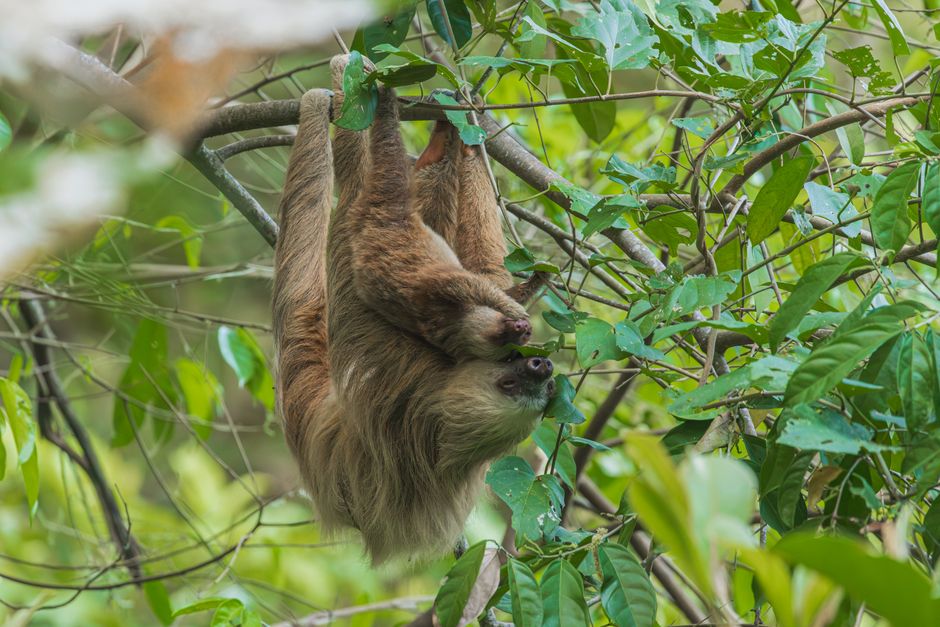
Once a week, sloths descend trees to perform one of nature's most puzzling rituals. They climb down from the safety of the canopy, dig a small hole at the base of their tree, defecate, cover it up, and slowly climb back to their arboreal home. This behavior seems suicidal for a creature that moves at glacial speeds and faces numerous predators on the ground. So why do these gentle animals risk their lives for a bathroom break they could easily take from the branches above?

The mystery deepens when you consider the numbers. Roughly half of all sloth deaths occur during these weekly descents. Jaguars, ocelots, and harpy eagles all prey on sloths, and the forest floor offers no escape route for an animal that can barely move faster than a few feet per minute. Yet despite this enormous predator risk, sloths have maintained this behavior for millions of years, suggesting the benefits must outweigh the deadly costs.

Key Takeaways

  • Sloths descend trees approximately once per week to defecate at the base of their preferred tree, despite moving extremely slowly on the ground.
  • About half of all sloth deaths in the wild occur during these risky toilet trips, making it one of the most dangerous activities in their lives.
  • The behavior likely supports a symbiotic relationship with moths that live in sloth fur and provide nitrogen-rich algae as camouflage and nutrition.
  • Three-toed sloths can store up to 30% of their body weight in feces before descending, reducing the frequency of dangerous ground visits.
  • Sloths move so slowly that algae grows on their fur, creating a miniature ecosystem that includes moths, beetles, and other organisms.
  • The energy cost of descending and climbing back up can represent a significant portion of a sloth's extremely low daily caloric budget.

Why Sloths Descend Trees Instead of Defecating From Above

The most compelling explanation involves a three-way partnership between sloths, moths, and algae. Sloth fur hosts a unique species of moth that depends entirely on sloth dung for reproduction. When a sloth descends to defecate, female moths leave the fur, lay their eggs in the fresh feces, then return to the sloth. The moth larvae develop in the dung pile, and adult moths eventually fly up to find a new sloth host.

This seems like a poor trade for the sloth until you examine what the moths provide in return. Dead moths and moth waste add nitrogen to the sloth's fur, which fertilizes the algae gardens growing there. This algae serves dual purposes: it camouflages sloths from predators and provides supplemental nutrition when sloths groom themselves. Chemical analysis of sloth fur has revealed significantly higher nitrogen levels in species that descend to defecate compared to those that don't.

The behavior creates a closed-loop ecosystem. Sloths fertilize specific trees with their nutrient-rich waste, potentially encouraging the growth of their preferred food sources. The trees benefit from concentrated fertilizer deposits. Moths get a breeding ground. Algae gets nitrogen. And sloths get better camouflage and extra calories from algae consumption. Every participant wins, as long as the sloth survives the climb down and back up.

The Metabolic Mystery of Sloth Bathroom Habits

Sloths possess the slowest metabolic rate of any mammal their size. Their digestive system works so gradually that food can take up to a month to pass through their four-chambered stomach. This extraordinarily slow digestion means sloths only need to defecate about once every five to seven days, but it also means they're carrying a substantial load.

Before descending, a sloth may be hauling around feces and urine equivalent to nearly one-third of its total body weight. Imagine carrying a backpack that heavy while climbing down a tree in slow motion with predators watching. The physical relief must be considerable, but the energy expenditure is equally significant. A single toilet trip can consume up to 8% of a sloth's daily energy budget, which is enormous for an animal that conserves every possible calorie.

Their slow metabolism ties directly to their diet of leaves, which provides minimal nutritional value. Sloths have adapted by doing almost nothing, maintaining low body temperatures, and moving only when absolutely necessary. Descending for bathroom breaks contradicts this entire survival strategy, which makes the behavior even more remarkable.

Comparing Ground Vulnerability Across Sloth Species

Species Defecation Behavior Ground Speed Primary Predator Risk
Three-toed sloth Descends to tree base weekly Approximately 0.15 mph High (jaguars, ocelots)
Two-toed sloth Often defecates from canopy Approximately 0.17 mph Moderate (mainly aerial predators)
Pygmy three-toed sloth Descends to mangrove roots Similar to three-toed Lower (island habitat, fewer predators)

The differences between species reveal how habitat shapes behavior. Two-toed sloths frequently defecate from the trees, suggesting their ecological niche doesn't require the same moth-algae relationship. Three-toed sloths, however, demonstrate remarkable fidelity to their toilet trees, often returning to the same spot repeatedly. This creates concentrated fertilizer deposits that may influence which trees thrive in their territory.

The Predator Gauntlet: What Hunts Sloths on the Ground

When a sloth reaches the forest floor, it enters a world designed to kill slow-moving creatures. Jaguars are ambush predators with bite forces strong enough to crush skulls, and they've learned to watch for descending sloths. Ocelots, though smaller, are equally deadly to a defenseless sloth. Even large snakes pose a threat.

On the ground, sloths can't flee. Their long claws, perfectly adapted for hanging from branches, make walking nearly impossible. They pull themselves forward in an awkward, dragging motion that wouldn't outpace a human crawl. If detected by a predator, a sloth's only defense is to slash with its claws, which can inflict serious wounds but rarely deters a determined jaguar.

Harpy eagles present danger both in trees and on the ground. These massive raptors can pluck a sloth from branches, but sloths are most vulnerable during their slow climb down and back up. The entire toilet expedition can take 30 minutes or more, creating an extended window of extreme vulnerability. That sloths continue this ritual despite such odds suggests evolutionary pressures have locked in the behavior over millions of years.

The Sloth's Fur Ecosystem and Camouflage Strategy

Sloth fur grows in the opposite direction of most mammals, pointing from belly to back. This allows rain to run off efficiently when the sloth hangs upside down. The grooved hair structure creates perfect channels for algae growth, turning sloths into mobile gardens. During the rainy season, sloths can appear distinctly greenish, blending remarkably well with the foliage.

This living camouflage hosts an entire community. Scientists have identified dozens of species living in sloth fur, including beetles, mites, ticks, and the specialized moths. The moths, particularly species in the genus Cryptoses, have evolved to depend entirely on sloths. They cannot complete their life cycle without access to sloth dung, creating an obligate relationship that may explain why sloths continue their dangerous descents.

The algae provides more than camouflage. Analysis shows sloths occasionally lick their fur, ingesting algae that contains lipids and other nutrients not present in their leaf diet. This supplemental nutrition, however minor, might provide essential fatty acids or other compounds that improve digestive efficiency or immune function. For an animal living on such thin energetic margins, even small nutritional boosts matter.

Frequently Asked Questions

How often do sloths poop?

Sloths typically defecate once every five to seven days due to their extremely slow metabolism and digestive process. Before descending, they may be carrying fecal matter equal to about 30% of their body weight.

Can sloths defecate while hanging in trees?

Two-toed sloths sometimes defecate from the canopy, but three-toed sloths almost always descend to ground level to perform their toilet ritual at the base of a tree. The reasons for this species difference remain under scientific investigation.

What is the biggest threat to sloths on the ground?

Jaguars and ocelots pose the greatest predator risk to sloths during their ground descents. Studies suggest approximately half of all sloth deaths occur during these weekly toilet trips, making it the most dangerous regular activity in their lives.

Do all sloth species have moths living in their fur?

Sloth fur moths are found primarily on three-toed sloths that descend to defecate. These moths depend on sloth dung to complete their reproductive cycle, creating a symbiotic relationship that may explain why sloths risk predation to fertilize specific trees.

The weekly descent of sloths represents one of nature's most puzzling gambles, where creatures that evolved to minimize every movement risk everything for a bathroom break. Whether driven by an ancient partnership with moths, nutritional benefits from fur algae, or tree fertilization strategies we're only beginning to understand, this behavior reminds us that evolution crafts solutions far stranger than we might imagine. Next time you marvel at a sloth's leisurely pace, remember that once a week, they bet their lives on a trip to the toilet.