
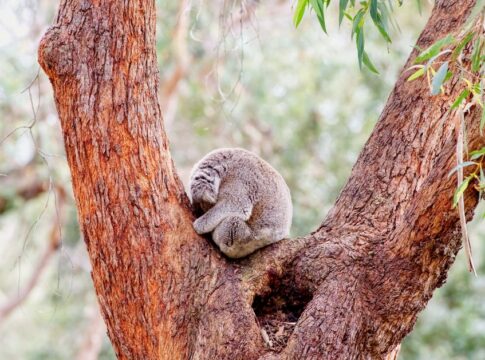
The Hidden Story of Why Koalas Sleep 22 Hours Every Day
By Trivia Owl, Animals Desk — Published November 24, 2026
Table of Contents
- Key Takeaways
- The Hidden Story Koalas Tell Through Their Diet
- The Science Behind Extreme Sleepiness
- Evolutionary Adaptations and Survival Strategies
- Comparing Sleepy Animals
- Frequently Asked Questions
Among the world’s sleepiest creatures, the koala reigns supreme. These iconic Australian marsupials spend an astonishing 22 hours each day in slumber, making them one of nature’s most dedicated nappers. The hidden story koalas carry in their drowsy lifestyle isn’t about laziness—it’s a remarkable evolutionary adaptation to one of the most nutritionally poor diets in the animal kingdom. Understanding why these fuzzy tree-dwellers need so much rest reveals a fascinating tale of survival, energy conservation, and the unique challenges of life in the eucalyptus canopy.
What appears as extreme lethargy is actually an ingenious strategy. Koalas have evolved to thrive on eucalyptus leaves, a food source so toxic and low in nutrients that few other species can digest it. This dietary choice has shaped every aspect of their behavior, from their minimal movement to their extraordinary sleep patterns, creating one of wildlife’s most intriguing metabolic adaptations.
Key Takeaways
- Koalas sleep 18 to 22 hours daily to conserve energy from their extremely low-calorie eucalyptus diet
- Eucalyptus leaves provide minimal nutrition and contain toxic compounds that require significant energy to detoxify
- Koalas possess specialized digestive systems with the longest relative cecum of any mammal to break down fibrous leaves
- Their low metabolic rate—about half that of most mammals—is an evolutionary adaptation to energy scarcity
- Despite sleeping most of the day, koalas remain alert to environmental threats and communicate with other individuals
- Climate change and habitat loss threaten koala populations by reducing the quality and availability of eucalyptus forests
The Hidden Story Koalas Tell Through Their Diet
1. Eucalyptus Leaves Are Essentially Poisonous
Eucalyptus leaves contain phenolic compounds and terpenes that are toxic to most animals. These chemical defenses evolved to protect eucalyptus trees from herbivores, making the leaves indigestible and dangerous to nearly every creature except koalas. The species has developed a highly specialized liver capable of detoxifying these compounds, but the process demands enormous metabolic energy. This detoxification work happens primarily while koalas sleep, allowing their bodies to safely process the day’s meals without expending energy on movement or activity.
2. A Diet With Almost No Nutritional Value
Eucalyptus leaves provide roughly half the calories of most other plant material that herbivores consume. The leaves consist mainly of indigestible fiber with minimal protein, fat, or readily available carbohydrates. A koala must consume between 200 and 500 grams of leaves daily just to meet its basic energy requirements. By comparison, animals of similar size eating more nutritious vegetation need far less food to sustain themselves, highlighting just how challenging the koala’s dietary choice truly is.
3. The Longest Digestive Organ in Mammalian Biology
Koalas possess a cecum—a specialized pouch in the digestive tract—that measures up to 2.4 meters long, making it the longest relative to body size of any mammal. This organ houses millions of bacteria that ferment eucalyptus fiber, slowly breaking it down over several days. The fermentation process is time-consuming and energy-intensive, requiring the koala to remain relatively motionless while digestion occurs. This extraordinary digestive adaptation is central to why the animals need such extended rest periods.
4. Metabolic Rate Cut Nearly in Half
The koala’s basal metabolic rate operates at approximately 50 percent of what would be expected for a mammal of its size. This dramatic reduction in metabolism means the animal burns calories at an exceptionally slow pace, allowing it to survive on its meager diet. The tradeoff is that koalas lack energy for sustained activity, complex behaviors, or rapid movement. Their bodies have essentially chosen energy conservation over nearly every other biological priority.
5. Brain Size Sacrificed for Survival
Koalas have unusually small brains for their body size, with the brain occupying only about 60 percent of the cranial cavity. The remaining space is filled with cerebrospinal fluid. Brain tissue is metabolically expensive to maintain, requiring significant energy even at rest. By reducing brain size, koalas decrease their baseline energy expenditure, freeing up precious calories for digestion and detoxification. This represents one of nature’s stark examples of evolutionary compromise.
6. Temperature Regulation Through Stillness
During hot Australian summers, koalas conserve water and energy by remaining motionless in tree forks, pressing their bodies against cooler bark. This behavior, combined with their extended sleep, helps them avoid heat stress without expending energy on panting or seeking water sources. Koalas rarely drink, obtaining most moisture from eucalyptus leaves themselves, which contain roughly 50 percent water by weight.
The Science Behind Extreme Sleepiness
7. Sleep Phases Match Digestive Cycles
Koala sleep patterns align closely with their digestive processes. After feeding for a few hours—typically at night or during dawn and dusk—koalas enter extended rest periods while their gut bacteria work to ferment the fibrous leaves. The animal’s sleep serves as a protective mechanism, ensuring they don’t waste energy on movement while their bodies struggle to extract nutrients from difficult-to-digest food.
8. Selective Feeding Demands Mental Energy
Not all eucalyptus leaves are created equal. Koalas carefully select specific eucalyptus species and even particular leaves on individual trees, choosing those with lower toxin concentrations and higher nitrogen content. This selection process requires sensory processing and decision-making that, while brief, consumes mental energy. The animals compensate by sleeping immediately after feeding sessions.
9. Minimal Muscle Mass Reduces Energy Needs
Koalas have relatively low muscle mass compared to other mammals of similar size. Muscle tissue requires constant energy to maintain, even during rest. By minimizing muscle development, koalas further reduce their baseline metabolic demands. Their movement capabilities are limited to slow climbing and short walks between trees, but this limitation is an acceptable tradeoff for survival on their challenging diet.
10. Nighttime Activity Windows
The few hours koalas spend awake typically occur at night when temperatures are cooler and moisture loss through respiration is minimized. During these brief active periods, koalas feed, move between trees, and engage in social behaviors like vocalizations. The rest of their time—the vast majority—is spent in various states of rest and sleep, from light dozing to deep slumber.
Evolutionary Adaptations and Survival Strategies
11. Competition Avoidance Through Specialization
By evolving to eat eucalyptus leaves, koalas eliminated competition from other herbivores. This ecological niche specialization gave them exclusive access to an abundant food resource across Australia’s vast eucalyptus forests. The tradeoff was developing extreme physiological adaptations, including their legendary sleepiness, but the strategy proved successful for millions of years.
12. Predator Avoidance Through Height
Spending nearly all their time high in eucalyptus trees provides koalas with natural protection from ground-based predators. Their sedentary lifestyle means they rarely descend, minimizing exposure to threats. When they do sleep, they wedge themselves securely into tree forks, remaining safely elevated even in deep slumber. This arboreal existence is both their feeding strategy and their primary defense mechanism.
13. Water Conservation Through Reduced Activity
Australia’s climate can be harsh and dry, making water conservation critical. By sleeping most of the day, koalas dramatically reduce water loss through respiration and perspiration. Their scientific name, Phascolarctos cinereus, was once thought to mean “doesn’t drink,” though koalas do occasionally drink when water is available. Their primary hydration comes from the moisture content in eucalyptus leaves, supplemented by their energy-conserving lifestyle.
14. Fur Insulation Supports Temperature Regulation
Koalas possess dense, woolly fur that provides excellent insulation, helping them maintain body temperature without expending metabolic energy. The fur is thicker on their backs and rumps—the areas most exposed while sitting in trees—and helps them tolerate temperature variations while remaining motionless for extended periods. This passive temperature regulation complements their low-energy lifestyle.
Comparing Sleepy Animals
| Animal | Hours of Sleep per Day | Primary Reason |
|---|---|---|
| Brown Bat | 20 hours | High metabolic rate during flight requires extensive rest |
| Koala | 18-22 hours | Low-nutrition diet and energy-intensive detoxification |
| Sloth | 15-20 hours | Extremely slow metabolism and low-calorie leaf diet |
| Giant Armadillo | 18 hours | Nocturnal lifestyle and energy conservation |
| Python | 18 hours | Extended digestion of large prey items |
15. Social Behavior in Brief Active Windows
During their limited waking hours, koalas engage in surprisingly complex social behaviors. Males produce loud bellowing calls that can carry over a kilometer, advertising their presence to females and warning rival males. These vocalizations require significant energy expenditure, which is why they’re reserved for specific times during breeding season and performed only during brief active periods.
16. Maternal Energy Investment
Female koalas with young joeys face even greater energy demands. Mothers must produce milk while maintaining their own energy reserves on their poor diet. Joeys remain in the pouch for about six months, then ride on their mother’s back for several more months. During this time, mothers may sleep even more than usual to compensate for the additional caloric burden of reproduction.
17. Climate Change Impacts on Sleep Patterns
Rising temperatures and changing rainfall patterns affect eucalyptus leaf quality and water content. As climate conditions shift, koalas may need to expend more energy seeking suitable leaves or accessing water sources, potentially disrupting their finely-tuned energy balance. Conservation biologists are studying whether habitat changes might force koalas to alter their traditional sleep patterns, which could have cascading effects on their survival.
18. Habitat Fragmentation Forces Movement
When eucalyptus forests are cleared or fragmented, koalas must travel on the ground between tree patches, exposing them to predators and vehicles while burning precious energy. These forced movements can disrupt their normal rest cycles and increase stress, demonstrating how habitat loss threatens not just koala numbers but the fundamental behavioral patterns that have allowed the species to thrive.
19. Disease Susceptibility and Immune Function
Koala populations face threats from diseases like chlamydia, which can cause blindness, infertility, and death. Their low-energy lifestyle and reduced immune system activity—a consequence of minimal metabolic resources—may make them more vulnerable to infections. Sleep itself provides some immune benefits, but the koala’s extreme rest requirements reflect energy scarcity rather than optimal health maintenance.
20. Genetic Adaptations for Toxin Processing
Recent genetic studies have identified specific genes that enable koalas to detect and process eucalyptus toxins. These genetic adaptations are found in taste receptors, liver enzymes, and digestive bacteria, all working together to make the koala’s extreme dietary specialization possible. Understanding these genetic mechanisms helps scientists appreciate the evolutionary journey that led to the koala’s remarkable sleep requirements.
21. Conservation Status and Population Decline
Koala populations have declined significantly across much of their range, with the species listed as vulnerable. Habitat loss, climate change, disease, and vehicle strikes all threaten their survival. Conservation efforts focus on protecting eucalyptus forests and creating wildlife corridors, recognizing that koalas need large, connected habitats to maintain their specialized lifestyle. Their extreme sleep requirements mean they’re particularly sensitive to environmental disturbances.
22. The Evolutionary Future of Koalas
Koalas represent an evolutionary endpoint—a species so specialized that it has limited capacity to adapt to rapid environmental change. Their extreme sleep patterns, while successful for millions of years, leave little room for behavioral flexibility. As Australia’s climate and forests continue to change, the question remains whether these iconic sleepers can adjust quickly enough to survive, or whether their remarkable adaptations will ultimately prove too specialized for a rapidly changing world.
Frequently Asked Questions
Do koalas really sleep 22 hours every single day?
Koalas sleep between 18 and 22 hours daily, with the exact amount varying based on age, season, and food quality. Younger koalas and those with access to higher-quality eucalyptus leaves may sleep slightly less, while older individuals or those in poor habitats may sleep at the upper end of this range.
Are koalas actually drunk or high from eucalyptus leaves?
No, this is a common myth. Koalas are not intoxicated by eucalyptus; they’re simply conserving energy due to their low-nutrition diet. The leaves do contain compounds that are toxic to most animals, but koalas have evolved to safely process these chemicals through specialized liver enzymes and digestive bacteria.
Can koalas survive on any type of eucalyptus tree?
Koalas are selective feeders, preferring certain eucalyptus species over others. Of the more than 600 eucalyptus species in Australia, koalas regularly eat only about 30 species and have strong preferences for specific trees within those species. They select leaves based on toxin levels, moisture content, and nutritional value.
Why don’t koalas evolve to eat more nutritious food?
Evolution doesn’t work backward easily. Koalas have invested millions of years developing highly specialized adaptations for eucalyptus consumption, including unique digestive systems, detoxification abilities, and behavioral patterns. Switching to a different food source would require equally dramatic evolutionary changes, and their current specialization eliminates competition from other herbivores, providing a survival advantage despite the challenges.
The next time you see a koala dozing in a tree, remember that what looks like laziness is actually one of nature’s most sophisticated survival strategies. These sleepy marsupials have turned energy conservation into an art form, proving that sometimes doing less—much less—is the key to thriving in a challenging world.