









1 / 10 Questions
0 Points

What cereal contains so much iron you can extract it with a magnet?

Total cereal

Lucky Charms

Cheerios

Corn Flakes

Points won
0
Correct score
0%

More Questions

The Hidden Story of Why Lobsters Were Once Prison Food

Lobster history reveals these luxury shellfish were so abundant they fed prisoners and fertilized fields. Discover how perception transformed poverty

The Hidden Story of Why Cats Cannot Taste Sweet Flavors

Cat taste buds lack sweet receptors due to a genetic mutation that changed feline evolution. Discover the fascinating science behind this unique trait.

The Truth About Werewolves Based on Rabies Outbreaks

Werewolves rabies connection reveals how medieval disease outbreaks created legendary monsters. Discover the symptoms that sparked centuries of folklore.

More Articles

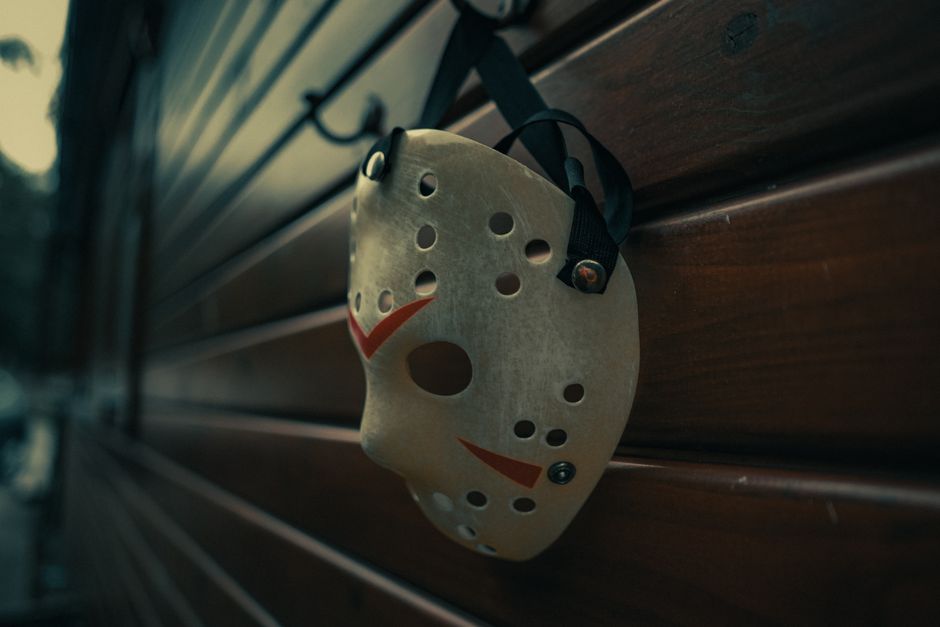
Why Friday the 13th Became Unlucky: The History Revealed

Why Friday the 13th Became Unlucky: The History Revealed

Why Friday the 13th Became Unlucky: The History Revealed

By Trivia Owl, Staff Writer — Published October 1, 2026

Table of Contents

Friday the 13th grips the modern imagination like few other superstitions. Millions avoid travel, refuse to sign contracts, or simply stay home when the calendar aligns this way. Yet this particular combination of day and number only became widely feared in the 20th century. The surprising truth? The origins blend medieval Christian tradition, Norse mythology, ancient numerology, and a bestselling novel that cemented the date in popular culture. Discover how friday 13th became the Western world's most infamous unlucky day through a fascinating mix of history, literature, and collective psychology.

The story spans centuries and continents, weaving together real historical events with mythological tales that have been embellished over time. What began as separate superstitions about Fridays and the number 13 eventually merged into the phenomenon we recognize today.

Key Takeaways

  • Friday and the number 13 were considered unlucky separately for centuries before combining in modern times
  • The Christian tradition associates Friday with the Crucifixion, while 13 relates to the Last Supper's attendees
  • Norse mythology contributed to Friday's negative reputation through the tale of Loki as the 13th guest
  • A 1907 novel titled "Friday, the Thirteenth" popularized the specific date's unlucky reputation
  • The superstition costs the U.S. economy an estimated hundreds of millions annually due to avoided travel and business
  • Roughly 17 to 21 million Americans experience friggatriskaidekaphobia, the clinical fear of Friday the 13th

How Friday the 13th Became Unlucky: 13 Historical Facts

1. Christianity Marked Friday as the Day of Crucifixion

Christian tradition holds that Jesus Christ was crucified on a Friday, forever casting a shadow over the sixth day of the week. Medieval Christians observed Friday as a day of fasting and penance, avoiding celebrations and major undertakings. This association with death and suffering laid the groundwork for Friday's negative reputation in Western culture, though the day itself wasn't universally feared until much later.

2. The Last Supper Seated 13 Guests at the Table

Biblical accounts describe 13 people present at the Last Supper: Jesus and his 12 apostles. Judas Iscariot, who betrayed Jesus, was often counted as the 13th guest. This connection between the number 13 and betrayal leading to death strengthened the number's unlucky associations in Christian societies. The superstition extended to dinner parties, where hosting 13 guests was considered particularly ominous.

3. Norse Mythology Added Another Layer to the Number 13

According to Norse legend, 12 gods gathered for a feast in Valhalla when Loki, the trickster god, arrived uninvited as the 13th guest. Loki arranged for the blind god Höðr to kill Balder the Beautiful with a mistletoe arrow, plunging the world into darkness and mourning. This myth reinforced the idea that a 13th guest brings disaster, though scholars debate how much this actually influenced later Christian superstitions.

4. Medieval Hangings Traditionally Occurred on Fridays

Throughout medieval Europe and colonial America, public executions commonly took place on Fridays. The practice gave the day an association with death and bad fortune that permeated popular consciousness. Condemned prisoners spent their final nights in cells, knowing Friday morning would bring the gallows. This grim tradition reinforced Friday's reputation as an unlucky day for new ventures.

5. The Knights Templar Faced Arrest on Friday, October 13, 1307

King Philip IV of France ordered the mass arrest of Knights Templar on Friday, October 13, 1307. Hundreds of knights were seized, tortured, and eventually executed on charges of heresy. While this historical event is frequently cited as the origin of Friday the 13th superstition, historians note that the date's unlucky reputation didn't become widespread until centuries later. The Templar connection appears to be a modern retroactive association rather than the true origin.

6. Ancient Numerology Favored 12 Over 13

Many ancient cultures considered 12 a number of completeness: 12 months, 12 zodiac signs, 12 hours, 12 tribes of Israel, 12 Olympian gods. The number 13 disrupted this perfect dozen, creating a sense of imbalance and irregularity. Mathematically, 12 is highly divisible, while 13 is prime and awkward. This mathematical "wrongness" contributed to 13's negative perception across various cultures.

7. A 1907 Novel Popularized the Specific Date

Thomas W. Lawson published "Friday, the Thirteenth" in 1907, a novel about a stockbroker who manipulates Wall Street on that date to create chaos. The bestselling book brought the specific combination of Friday and 13 into mainstream conversation. Before this novel, references to "Friday the 13th" as a uniquely unlucky date were rare in literature and journalism. Lawson's work marked a turning point in the superstition's cultural prominence.

8. The 20th Century Saw Superstition Spread Through Media

Newspapers, radio programs, and eventually television amplified Friday the 13th superstitions throughout the 1900s. Journalists published stories about accidents and misfortunes occurring on the date, creating a feedback loop of confirmation bias. The 1980 horror film "Friday the 13th" and its numerous sequels cemented the date in popular culture as synonymous with bad luck and danger, though the film itself didn't create the superstition.

9. The Fear Has a Clinical Name: Friggatriskaidekaphobia

Psychologists recognize friggatriskaidekaphobia as a specific phobia combining "Frigg" (the Norse goddess for whom Friday is named), "triskaideka" (Greek for thirteen), and "phobia" (fear). People with this condition experience genuine anxiety on Friday the 13th, sometimes severe enough to interfere with daily activities. The related fear of the number 13 alone is called triskaidekaphobia and affects building floor numbering, airline seat rows, and hotel room designations worldwide.

10. Economic Impact Reaches Into the Millions

The Stress Management Center and Phobia Institute estimates that Friday the 13th costs the American economy between $800 and $900 million annually. Businesses report decreased air travel, reduced shopping activity, and postponed weddings and major purchases. Whether this economic impact stems from genuine fear or simply people using the date as an excuse to delay decisions remains debated among economists and psychologists.

11. The Calendar Creates One to Three Friday the 13ths Annually

Mathematical certainty dictates that every year contains at least one Friday the 13th, with a maximum of three. The 13th falls on Friday when the month begins on Sunday. This happens in a predictable pattern determined by the Gregorian calendar's structure and leap year cycle. Months separated by exactly 28 days will share the same day-date combinations, creating patterns that superstitious observers track carefully.

12. Many Cultures Consider Friday or 13 Lucky

The superstition remains largely confined to Western cultures with Christian heritage. In Spanish-speaking countries, Tuesday the 13th carries similar unlucky associations. Italian culture traditionally feared Friday the 17th instead. Some cultures view 13 positively: in Italy, 13 is considered fortunate, and in Judaism, 13 signifies the age of maturity and responsibility. These cultural variations reveal how arbitrary superstitious associations truly are.

13. Scientific Studies Find No Actual Increase in Misfortune

Multiple statistical analyses have examined accident rates, hospital admissions, and insurance claims on Friday the 13th compared to other Fridays. The overwhelming conclusion: no significant difference exists. A Dutch study published in the British Medical Journal found fewer accidents on Friday the 13th, possibly because anxious people stay home and drive less. The superstition persists despite zero empirical evidence supporting it, demonstrating the power of cultural belief over statistical reality.

The Cultural Evolution of Superstition

Superstitions evolve like living organisms, adapting to new media and cultural contexts. Friday the 13th demonstrates how separate folk beliefs can merge into something greater than their parts. The Christian associations with Friday and 13 provided fertile ground, but the superstition needed mass media to truly flourish. Print journalism in the early 20th century gave people a shared cultural reference point, while later film and television transformed the date into a commercial brand.

The persistence of Friday the 13th superstition reveals something fundamental about human psychology. Pattern-seeking brains naturally connect coincidences, especially negative ones. When something unfortunate happens on Friday the 13th, confirmation bias makes it memorable. The countless uneventful Friday the 13ths fade from memory. This selective recall perpetuates the superstition across generations, even among people who claim not to believe in it.

Comparing Friday the 13th Superstitions Worldwide

Country/Region Unlucky Date Cultural Origin
United States, UK, Canada Friday the 13th Christian tradition, 20th-century media
Spain, Latin America Tuesday the 13th Associated with Mars, god of war
Italy, Greece Friday the 17th Roman numeral XVII rearranges to "VIXI" (I have lived/I am dead)
China 4th of any month Word for "four" sounds like "death"

Frequently Asked Questions

When did Friday the 13th first become associated with bad luck?

While Friday and the number 13 were separately considered unlucky for centuries, their specific combination gained widespread recognition in the early 20th century, particularly after Thomas W. Lawson's 1907 novel. The superstition achieved full cultural saturation by mid-century through newspapers and popular media.

How many Friday the 13ths occur each year?

Every year has at least one Friday the 13th, with a maximum of three. The specific number depends on which day of the week January 1st falls and whether the year is a leap year. On average, Friday the 13th occurs about 1.7 times per year.

Is there any scientific evidence that Friday the 13th is actually unlucky?

No credible scientific studies have found increased accidents, injuries, or misfortunes on Friday the 13th compared to other Fridays. Statistical analyses consistently show the date is no more dangerous than any other day, though the superstition's economic impact is measurable and real.

Why do some buildings skip the 13th floor?

Triskaidekaphobia, the fear of the number 13, leads many architects and building managers to skip from the 12th to 14th floor in numbering. This practice became common in early 20th-century America and continues today, though the 13th floor physically exists—it's simply labeled differently to avoid superstitious concerns from tenants.

The next time Friday the 13th arrives, remember that its fearsome reputation is remarkably recent—a cultural construction built from ancient fragments but assembled in living memory. Perhaps the real surprise isn't that people fear this date, but that a superstition so young has achieved such remarkable cultural power in an age of science and reason.
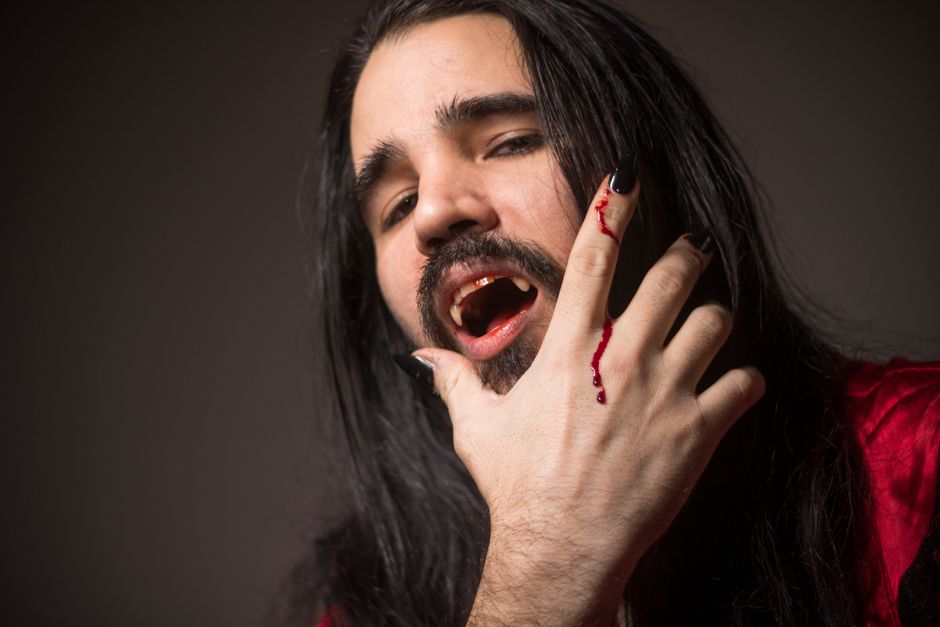
Vampire Legends: 9 Surprising Facts About Their Origins

Vampire Legends: 9 Surprising Facts About Their Origins

Vampire Legends: 9 Surprising Facts About Their Origins

By TriviaOwl, Staff Writer — Published August 10, 2026

Table of Contents

Long before sparkly vampires captured modern imaginations, these undead creatures haunted the nightmares of cultures across the globe. The vampire legends origins we know today are far stranger than fiction, rooted in genuine historical fears, medical misunderstandings, and ancient burial practices. What's truly fascinating is how these myths evolved from real events—from unexplained diseases to decomposition processes that terrified our ancestors. Discover the surprising truths behind one of humanity's most enduring supernatural beliefs.

These bloodsucking monsters didn't spring fully formed from a single source. Instead, vampire mythology emerged independently across continents, each culture adding its own terrifying twist to the legend.

Key Takeaways

  • Vampire legends appeared in ancient civilizations worldwide, including Mesopotamia, Greece, and China, long before European folklore.
  • Rabies symptoms closely mirrored traditional vampire behavior, possibly inspiring many characteristics of the myth.
  • Premature burial and misunderstood decomposition led people to believe corpses were returning from the dead.
  • Porphyria, a rare blood disorder, may have contributed to vampire folklore through its disturbing symptoms.
  • The modern vampire image was largely created by 19th-century literature, not ancient folklore.
  • Garlic was believed to ward off vampires because it was thought to have genuine medicinal properties against disease.

The Ancient Roots of Vampire Legends Origins

Vampire-like creatures existed in mythology thousands of years before Dracula ever donned his cape. Ancient Mesopotamian texts describe the Lilitu, demons that fed on blood and preyed on sleeping men. The ancient Greeks feared the vrykolakas, and Chinese folklore warned of the jiangshi, hopping corpses that drained life force from the living. These weren't isolated superstitions—they represented humanity's universal attempt to explain death, disease, and the unknown.

What's particularly interesting is how these legends share common elements despite arising in geographically separated cultures. Blood-drinking, aversion to sunlight, and the undead rising from graves appear repeatedly across continents. This suggests these myths addressed fundamental human anxieties about mortality and the thin boundary between life and death.

The 9 Surprising Facts

1. Rabies May Have Created the Vampire Myth

Medical researchers have identified striking parallels between rabies symptoms and traditional vampire characteristics. Rabies victims experience hypersensitivity to stimuli like garlic and light, aggressive behavior, and hypersalivation that appears as frothing at the mouth. The disease spreads through bites, and infected individuals sometimes display heightened sexual aggression—all hallmarks of vampire behavior in folklore. Before modern medicine understood this viral infection, communities watching rabies spread through animal and human populations might have interpreted these symptoms as supernatural transformation. The timing of rabies outbreaks in Eastern Europe corresponds with some of the most intense vampire hysteria periods.

2. Decomposition Fooled Grave Robbers Into Believing in Vampires

When 18th-century Europeans exhumed suspected vampires, they found "evidence" that seemed irrefutable: corpses with blood around their mouths, longer hair and nails, and bloated bodies that appeared well-fed. We now understand these as normal decomposition processes. Gases build up in bodies, causing bloating and forcing blood out through the mouth and nose. Hair and nails appear longer as skin recedes. But to observers without modern forensic knowledge, these corpses looked disturbingly alive. This misunderstanding led to widespread vampire panics, particularly in Serbia and Romania, where authorities had to issue official statements attempting to calm public hysteria.

3. Porphyria Sufferers Were Mistaken for Vampires

Porphyria encompasses several rare genetic disorders affecting heme production in blood. Severe cases produce symptoms that eerily match vampire descriptions: extreme photosensitivity causing skin to blister in sunlight, receding gums that make teeth appear fang-like, and reddish-brown urine. Some historical medical treatments for porphyria even involved drinking animal blood, as physicians incorrectly believed it might help. While porphyria alone couldn't account for all vampire legends, individuals suffering from this condition in medieval villages would have appeared terrifyingly inhuman to their neighbors, potentially reinforcing existing supernatural beliefs.

4. Premature Burial Sparked Undead Fears

Before modern medical technology could reliably confirm death, people were occasionally buried alive. Catalepsy, comas, and other conditions sometimes mimicked death closely enough to fool physicians. When these individuals awoke underground and clawed desperately at their coffin lids, they left scratches inside the wood. If graves were later opened for any reason, these marks suggested the "corpse" had been active after burial. Some unfortunate souls even managed to partially escape their graves before dying of suffocation or exposure, creating the appearance of bodies that had risen and then collapsed. These tragic cases fueled beliefs that the dead could return.

5. The Plague Created Vampire Scapegoats

During devastating plague outbreaks across Europe, communities desperate for explanations blamed the undead. Mass graves were sometimes reopened to add new victims, and gravediggers would discover older corpses in various states of decay. Bodies buried in shrouds showed evidence of the fabric around the mouth being eroded by decomposition fluids—which observers interpreted as the corpse "chewing" its way out. These "shroud-eaters" were thought to spread plague by mystically consuming their burial clothes and then attacking the living. Archaeological evidence from plague burial sites shows some bodies were pinned down with stones or staked, clear anti-vampire measures taken by terrified populations.

6. Vampires Had No Fangs in Original Folklore

The iconic image of a vampire with prominent fangs is a relatively modern invention. Early European vampire legends rarely mentioned elongated canines. Instead, these creatures were often described as bloated, ruddy-faced corpses—quite unlike the pale, aristocratic figures we picture today. The fang detail became standardized largely through 19th and 20th-century literature and film. Bram Stoker's Dracula featured sharp teeth, but even this description was subtle compared to later interpretations. Cinema, particularly the 1922 film Nosferatu and subsequent Hollywood productions, created the fang imagery now inseparable from vampire identity.

7. Garlic Protection Had Practical Origins

The belief that garlic repels vampires wasn't purely superstitious—it stemmed from garlic's genuine use as a folk medicine. For centuries, people correctly observed that garlic had antiseptic properties (we now know it contains allicin, which has antibacterial effects). During disease outbreaks, garlic was worn or hung in homes as protection against illness. Since vampires were often blamed for spreading disease, the logical extension was that garlic would repel them too. This practical health measure became woven into supernatural protection rituals, merging medical folklore with monster mythology in a way that made perfect sense to pre-scientific communities.

8. Tuberculosis Families Inspired New England Vampire Panics

The 19th-century tuberculosis epidemic in New England triggered America's own vampire fears. The disease, then called consumption, spread through families in ways that seemed supernatural. One family member would waste away, and shortly after their death, another would fall ill. Desperate families sometimes exhumed deceased relatives suspected of draining the living from beyond the grave. The most documented case involved Mercy Brown of Rhode Island in 1892, whose body was exhumed and her heart burned in a ritual intended to save her dying brother. These incidents occurred not in medieval Europe but in relatively modern America, showing how persistent vampire beliefs remained even in the industrial age.

9. Vampires Were Originally Peasants, Not Aristocrats

Count Dracula established the vampire-as-nobleman archetype, but original folklore painted a completely different picture. Traditional European vampire legends described undead peasants and commoners, not wealthy lords. These were local people—farmers, tradesmen, or outcasts—who returned from death to plague their own villages. The aristocratic vampire emerged from Romantic literature's fascination with decadent nobility and exotic foreigners. This transformation reflected 19th-century anxieties about class, sexuality, and foreign influence more than it preserved authentic folklore. The shift from shambling peasant corpse to sophisticated count represents how vampire legends evolved to mirror each era's particular fears and fascinations.

Frequently Asked Questions

What was the first recorded vampire legend?

Ancient Mesopotamian and Assyrian texts from around 4,000 years ago describe blood-drinking demons like Lilitu and Lamashtu, making them among the earliest documented vampire-like entities. However, the word "vampire" itself didn't appear in European languages until the early 18th century.

Why do vampires supposedly fear sunlight?

Sunlight vulnerability is actually a modern addition to vampire lore, popularized by the 1922 film Nosferatu. Traditional folklore rarely mentioned sunlight harming vampires; they were often active during the day in early legends, though they preferred nighttime.

Were vampire hunters real historical figures?

Yes, during vampire panics in 18th-century Eastern Europe, some individuals gained reputations as vampire hunters or experts. Local priests and officials were sometimes called upon to perform exorcisms or recommend anti-vampire measures, though these weren't full-time professions as fiction suggests.

Why are vampires associated with Transylvania?

Bram Stoker set his novel Dracula in Transylvania partly because the region seemed exotic and remote to Victorian English readers. While Eastern European folklore did include vampire legends, Transylvania wasn't uniquely associated with vampires until Stoker's novel made it famous in 1897.

The vampire legends that haunt our collective imagination were born from very human fears—of disease, death, and the mysteries of the body after life ends. What started as attempts to explain medical phenomena we now understand became one of mythology's most adaptable monsters, forever evolving to reflect whatever terrifies us most. Every generation reinvents the vampire, but those original misunderstood corpses remain at the dark heart of the legend.