









7 Surprising Facts About Human Fingerprints Never Repeating
By Trivia Owl, Staff Writer — Published September 23, 2026
Table of Contents
- Key Takeaways
- Why Human Fingerprints Never Repeat: The Science of Uniqueness
- The Three Basic Patterns and Infinite Variations
- How Fingerprint Identification Changed Criminal Justice
- Frequently Asked Questions
Every person walking the planet carries a unique identifier at the tips of their fingers. The notion that human fingerprints never repeat—that no two people, not even identical twins, share the same pattern—has fascinated scientists, law enforcement, and curious minds for over a century. This biological marvel isn't just trivia for detective shows; it's a fundamental truth about human development that reveals surprising facts about how we form in the womb and why nature favors randomness over repetition.
What makes this phenomenon even more interesting is that your fingerprints formed before you were born and will remain essentially unchanged throughout your entire life. Discover the amazing science behind these tiny ridges and the hidden stories they tell about human biology.
Key Takeaways
- No two fingerprints have ever been found to match, even among billions of people throughout recorded history.
- Identical twins with the same DNA still develop completely different fingerprint patterns.
- Fingerprints form during fetal development through random environmental factors in the womb, not genetic coding.
- The probability of two identical fingerprints is estimated at less than one in 64 billion.
- Even your own ten fingers each have entirely unique patterns that never match each other.
- Fingerprints can regenerate after minor injuries, returning to their original pattern.
Why Human Fingerprints Never Repeat: The Science of Uniqueness
The uniqueness of fingerprints stems from their formation process during the first trimester of pregnancy. Between roughly 10 and 24 weeks of fetal development, the basal layer of skin begins forming ridges. These patterns emerge not from genetic instructions but from a complex interplay of factors: the exact position of the fetus in the womb, the density of amniotic fluid, blood pressure in tiny capillaries, and the rate at which individual cells grow.
Think of it like ice crystals forming on a window. The general conditions are the same, but microscopic variations in temperature, air flow, and surface texture create unique patterns every single time. Your genes determine that you'll have fingerprints, but they don't specify the exact arrangement of loops, whorls, and arches. This randomness is why identical twins, despite sharing 100% of their DNA, develop completely different fingerprints.
Scientists have studied millions of fingerprints across populations worldwide. No matches have ever been documented. The Smithsonian Institution and forensic databases containing hundreds of millions of prints confirm this remarkable fact: every fingerprint is one of a kind.
The Three Basic Patterns and Infinite Variations
While fingerprints never repeat, they do fall into three broad categories that forensic experts use for classification. Understanding these patterns reveals just how much variation exists within seemingly simple designs.
| Pattern Type | Characteristics | Approximate Frequency |
|---|---|---|
| Loops | Ridges enter from one side, curve around, and exit the same side | 60-65% of all fingerprints |
| Whorls | Circular or spiral patterns with ridges forming complete circles | 30-35% of all fingerprints |
| Arches | Ridges enter from one side and exit the other in a wave-like pattern | 5% of all fingerprints |
Within these three categories exist countless subtle variations. Forensic analysts examine minutiae—the specific points where ridges end, split, or form islands. A single fingerprint typically contains 75 to 175 of these minutiae points. The exact location, angle, and relationship between these points creates the unique signature that never repeats across the human population.
1. Identical Twins Have Completely Different Fingerprints
Despite sharing identical genetic blueprints, twins develop distinct fingerprints in the womb. This fact alone proves that DNA doesn't dictate fingerprint patterns. While twins might show similar general pattern types—both might have whorl patterns, for example—the specific details differ dramatically. Researchers have studied thousands of twin pairs and found that their fingerprints are no more similar than those of unrelated individuals. The random environmental conditions each fetus experiences during critical weeks of development ensure that even siblings sharing a womb at the same time emerge with unique prints.
2. Your Fingerprints Formed Before You Were Born and Never Change
The fingerprints you have today began forming when you were roughly the size of a lime in your mother's womb. By the time you reached 24 weeks of gestation, your fingerprint patterns were fully established. From that moment forward, they've remained essentially unchanged. You can gain or lose weight, age decades, or work with your hands until they're calloused—the underlying ridge patterns stay the same. Only severe burns or deep cuts that damage the dermal layer can alter fingerprints, and even then, the body often regenerates the original pattern during healing. This permanence makes fingerprints invaluable for identification across a person's entire lifetime.
3. The Probability of Matching Fingerprints Is Astronomically Small
Mathematicians and forensic scientists have attempted to calculate the odds of two identical fingerprints occurring by chance. While exact numbers vary depending on methodology, estimates consistently place the probability at less than one in 64 billion. Some studies suggest the odds might be closer to one in several trillion. To put this in perspective, roughly 117 billion humans have ever lived on Earth throughout all of history. Even accounting for every person who has ever existed, the mathematical probability of finding two matching fingerprints remains vanishingly small. This statistical near-impossibility has made fingerprints the gold standard for identification in criminal justice systems worldwide.
4. Koalas Share Our Fingerprint Feature
Humans aren't the only creatures sporting unique fingerprints. Koalas, those eucalyptus-munching marsupials from Australia, have evolved remarkably similar ridge patterns on their paws. Under a microscope, koala prints are nearly indistinguishable from human ones, complete with loops, whorls, and arches. This similarity arose through convergent evolution—both species needed enhanced grip for climbing and manipulating objects. Primates like chimpanzees and gorillas also have fingerprints, but koalas developed theirs independently, despite being marsupials rather than primates. The fact that nature arrived at this same solution twice underscores how effective unique friction ridges are for survival.
5. Fingerprints Can Reveal More Than Just Identity
Modern forensic science has discovered that fingerprints contain chemical information beyond just pattern recognition. The oils and residues left behind in a fingerprint can reveal what a person has touched, ingested, or been exposed to recently. Researchers have detected traces of explosives, drugs, and specific medications in fingerprint residue. Some studies even suggest that fingerprint chemistry might indicate certain medical conditions or dietary habits. While pattern matching remains the primary identification method, this chemical dimension adds another layer of information encoded in the prints we leave behind on every surface we touch.
6. Fingerprint Recognition Works Even After Decades
Law enforcement agencies have solved cold cases spanning 30, 40, or even 50 years by matching fingerprints collected at old crime scenes. The FBI maintains a database with hundreds of millions of fingerprints, some dating back many decades. Because fingerprints don't change with age, a print lifted from a crime scene in 1975 can still identify a suspect in 2024. This temporal stability makes fingerprints one of the most reliable forms of biometric identification. Even elderly individuals with wrinkled, weathered skin retain the same ridge patterns they had as teenagers—the ridges simply spread slightly farther apart as skin loses elasticity.
7. You Leave Invisible Fingerprints Everywhere You Go
Every time you touch an object, you deposit a trace of yourself through the natural oils and sweat on your fingertips. These latent prints are invisible to the naked eye but can be revealed through various techniques, from traditional fingerprint powder to advanced chemical treatments and ultraviolet light. You've probably left readable prints on your phone, keyboard, and water glass within the past hour. The persistence of these prints varies—some fade within hours, while others on certain surfaces can remain identifiable for years. This constant trail of unique identifiers follows us through daily life, a biological signature we can't help but leave behind.
How Fingerprint Identification Changed Criminal Justice
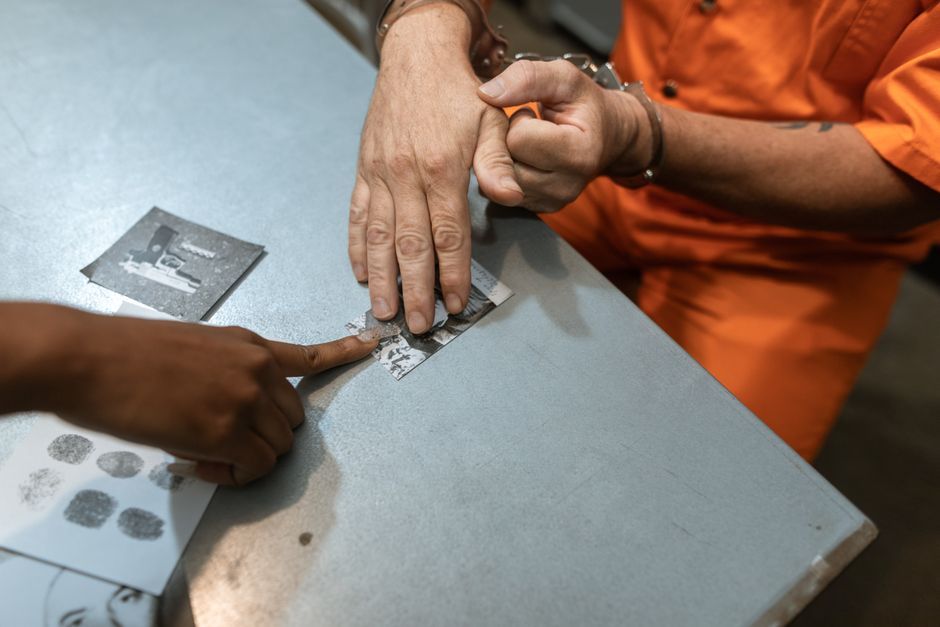
Before fingerprinting became standard practice in the late 1800s, identifying criminals relied on unreliable methods like witness descriptions and early photography. The realization that fingerprints never repeat revolutionized law enforcement worldwide. Argentina became the first country to solve a murder case using fingerprint evidence in 1892, and the technique quickly spread globally.
Today, automated fingerprint identification systems can search millions of prints in seconds, comparing the unique minutiae points that make each print distinct. The National Institute of Standards and Technology has established protocols ensuring that fingerprint matching meets rigorous scientific standards. Despite occasional controversies about human error in analysis, the fundamental principle remains sound: no two fingerprints have ever been proven identical.
Frequently Asked Questions
Can you be born without fingerprints?
Yes, though it's extremely rare. A genetic condition called adermatoglyphia, sometimes called "immigration delay disease," causes people to be born without fingerprints. Only a handful of families worldwide have been documented with this condition, which results from a specific genetic mutation.
Do fingerprints grow back if burned or cut?
Minor injuries typically heal with the original pattern intact, as the dermal layer contains the "blueprint" for ridge formation. However, severe burns or deep cuts that destroy the dermal layer can permanently alter fingerprints, though complete removal is difficult and often results in distinctive scarring patterns.
At what age do babies develop fingerprints?
Fingerprints begin forming around 10 weeks after conception and are fully developed by approximately 24 weeks of gestation. Premature babies born before this period already have their unique fingerprints in place, which will remain unchanged for their entire lives.
Can fingerprints determine someone's ancestry or race?
No. While certain fingerprint pattern frequencies vary slightly among different populations, these differences are statistical trends, not definitive markers. Fingerprints cannot reliably indicate a person's ancestry, ethnicity, or race—they're far too variable within all human populations to serve as genetic markers.
The ridges on your fingertips represent one of nature's most elegant solutions to the challenge of creating billions of unique individuals. These patterns, formed through random chance before birth and preserved throughout life, remind us that even in our genetic similarities, we each carry something absolutely irreplaceable. Next time you press your thumb to unlock your phone, consider the microscopic landscape that belongs to you alone—a pattern that has never existed before and will never appear again in all of human history.