









1 / 10 Questions
0 Points

What shape is SpongeBob SquarePants' house in Bikini Bottom?

Conch shell

Easter Island head

Treasure chest

Pineapple

Points won
0
Correct score
0%

More Questions

The Truth About Dragons Existing in Komodo Island Today

Dragon myths meet reality on Komodo Island where massive lizards roam today. Discover how ancient legends connect to these living prehistoric predators.

The Truth About Butterflies Tasting With Their Feet

Butterfly anatomy includes chemoreceptors on their feet that detect sweetness and nutrients. Discover how this unique sensory system helps them find food.

Why Humans Are the Only Animals With Chins

Discover the fascinating human anatomy feature that sets us apart from all other species. Learn why chins evolved exclusively in humans and what they

More Articles

Why Owls Can Rotate Their Heads 270 Degrees

Why Owls Can Rotate Their Heads 270 Degrees

Why Owls Can Rotate Their Heads 270 Degrees

By Trivia Daily, Animals Desk — Published September 19, 2026

Table of Contents

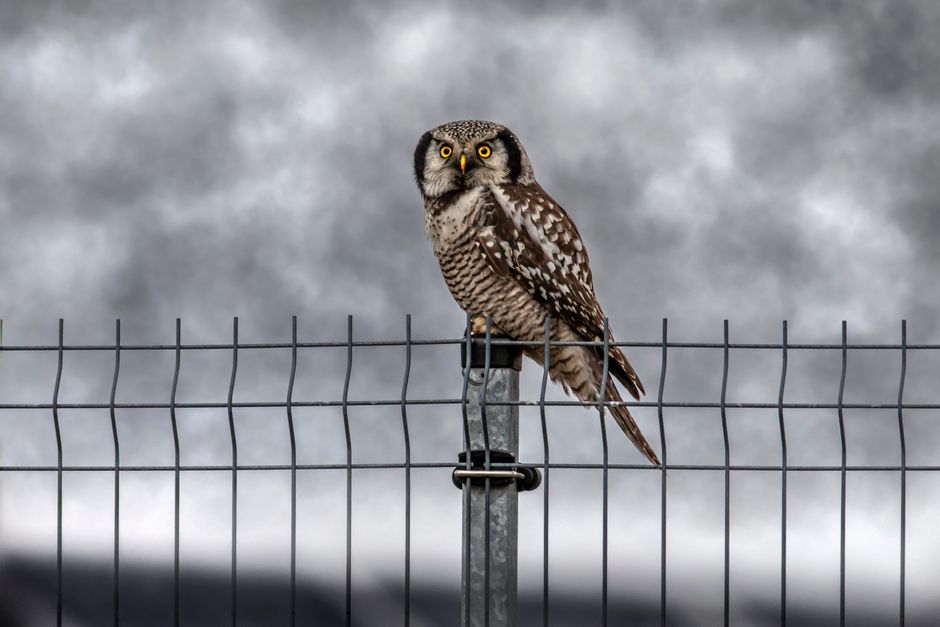
Picture a barn owl perched on a fence post at dusk, scanning the field for prey. Suddenly, without moving its body an inch, the bird swivels its head almost completely backward, tracking a sound behind it. This remarkable ability has captivated humans for centuries and sparked countless myths about these nocturnal hunters. Owls rotate heads with an astonishing range that would be impossible—and fatal—for most animals, including humans. The secret lies in specialized anatomy that evolved over millions of years to help these creatures survive in their habitat.

Unlike humans, who can only turn their heads about 90 degrees in either direction, owls have evolved a neck structure that allows them to rotate their heads roughly 270 degrees. That's three-quarters of a full circle. This incredible adaptation compensates for a significant limitation: their eyes are fixed in their sockets and cannot move like ours can.

Key Takeaways

  • Owls can rotate their heads approximately 270 degrees in either direction, allowing them to see almost completely behind themselves without moving their bodies.
  • This species has 14 neck vertebrae—twice as many as humans—which provides exceptional flexibility while maintaining stability.
  • Specialized blood vessel structures prevent strokes and brain damage during extreme head rotation, solving a problem that would kill most animals.
  • The behavior compensates for tubular eyes that cannot move in their sockets, unlike the spherical eyes of most other wildlife.
  • Owl neck bones have unique air pockets and enlarged openings that allow arteries to move freely without being pinched during rotation.
  • This adaptation is crucial for hunting behavior, allowing these predators to locate prey using both vision and sound while remaining motionless.

Why Owls Rotate Heads: The Anatomy Behind the Adaptation

The owl's remarkable head rotation begins with the neck. Where humans have seven cervical vertebrae, owls possess 14. This doubling of neck bones creates multiple pivot points that distribute the rotation smoothly across the entire neck rather than concentrating stress at one or two joints. Each vertebra can move just a little, but together they create an extraordinary range of motion.

But extra bones alone wouldn't prevent a major problem: cutting off blood flow to the brain. When an owl twists its neck to extreme angles, the arteries running through the neck bones could easily become kinked or compressed, causing a stroke. Nature solved this engineering challenge with elegant precision.

The vertebral arteries that supply blood to an owl's brain pass through holes in the neck vertebrae called transverse foramina. In owls, these holes are roughly ten times wider than the arteries passing through them. This extra space allows the blood vessels to slide and move without being pinched, even during extreme rotation. Think of it like a garden hose passing through a pipe much wider than necessary—the hose can shift and bend without blocking water flow.

The arteries themselves have evolved special adaptations. Small vessel connections called anastomoses create a network of alternative pathways for blood to reach the brain. If one route becomes temporarily restricted during a head turn, blood can detour through another channel. At the base of the skull, owls also have enlarged vessel cavities that pool blood, maintaining steady flow to the brain even when neck arteries are momentarily compressed.

The Eyes That Cannot Move

Understanding why owls need such extreme neck flexibility requires examining their unusual eyes. Unlike most animals, including humans and other birds, owls have tubular rather than spherical eyes. These elongated structures act like telephoto lenses, providing exceptional long-distance vision and superior light-gathering ability for night hunting.

The trade-off is complete immobility. An owl cannot glance to the side or look up and down by moving its eyes alone. The entire head must move to shift the gaze. For a predator that hunts in darkness and relies on spotting the slightest movement from prey, this would be a severe disadvantage without the compensating ability to rotate the head extensively.

This fixed-eye design is common among nocturnal hunters in nature. The large, forward-facing eyes provide binocular vision—both eyes see the same area, creating depth perception critical for judging distances when swooping down on a mouse or vole. The tubular shape maximizes the number of light-sensitive cells packed into the retina, essential for hunting in low-light conditions.

Comparing Head Rotation Across Species

Animal Maximum Head Rotation Number of Neck Vertebrae
Owls 270 degrees 14
Humans 80-90 degrees 7
Pigeons ~200 degrees 14
Cats ~180 degrees 7
Horses ~90 degrees 7

Hunting Behavior and Survival in the Wild

The ability to rotate their heads serves owls in multiple ways beyond simply compensating for immobile eyes. When perched and hunting, an owl can remain completely still—critical for ambush predators—while scanning its entire surroundings for both prey and threats. Movement attracts attention in nature, and a motionless body with a slowly rotating head is far less conspicuous than a bird constantly shifting position.

Owls also rely heavily on sound to locate prey, especially species that hunt in complete darkness. Many owls have asymmetrical ear openings, with one positioned higher on the skull than the other. This arrangement allows them to pinpoint sounds in three dimensions with remarkable accuracy. The head rotation enables them to aim these sophisticated listening devices in any direction without telegraphing their position through body movement.

Different owl species use this adaptation across varied habitats worldwide. The great horned owl hunts in forests, grasslands, and deserts. The barn owl prefers open farmland and grasslands. The snowy owl thrives in Arctic tundra. Regardless of environment, the head-rotation ability remains a constant advantage for these diverse creatures.

Debunking the 360-Degree Myth

Despite popular belief and countless cartoons, owls cannot rotate their heads a full 360 degrees. The maximum range is approximately 270 degrees in either direction from center. This means an owl looking straight ahead can turn its head 135 degrees to the left or right. To see directly behind itself, an owl must choose which direction to rotate—it cannot complete a full circle.

This myth likely persists because 270 degrees is so extreme by human standards that it seems like a complete rotation. When you watch an owl turn its head to look behind itself, the motion appears impossibly fluid and complete. The bird can indeed see almost everything around it, but there's a small blind spot directly behind that it can only view by choosing left or right rotation.

Frequently Asked Questions

Can owls really turn their heads all the way around?

No, owls cannot complete a full 360-degree rotation. They can turn their heads approximately 270 degrees in either direction, which allows them to look almost directly behind themselves but not quite complete a full circle.

Why don't owls get dizzy from turning their heads so far?

Owls have specialized balance systems and blood vessel adaptations that maintain steady blood flow to the brain during extreme head rotation. Their vestibular system, which controls balance, has evolved to accommodate these movements without causing disorientation.

Do all owl species have the same head rotation ability?

Yes, all owl species share this adaptation, as it's tied to their fundamental eye structure. All owls have tubular, fixed eyes that require exceptional neck flexibility to compensate for the inability to move their eyes in their sockets.

Could humans ever rotate their heads like owls?

No, human anatomy makes this impossible. We have half the number of neck vertebrae, our blood vessels lack the protective adaptations owls possess, and attempting such rotation would cause severe injury or death from arterial damage and stroke.

The next time you see an owl in nature or at a wildlife sanctuary, watch how it moves—or rather, how it doesn't. The body remains perfectly still while the head swivels with eerie smoothness, scanning for the faintest rustle in the grass below. Millions of years of evolution solved a complex engineering problem, creating one of the animal kingdom's most distinctive and mesmerizing adaptations.
Why Sloths Descend Trees to Defecate: The Predator Risk

Why Sloths Descend Trees to Defecate: The Predator Risk

Why Sloths Descend Trees to Defecate: The Predator Risk

By Trivia Daily, Animals Desk — Published August 27, 2026

Table of Contents

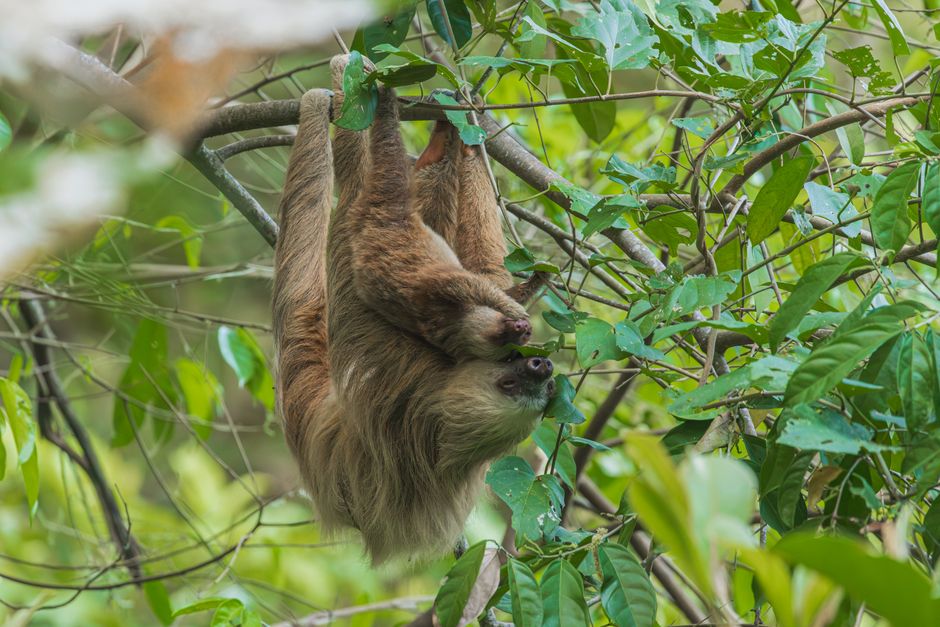
Once a week, sloths descend trees to perform one of nature's most puzzling rituals. They climb down from the safety of the canopy, dig a small hole at the base of their tree, defecate, cover it up, and slowly climb back to their arboreal home. This behavior seems suicidal for a creature that moves at glacial speeds and faces numerous predators on the ground. So why do these gentle animals risk their lives for a bathroom break they could easily take from the branches above?

The mystery deepens when you consider the numbers. Roughly half of all sloth deaths occur during these weekly descents. Jaguars, ocelots, and harpy eagles all prey on sloths, and the forest floor offers no escape route for an animal that can barely move faster than a few feet per minute. Yet despite this enormous predator risk, sloths have maintained this behavior for millions of years, suggesting the benefits must outweigh the deadly costs.

Key Takeaways

  • Sloths descend trees approximately once per week to defecate at the base of their preferred tree, despite moving extremely slowly on the ground.
  • About half of all sloth deaths in the wild occur during these risky toilet trips, making it one of the most dangerous activities in their lives.
  • The behavior likely supports a symbiotic relationship with moths that live in sloth fur and provide nitrogen-rich algae as camouflage and nutrition.
  • Three-toed sloths can store up to 30% of their body weight in feces before descending, reducing the frequency of dangerous ground visits.
  • Sloths move so slowly that algae grows on their fur, creating a miniature ecosystem that includes moths, beetles, and other organisms.
  • The energy cost of descending and climbing back up can represent a significant portion of a sloth's extremely low daily caloric budget.

Why Sloths Descend Trees Instead of Defecating From Above

The most compelling explanation involves a three-way partnership between sloths, moths, and algae. Sloth fur hosts a unique species of moth that depends entirely on sloth dung for reproduction. When a sloth descends to defecate, female moths leave the fur, lay their eggs in the fresh feces, then return to the sloth. The moth larvae develop in the dung pile, and adult moths eventually fly up to find a new sloth host.

This seems like a poor trade for the sloth until you examine what the moths provide in return. Dead moths and moth waste add nitrogen to the sloth's fur, which fertilizes the algae gardens growing there. This algae serves dual purposes: it camouflages sloths from predators and provides supplemental nutrition when sloths groom themselves. Chemical analysis of sloth fur has revealed significantly higher nitrogen levels in species that descend to defecate compared to those that don't.

The behavior creates a closed-loop ecosystem. Sloths fertilize specific trees with their nutrient-rich waste, potentially encouraging the growth of their preferred food sources. The trees benefit from concentrated fertilizer deposits. Moths get a breeding ground. Algae gets nitrogen. And sloths get better camouflage and extra calories from algae consumption. Every participant wins, as long as the sloth survives the climb down and back up.

The Metabolic Mystery of Sloth Bathroom Habits

Sloths possess the slowest metabolic rate of any mammal their size. Their digestive system works so gradually that food can take up to a month to pass through their four-chambered stomach. This extraordinarily slow digestion means sloths only need to defecate about once every five to seven days, but it also means they're carrying a substantial load.

Before descending, a sloth may be hauling around feces and urine equivalent to nearly one-third of its total body weight. Imagine carrying a backpack that heavy while climbing down a tree in slow motion with predators watching. The physical relief must be considerable, but the energy expenditure is equally significant. A single toilet trip can consume up to 8% of a sloth's daily energy budget, which is enormous for an animal that conserves every possible calorie.

Their slow metabolism ties directly to their diet of leaves, which provides minimal nutritional value. Sloths have adapted by doing almost nothing, maintaining low body temperatures, and moving only when absolutely necessary. Descending for bathroom breaks contradicts this entire survival strategy, which makes the behavior even more remarkable.

Comparing Ground Vulnerability Across Sloth Species

Species Defecation Behavior Ground Speed Primary Predator Risk
Three-toed sloth Descends to tree base weekly Approximately 0.15 mph High (jaguars, ocelots)
Two-toed sloth Often defecates from canopy Approximately 0.17 mph Moderate (mainly aerial predators)
Pygmy three-toed sloth Descends to mangrove roots Similar to three-toed Lower (island habitat, fewer predators)

The differences between species reveal how habitat shapes behavior. Two-toed sloths frequently defecate from the trees, suggesting their ecological niche doesn't require the same moth-algae relationship. Three-toed sloths, however, demonstrate remarkable fidelity to their toilet trees, often returning to the same spot repeatedly. This creates concentrated fertilizer deposits that may influence which trees thrive in their territory.

The Predator Gauntlet: What Hunts Sloths on the Ground

When a sloth reaches the forest floor, it enters a world designed to kill slow-moving creatures. Jaguars are ambush predators with bite forces strong enough to crush skulls, and they've learned to watch for descending sloths. Ocelots, though smaller, are equally deadly to a defenseless sloth. Even large snakes pose a threat.

On the ground, sloths can't flee. Their long claws, perfectly adapted for hanging from branches, make walking nearly impossible. They pull themselves forward in an awkward, dragging motion that wouldn't outpace a human crawl. If detected by a predator, a sloth's only defense is to slash with its claws, which can inflict serious wounds but rarely deters a determined jaguar.

Harpy eagles present danger both in trees and on the ground. These massive raptors can pluck a sloth from branches, but sloths are most vulnerable during their slow climb down and back up. The entire toilet expedition can take 30 minutes or more, creating an extended window of extreme vulnerability. That sloths continue this ritual despite such odds suggests evolutionary pressures have locked in the behavior over millions of years.

The Sloth's Fur Ecosystem and Camouflage Strategy

Sloth fur grows in the opposite direction of most mammals, pointing from belly to back. This allows rain to run off efficiently when the sloth hangs upside down. The grooved hair structure creates perfect channels for algae growth, turning sloths into mobile gardens. During the rainy season, sloths can appear distinctly greenish, blending remarkably well with the foliage.

This living camouflage hosts an entire community. Scientists have identified dozens of species living in sloth fur, including beetles, mites, ticks, and the specialized moths. The moths, particularly species in the genus Cryptoses, have evolved to depend entirely on sloths. They cannot complete their life cycle without access to sloth dung, creating an obligate relationship that may explain why sloths continue their dangerous descents.

The algae provides more than camouflage. Analysis shows sloths occasionally lick their fur, ingesting algae that contains lipids and other nutrients not present in their leaf diet. This supplemental nutrition, however minor, might provide essential fatty acids or other compounds that improve digestive efficiency or immune function. For an animal living on such thin energetic margins, even small nutritional boosts matter.

Frequently Asked Questions

How often do sloths poop?

Sloths typically defecate once every five to seven days due to their extremely slow metabolism and digestive process. Before descending, they may be carrying fecal matter equal to about 30% of their body weight.

Can sloths defecate while hanging in trees?

Two-toed sloths sometimes defecate from the canopy, but three-toed sloths almost always descend to ground level to perform their toilet ritual at the base of a tree. The reasons for this species difference remain under scientific investigation.

What is the biggest threat to sloths on the ground?

Jaguars and ocelots pose the greatest predator risk to sloths during their ground descents. Studies suggest approximately half of all sloth deaths occur during these weekly toilet trips, making it the most dangerous regular activity in their lives.

Do all sloth species have moths living in their fur?

Sloth fur moths are found primarily on three-toed sloths that descend to defecate. These moths depend on sloth dung to complete their reproductive cycle, creating a symbiotic relationship that may explain why sloths risk predation to fertilize specific trees.

The weekly descent of sloths represents one of nature's most puzzling gambles, where creatures that evolved to minimize every movement risk everything for a bathroom break. Whether driven by an ancient partnership with moths, nutritional benefits from fur algae, or tree fertilization strategies we're only beginning to understand, this behavior reminds us that evolution crafts solutions far stranger than we might imagine. Next time you marvel at a sloth's leisurely pace, remember that once a week, they bet their lives on a trip to the toilet.