











1 / 10 Questions
0 Points

Which vitamin makes polar bear liver dangerous to eat?

Vitamin A

Vitamin C

Vitamin D

Vitamin B12

Points won
0
Correct score
0%

More Questions

More Articles

Did You Know? 12 Facts About Samurai Legends

Did You Know? 12 Facts About Samurai Legends

⏱️ 6 min read

Did You Know? 12 Facts About Samurai Legends

The samurai warriors of feudal Japan have captured the imagination of people worldwide for centuries. These legendary figures, bound by the strict code of bushido, have inspired countless stories, films, and myths that blur the line between historical fact and legend. While many people are familiar with the basic concept of samurai as skilled swordsmen, the deeper mythology and legendary tales surrounding these warriors reveal a far more complex and fascinating culture. From supernatural encounters to heroic deeds that defied belief, samurai legends offer a window into the values, fears, and aspirations of medieval Japan. Here are twelve captivating facts about samurai legends that showcase the mythical dimensions of these iconic warriors.

1. The Legend of the 47 Ronin

Perhaps the most famous samurai legend is the tale of the 47 Ronin, which has become the ultimate story of loyalty and revenge in Japanese culture. According to legend, these masterless samurai spent years planning to avenge their lord's death, ultimately attacking their enemy's fortress and taking his head. This story embodies the samurai ideals of loyalty, honor, and self-sacrifice, and has been retold countless times in Japanese literature, theater, and modern media.

2. Samurai and Supernatural Encounters

Samurai legends frequently feature encounters with supernatural beings such as oni (demons), tengu (crow-like spirits), and yurei (ghosts). These mythical tales often depicted samurai as defenders against dark forces, using both their martial prowess and spiritual strength to protect villages and maintain cosmic balance. Such stories reinforced the image of samurai as more than mere warriors—they were spiritual guardians of the realm.

3. The Cursed Blade Muramasa

Legend tells of Muramasa, a master swordsmith whose blades were said to be cursed with a bloodlust. These legendary swords supposedly drove their wielders to madness and violence, unable to be sheathed until they had drawn blood. The Tokugawa shogunate particularly feared Muramasa blades, as several family members allegedly died by them, leading to the swords being banned and destroyed throughout Japan.

4. Miyamoto Musashi's Undefeated Record

The legendary swordsman Miyamoto Musashi reportedly fought over sixty duels without a single defeat, creating a mythology around his strategic genius and unorthodox techniques. Legends describe his most famous duel against Sasaki Kojiro, where Musashi supposedly arrived late to anger his opponent and carved a wooden sword from an oar during his boat journey to the duel site. His legendary status was cemented by his treatise "The Book of Five Rings," which blended philosophy with martial strategy.

5. The Tengu Masters

According to legend, many renowned samurai learned their exceptional sword skills from tengu—mythical creatures with both human and bird-like features who dwelt in mountains and forests. These supernatural beings were said to be master swordsmen who would train select warriors in secret techniques. The young Minamoto no Yoshitsune, who became one of Japan's greatest military commanders, was legendarily trained by the Tengu King on Mount Kurama.

6. Tomoe Gozen: The Warrior Woman

Legends speak of Tomoe Gozen, a rare female samurai whose combat skills rivaled any man. Described as exceptionally beautiful yet fearsome in battle, legends claim she was worth a thousand warriors and could defeat anyone in single combat. Her most famous legendary feat involved decapitating an enemy warrior during the Genpei War before disappearing from historical records, her fate becoming the subject of numerous mythological interpretations.

7. Seppuku and the Sacred Ritual

The legendary practice of seppuku (ritual suicide) has become synonymous with samurai culture, surrounded by myths about honor and spiritual transcendence. Legends describe how a samurai's spirit would be judged based on the composure and dignity displayed during this ritual. Some tales even claim that master samurai could complete the ritual without showing any sign of pain, demonstrating complete mastery over both body and spirit.

8. The Three Sacred Treasures

Samurai legends often reference the Three Sacred Treasures of Japan—the sword, mirror, and jewel—which represented valor, wisdom, and benevolence respectively. Legendary samurai were said to embody these qualities, with the sword being particularly significant as both a physical weapon and a spiritual symbol. Some legends claim certain samurai carried blades blessed by these sacred treasures, granting them supernatural protection.

9. Benkei's Last Stand

The legend of Benkei, the warrior monk who served Minamoto no Yoshitsune, tells of his miraculous final stand. According to myth, Benkei defended a bridge single-handedly against an entire army to allow his master to escape. The legend claims he died while still standing, his body pierced by so many arrows that he remained upright even in death, terrifying enemies who dared not approach. This tale has become symbolic of ultimate loyalty and determination.

10. The Samurai Code Beyond Death

Legends suggest that samurai spirits continued to serve their lords even after death, manifesting as protective guardians or vengeful ghosts depending on the circumstances of their demise. Stories of ghostly samurai armies appearing in times of great need or haunting those who betrayed bushido principles were common in Japanese folklore, reinforcing the eternal nature of samurai duty.

11. Dragon Slaying Samurai

Some of the most fantastical samurai legends involve encounters with dragons and sea monsters. Legendary warriors like Susanoo and Tawara Toda were credited with slaying massive serpents and dragons that threatened villages and kingdoms. These myths elevated samurai from historical warriors to mythological heroes comparable to dragon-slayers in Western traditions, representing triumph over chaos and evil.

12. The Perfect Death

Samurai culture contained numerous legends about achieving the "perfect death" in battle—dying at the height of one's powers while serving one's lord with complete honor. Legends told of warriors who predicted their own deaths, composed final poems at the moment of their demise, or achieved such legendary status that their deaths became inspirational tales passed down through generations. This mythologizing of death reflected the samurai acceptance of mortality and pursuit of eternal honor.

Conclusion

These twelve facts about samurai legends reveal how deeply mythology and history intertwine in Japanese culture. From supernatural training with tengu masters to cursed swords and immortal loyalty beyond death, samurai legends transcended simple warrior tales to become profound expressions of cultural values. Whether featuring demon-slaying heroes, devoted ronin seeking revenge, or warriors achieving spiritual transcendence through ritual death, these legends continue to captivate audiences worldwide. They remind us that the samurai legacy extends far beyond historical military service—these warriors have become timeless symbols of honor, discipline, and the eternal struggle between duty and humanity. The enduring power of samurai legends lies not just in their dramatic narratives, but in their exploration of universal themes that resonate across cultures and centuries.
The Truth About Lightning Striking the Same Place Repeatedly

The Truth About Lightning Striking the Same Place Repeatedly

The Truth About Lightning Striking the Same Place Repeatedly

By Trivia Owl, Staff Writer — Published November 20, 2026

Table of Contents

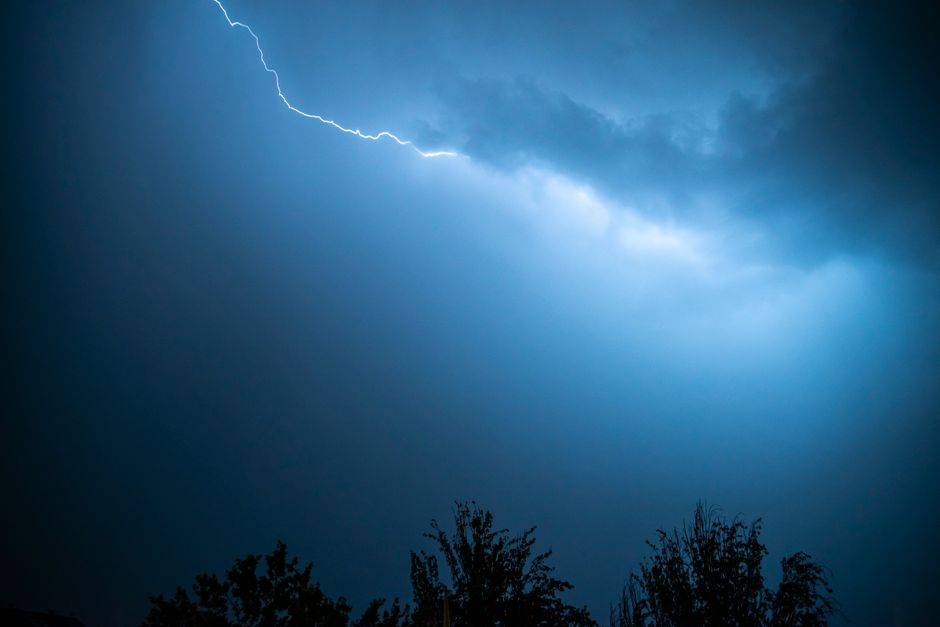
You've probably heard the old saying: "Lightning never strikes the same place twice." It's one of those bits of folk wisdom that sounds convincing but turns out to be completely wrong. The truth about lightning striking the same location multiple times is far more interesting—and backed by solid science. Tall structures like skyscrapers, communication towers, and even certain trees get hit by lightning over and over again, sometimes dozens of times per year. This fascinating phenomenon reveals how electricity really works in nature and why some spots become lightning magnets.

Understanding why lightning favors certain targets helps explain everything from why we build lightning rods to how meteorologists track storm patterns. The facts behind repeated lightning strikes are surprising, educational, and challenge what many people assume about electrical storms.

Key Takeaways

  • Lightning routinely strikes the same places multiple times, especially tall or isolated structures that provide the easiest path to ground.
  • The Empire State Building gets struck by lightning approximately 20 to 25 times each year, making it one of the most frequently hit structures in the world.
  • Lightning seeks the path of least resistance, which means height, shape, and isolation matter far more than whether a location has been struck before.
  • Roy Sullivan, a U.S. park ranger, survived being struck by lightning seven times during his career—a record documented by Guinness World Records.
  • Lightning rods work precisely because lightning does strike the same place repeatedly, channeling electrical discharge safely into the ground.

Why Lightning Strikes the Same Spots Over and Over

Lightning doesn't have a memory. It's simply an electrical discharge seeking the quickest route between a charged cloud and the ground. When a thunderstorm develops, electrical charges separate within the cloud—negative charges typically accumulate at the bottom while positive charges gather at the top. The ground below develops a positive charge in response. When the electrical potential difference becomes large enough, a lightning bolt bridges the gap.

Tall objects shorten that distance. A 100-story building essentially gives lightning a head start of more than 1,200 feet. The pointed shape of towers and spires also concentrates the electrical field at their tips, making them even more attractive targets. This is basic physics, and it applies every single time a storm passes overhead. Previous strikes don't somehow "use up" a location's lightning-attracting properties.

Isolated structures face even higher risk. A lone tree in an open field, a lighthouse on a rocky coast, or a radio tower on a hilltop becomes the obvious path for electrical discharge. The surrounding landscape offers no competition, so these structures get struck repeatedly throughout their existence.

Famous Lightning Magnets Around the World

Some structures have become legendary for their frequent encounters with lightning. The Empire State Building in New York City serves as a prime example, with its distinctive Art Deco spire acting as a natural lightning rod. The building's height—1,454 feet including its antenna—makes it the tallest structure for miles around in many directions. Weather monitoring equipment installed on the building has helped scientists study lightning behavior for decades.

Chicago's Willis Tower (formerly Sears Tower) experiences similar treatment. Standing 1,450 feet tall in a relatively flat landscape, it attracts dozens of strikes annually. The CN Tower in Toronto, reaching 1,815 feet, gets struck even more frequently—roughly 75 times per year on average according to monitoring data.

Structure Location Height Approximate Annual Strikes
Empire State Building New York City 1,454 feet 20–25
CN Tower Toronto 1,815 feet 75
Willis Tower Chicago 1,450 feet Multiple dozen
Eiffel Tower Paris 1,083 feet 5–10

The Science Behind Lightning Protection

Benjamin Franklin's invention of the lightning rod in the 1750s was based on the very principle that lightning strikes the same places repeatedly. His insight was simple but revolutionary: if tall, pointed structures attract lightning, why not install them deliberately to protect buildings? A lightning rod provides a low-resistance pathway for electrical current to travel safely into the ground, bypassing the structure it protects.

Modern lightning protection systems expand on Franklin's basic design. They include a network of conductors, grounding rods, and surge protectors that dissipate electrical energy safely. These systems work because they exploit lightning's predictable behavior—it will always choose the easiest path available. Skyscrapers, airports, power plants, and countless other facilities rely on this technology daily.

The National Oceanic and Atmospheric Administration (NOAA) tracks lightning strikes across the United States using ground-based sensors and satellite technology. This data confirms that certain geographic features—mountain peaks, coastal promontories, and isolated tall structures—experience dramatically higher strike frequencies than surrounding areas. Some spots in Florida, which has the highest lightning frequency in the country, see hundreds of strikes per square mile annually.

When Lightning Strikes People Multiple Times

While most lightning safety advice focuses on avoiding a single strike, some individuals have been struck multiple times. Roy Sullivan, a park ranger in Shenandoah National Park, survived seven documented lightning strikes between 1942 and 1977. His record, verified by Guinness World Records, seems almost impossible until you consider his circumstances—he spent decades working outdoors in mountainous terrain during all weather conditions.

Sullivan's experience, though extreme, illustrates that people who work or recreate in exposed environments face cumulative risk. Each thunderstorm presents a new opportunity for lightning to find the tallest, most conductive target available. If that happens to be a person standing on an open ridge or golf course, the results can be devastating. Lightning doesn't recognize that it struck that same person before.

Debunking Common Lightning Myths

The "lightning never strikes twice" myth probably persists because people want to believe that surviving one strike means safety from future ones. It's psychologically comforting but factually wrong. Other common misconceptions include the belief that rubber tires protect you in a car (they don't—the metal frame conducts electricity around you to the ground) or that lightning only strikes during rain (dry lightning from distant storms is common in many regions).

Another myth claims that lightning rods attract strikes that wouldn't have occurred otherwise. The truth is more nuanced. Lightning rods don't increase the overall frequency of strikes to an area, but they do provide a preferred target within a limited radius. The strike was coming anyway—the rod simply ensures it hits a safe, grounded conductor rather than the building itself.

Frequently Asked Questions

Can lightning really strike the same place twice?

Yes, lightning frequently strikes the same places multiple times, especially tall or isolated structures. The Empire State Building gets struck approximately 20 to 25 times per year, and some structures experience even higher frequencies.

Why do some buildings get struck more than others?

Height, shape, and isolation determine lightning strike frequency. Tall, pointed structures shorten the distance electricity must travel and concentrate the electrical field, making them preferred targets for lightning discharge.

Is it safe to be near a place that was just struck by lightning?

There's no increased or decreased safety based on recent strikes. Each lightning bolt is an independent event, so the same safety precautions apply regardless of whether a location was struck seconds ago or never before.

What's the most lightning-prone location on Earth?

Lake Maracaibo in Venezuela experiences lightning storms on approximately 260 nights per year, making it the most lightning-prone location on the planet. The unique geography and weather patterns create ideal conditions for electrical storms.

Next time a thunderstorm rolls through, look at the tallest structures around you. They're not just architectural landmarks—they're lightning's favorite targets, struck again and again with predictable regularity. That persistence of nature, that mathematical certainty of electricity seeking its path, turns an old saying on its head and reminds us that the truth is often more fascinating than folklore.