
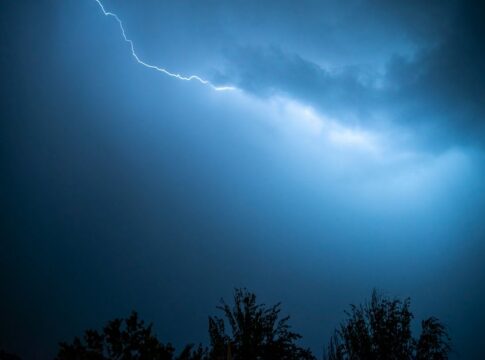
The Truth About Lightning Striking the Same Place Repeatedly
By Trivia Daily, Staff Writer — Published November 20, 2026
Table of Contents
- Key Takeaways
- Why Lightning Strikes the Same Spots Over and Over
- Famous Lightning Magnets Around the World
- The Science Behind Lightning Protection
- When Lightning Strikes People Multiple Times
- Debunking Common Lightning Myths
- Frequently Asked Questions
You’ve probably heard the old saying: “Lightning never strikes the same place twice.” It’s one of those bits of folk wisdom that sounds convincing but turns out to be completely wrong. The truth about lightning striking the same location multiple times is far more interesting—and backed by solid science. Tall structures like skyscrapers, communication towers, and even certain trees get hit by lightning over and over again, sometimes dozens of times per year. This fascinating phenomenon reveals how electricity really works in nature and why some spots become lightning magnets.
Understanding why lightning favors certain targets helps explain everything from why we build lightning rods to how meteorologists track storm patterns. The facts behind repeated lightning strikes are surprising, educational, and challenge what many people assume about electrical storms.
Key Takeaways
- Lightning routinely strikes the same places multiple times, especially tall or isolated structures that provide the easiest path to ground.
- The Empire State Building gets struck by lightning approximately 20 to 25 times each year, making it one of the most frequently hit structures in the world.
- Lightning seeks the path of least resistance, which means height, shape, and isolation matter far more than whether a location has been struck before.
- Roy Sullivan, a U.S. park ranger, survived being struck by lightning seven times during his career—a record documented by Guinness World Records.
- Lightning rods work precisely because lightning does strike the same place repeatedly, channeling electrical discharge safely into the ground.
Why Lightning Strikes the Same Spots Over and Over
Lightning doesn’t have a memory. It’s simply an electrical discharge seeking the quickest route between a charged cloud and the ground. When a thunderstorm develops, electrical charges separate within the cloud—negative charges typically accumulate at the bottom while positive charges gather at the top. The ground below develops a positive charge in response. When the electrical potential difference becomes large enough, a lightning bolt bridges the gap.
Tall objects shorten that distance. A 100-story building essentially gives lightning a head start of more than 1,200 feet. The pointed shape of towers and spires also concentrates the electrical field at their tips, making them even more attractive targets. This is basic physics, and it applies every single time a storm passes overhead. Previous strikes don’t somehow “use up” a location’s lightning-attracting properties.
Isolated structures face even higher risk. A lone tree in an open field, a lighthouse on a rocky coast, or a radio tower on a hilltop becomes the obvious path for electrical discharge. The surrounding landscape offers no competition, so these structures get struck repeatedly throughout their existence.
Famous Lightning Magnets Around the World
Some structures have become legendary for their frequent encounters with lightning. The Empire State Building in New York City serves as a prime example, with its distinctive Art Deco spire acting as a natural lightning rod. The building’s height—1,454 feet including its antenna—makes it the tallest structure for miles around in many directions. Weather monitoring equipment installed on the building has helped scientists study lightning behavior for decades.
Chicago’s Willis Tower (formerly Sears Tower) experiences similar treatment. Standing 1,450 feet tall in a relatively flat landscape, it attracts dozens of strikes annually. The CN Tower in Toronto, reaching 1,815 feet, gets struck even more frequently—roughly 75 times per year on average according to monitoring data.
| Structure | Location | Height | Approximate Annual Strikes |
|---|---|---|---|
| Empire State Building | New York City | 1,454 feet | 20–25 |
| CN Tower | Toronto | 1,815 feet | 75 |
| Willis Tower | Chicago | 1,450 feet | Multiple dozen |
| Eiffel Tower | Paris | 1,083 feet | 5–10 |
The Science Behind Lightning Protection
Benjamin Franklin’s invention of the lightning rod in the 1750s was based on the very principle that lightning strikes the same places repeatedly. His insight was simple but revolutionary: if tall, pointed structures attract lightning, why not install them deliberately to protect buildings? A lightning rod provides a low-resistance pathway for electrical current to travel safely into the ground, bypassing the structure it protects.
Modern lightning protection systems expand on Franklin’s basic design. They include a network of conductors, grounding rods, and surge protectors that dissipate electrical energy safely. These systems work because they exploit lightning’s predictable behavior—it will always choose the easiest path available. Skyscrapers, airports, power plants, and countless other facilities rely on this technology daily.
The National Oceanic and Atmospheric Administration (NOAA) tracks lightning strikes across the United States using ground-based sensors and satellite technology. This data confirms that certain geographic features—mountain peaks, coastal promontories, and isolated tall structures—experience dramatically higher strike frequencies than surrounding areas. Some spots in Florida, which has the highest lightning frequency in the country, see hundreds of strikes per square mile annually.
When Lightning Strikes People Multiple Times
While most lightning safety advice focuses on avoiding a single strike, some individuals have been struck multiple times. Roy Sullivan, a park ranger in Shenandoah National Park, survived seven documented lightning strikes between 1942 and 1977. His record, verified by Guinness World Records, seems almost impossible until you consider his circumstances—he spent decades working outdoors in mountainous terrain during all weather conditions.
Sullivan’s experience, though extreme, illustrates that people who work or recreate in exposed environments face cumulative risk. Each thunderstorm presents a new opportunity for lightning to find the tallest, most conductive target available. If that happens to be a person standing on an open ridge or golf course, the results can be devastating. Lightning doesn’t recognize that it struck that same person before.
Debunking Common Lightning Myths
The “lightning never strikes twice” myth probably persists because people want to believe that surviving one strike means safety from future ones. It’s psychologically comforting but factually wrong. Other common misconceptions include the belief that rubber tires protect you in a car (they don’t—the metal frame conducts electricity around you to the ground) or that lightning only strikes during rain (dry lightning from distant storms is common in many regions).
Another myth claims that lightning rods attract strikes that wouldn’t have occurred otherwise. The truth is more nuanced. Lightning rods don’t increase the overall frequency of strikes to an area, but they do provide a preferred target within a limited radius. The strike was coming anyway—the rod simply ensures it hits a safe, grounded conductor rather than the building itself.
Frequently Asked Questions
Can lightning really strike the same place twice?
Yes, lightning frequently strikes the same places multiple times, especially tall or isolated structures. The Empire State Building gets struck approximately 20 to 25 times per year, and some structures experience even higher frequencies.
Why do some buildings get struck more than others?
Height, shape, and isolation determine lightning strike frequency. Tall, pointed structures shorten the distance electricity must travel and concentrate the electrical field, making them preferred targets for lightning discharge.
Is it safe to be near a place that was just struck by lightning?
There’s no increased or decreased safety based on recent strikes. Each lightning bolt is an independent event, so the same safety precautions apply regardless of whether a location was struck seconds ago or never before.
What’s the most lightning-prone location on Earth?
Lake Maracaibo in Venezuela experiences lightning storms on approximately 260 nights per year, making it the most lightning-prone location on the planet. The unique geography and weather patterns create ideal conditions for electrical storms.
Next time a thunderstorm rolls through, look at the tallest structures around you. They’re not just architectural landmarks—they’re lightning’s favorite targets, struck again and again with predictable regularity. That persistence of nature, that mathematical certainty of electricity seeking its path, turns an old saying on its head and reminds us that the truth is often more fascinating than folklore.