







1 / 10 Questions
0 Points

Who literally set his piano on fire during a 1958 concert?

Little Richard

Chuck Berry

Fats Domino

Jerry Lee Lewis

Points won
0
Correct score
0%

More Questions

The Truth About Dragons Existing in Komodo Island Today

Dragon myths meet reality on Komodo Island where massive lizards roam today. Discover how ancient legends connect to these living prehistoric predators.

The Truth About Butterflies Tasting With Their Feet

Butterfly anatomy includes chemoreceptors on their feet that detect sweetness and nutrients. Discover how this unique sensory system helps them find food.

Why Humans Are the Only Animals With Chins

Discover the fascinating human anatomy feature that sets us apart from all other species. Learn why chins evolved exclusively in humans and what they

More Articles

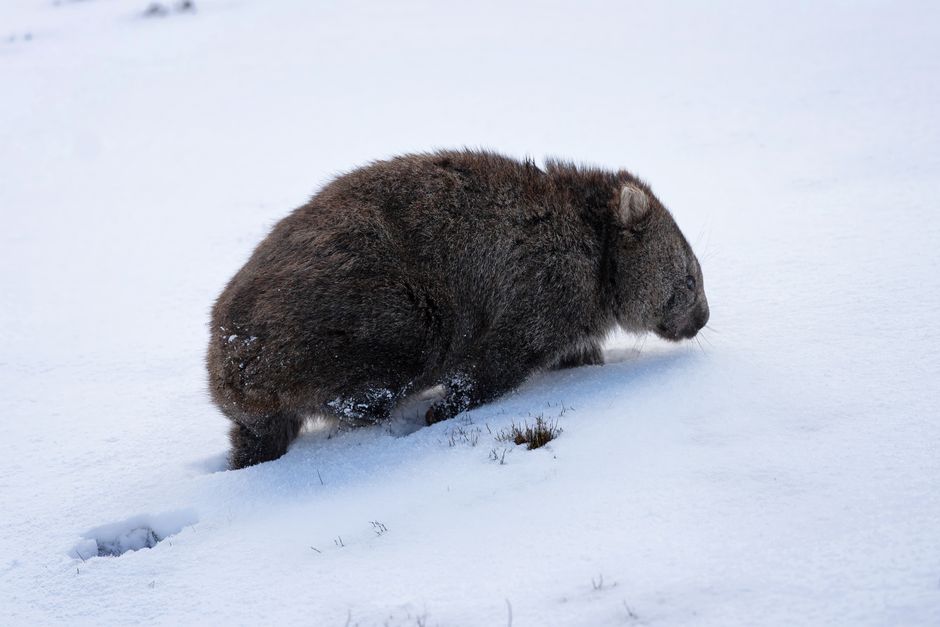
Why Wombat Poop Is Cube-Shaped: Digestion Mystery Solved

Why Wombat Poop Is Cube-Shaped: Digestion Mystery Solved

Why Wombat Poop Is Cube-Shaped: Digestion Mystery Solved

By Trivia Daily, Staff Writer — Published September 13, 2026

Table of Contents

Nature is full of surprises, but few are as delightfully bizarre as wombat poop cubes. While most animals produce cylindrical or formless droppings, wombats in Australia deposit neat, six-sided cubes that look almost machine-tooled. For years, scientists puzzled over this anatomical oddity. How does a round intestine produce a cube? The answer reveals an amazing adaptation that blends physics, biology, and territorial behavior in ways you'd never expect.

Wombats aren't just interesting for their boxy bathroom habits. These stocky marsupials use their cubic droppings as territorial markers, stacking them on rocks and logs to communicate with neighbors. The cube shape prevents the poop from rolling away—a clever evolutionary solution to marking territory in their rocky, hilly habitats. Discover how digestion, intestinal elasticity, and muscle contractions combine to create one of nature's most curious geometric wonders.

Key Takeaways

  • Wombats are the only known animals that produce cube-shaped feces, depositing roughly 80 to 100 cubes per night.
  • The cubic shape forms in the last portion of the intestine through differential elasticity and muscle contractions over an extremely long digestive process.
  • Wombat digestion takes 14 to 18 days, one of the longest among mammals, allowing maximum nutrient extraction in their arid environment.
  • The cube shape serves a territorial function—cubes don't roll off rocks and logs where wombats stack them as scent markers.
  • Researchers discovered the mechanism involves two stiff and two flexible regions in the intestinal wall that mold the waste into corners and flat sides.
  • This discovery has potential applications in manufacturing, showing how soft tissues can create sharp edges without rigid molds.

The Wombat Poop Cube Mystery That Stumped Scientists

For decades, biologists knew about cubic wombat droppings but couldn't explain them. The mystery deepened because wombats lack any obvious specialized anatomy at the exit point. Their anus is round, like other mammals. So where do the cubes come from?

The breakthrough came when researchers examined the intestines of wombats that had died in vehicle collisions or from natural causes. They discovered that the shape forms in the last 17 percent of the intestine, where the colon has regions with varying elasticity. Two grooves of stiffer tissue alternate with two more flexible areas. As waste moves through this section over many days, rhythmic muscle contractions squeeze it differently in different directions.

The stiffer regions resist stretching and form the flat faces of the cube. The more elastic regions bulge slightly, creating the edges where faces meet. By the time the waste reaches the end, it's been sculpted into distinct cubes measuring roughly two centimeters per side. The process resembles how a baker might shape dough, except the "mold" is living tissue that pulses and squeezes in coordinated waves.

Why Wombats Need Cubic Poop: Territorial Communication

The cube shape isn't just a biological curiosity—it serves a real purpose. Wombats are territorial animals that live in burrow systems and need to mark their territory effectively. They deposit their cubic droppings on elevated surfaces like rocks, fallen logs, and prominent dirt mounds.

A sphere or cylinder would roll away from these markers, especially in the hilly, rocky terrain where wombats live. Cubes stay put. This stability matters because wombats use these latrines to communicate with neighbors about territory boundaries and reproductive status. The poop contains scent information that other wombats can detect and interpret.

Wombats often stack their cubes in small piles, creating conspicuous signposts. Some researchers have observed piles containing eight or more cubes. These communal latrines become information hubs where wombats can "read" who's been in the area and when. The geometric precision ensures the message stays exactly where it was placed.

The Slowest Digestion Creates the Strangest Shapes

Wombat digestion is extraordinarily slow, taking two to three weeks from eating to elimination. This marathon digestive process evolved because wombats eat tough, fibrous native grasses with low nutritional value. To survive on this poor-quality diet, they extract every possible calorie and nutrient.

The extended time in the gut allows beneficial bacteria to break down cellulose and other plant fibers thoroughly. By the time waste reaches the final section of intestine, it's extremely dry and compact—roughly 60 percent drier than human feces. This dryness is crucial for cube formation. Wetter, softer waste wouldn't hold sharp edges and corners.

The combination of dry, compact waste and the specialized intestinal structure creates ideal conditions for geometric shaping. As the stiff material moves through the alternating elastic regions, it literally gets pressed into corners. The process happens so gradually and with such consistent pressure that the cubes emerge with surprisingly uniform dimensions.

Comparing Wombat Species and Their Cubic Capabilities

Species Habitat Cube Production Size
Common Wombat Southeastern Australia, Tasmania 80-100 cubes per night 1.5-2 cm per side
Southern Hairy-Nosed Wombat Southern Australia grasslands Similar production rate 1.5-2 cm per side
Northern Hairy-Nosed Wombat Queensland (critically endangered) Similar production rate 1.5-2 cm per side

All three wombat species produce cubic feces, suggesting this trait evolved in their common ancestor. The northern hairy-nosed wombat is critically endangered, with fewer than 300 individuals remaining in the wild, making study of their digestive systems challenging but valuable for conservation efforts.

Scientific Applications Beyond the Bathroom

Understanding how wombat intestines create cubes without rigid structures has caught the attention of engineers and manufacturers. The discovery demonstrates that soft, flexible materials can produce precise geometric shapes through strategic variation in elasticity and rhythmic compression.

This principle could inform new manufacturing techniques for products that need to be shaped without traditional hard molds. Researchers have explored applications in soft robotics, medical devices, and even food processing. The wombat intestine essentially acts as a biological 3D printer, showing that nature solved complex engineering problems millions of years before humans started trying.

The research also highlights how form follows function in evolution. The cube shape wasn't designed—it emerged because wombats that could mark territory more effectively had reproductive advantages. Over countless generations, intestinal structures that produced more stable, stackable droppings became standard equipment for all wombats.

Frequently Asked Questions

How many sides does wombat poop have?

Wombat poop has six sides, forming a true cube shape with relatively uniform dimensions. Each dropping measures roughly 1.5 to 2 centimeters per side, though size varies slightly based on diet and individual wombat.

Do baby wombats produce cubic poop?

Young wombats produce softer, less geometric droppings while nursing. The cubic shape develops as they transition to eating fibrous grasses and their digestive systems mature, typically after leaving the pouch at around seven months old.

Can other animals produce cube-shaped droppings?

No other known animal produces consistently cubic feces. While some animals produce pellets or segmented droppings, only wombats have the specialized intestinal structure and slow digestion needed to create true cubes.

Why don't wombat cubes have rounded edges?

The extremely dry, compact nature of the waste and the precise pressure from alternating stiff and flexible intestinal regions create surprisingly sharp edges and corners. The material behaves more like firm clay than typical animal waste, holding its geometric shape.

Next time you hear someone claim that nature doesn't do straight lines or right angles, you can tell them about wombats. These unassuming marsupials prove that evolution can engineer solutions as precise as any human invention—and far more interesting. Who knew that answering the call of nature could involve such impressive geometry?
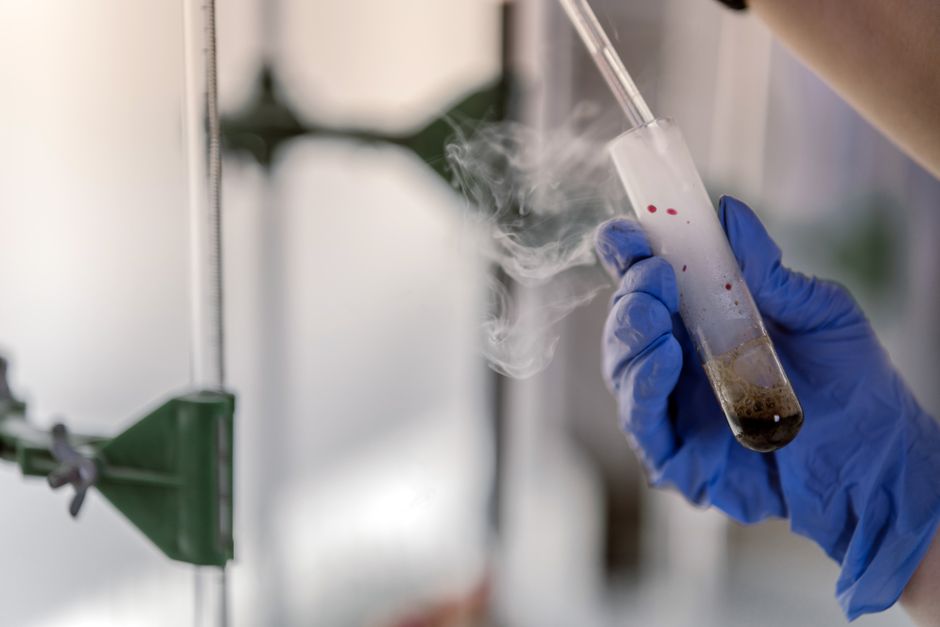
Did You Know? 10 Facts About Leidenfrost Effect

Did You Know? 10 Facts About Leidenfrost Effect

⏱️ 7 min read

Did You Know? 10 Facts About Leidenfrost Effect

Introduction: The Fascinating Leidenfrost Effect

Have you ever noticed how a droplet of water dances and skitters across a scorching hot pan instead of immediately evaporating? This mesmerizing phenomenon is known as the Leidenfrost effect, named after the German physician Johann Gottlob Leidenfrost who first documented it in 1756. This peculiar scientific occurrence happens when a liquid comes into near contact with a surface significantly hotter than its boiling point, creating an insulating vapor layer that prevents direct contact. The Leidenfrost effect is not just a kitchen curiosity—it has profound implications in various fields, from industrial applications to everyday life. Let's explore ten fascinating facts about this remarkable physical phenomenon that continues to captivate scientists and observers alike.

The Ten Remarkable Facts About the Leidenfrost Effect

1. The Insulating Vapor Cushion

At the heart of the Leidenfrost effect lies an incredibly thin layer of vapor that forms between the liquid and the hot surface. When the surface temperature exceeds what's called the Leidenfrost point—typically around 193°C (379°F) for water—the bottom layer of the liquid droplet instantly vaporizes. This vapor layer acts as an insulating cushion, preventing the rest of the liquid from making direct contact with the hot surface. The layer is typically only a fraction of a millimeter thick, yet it's powerful enough to support the entire droplet and significantly slow down the evaporation process. This counterintuitive result means that a water droplet can actually last longer on an extremely hot surface than on a merely hot one.

2. Historical Discovery and Documentation

Johann Gottlob Leidenfrost documented this phenomenon in his 1756 treatise "De Aquae Communis Nonnullis Qualitatibus Tractatus" (A Tract About Some Qualities of Common Water). While the effect had likely been observed by cooks and metalworkers for centuries before, Leidenfrost was the first to study it scientifically and describe it in detail. He conducted experiments by dropping water onto red-hot iron spoons and carefully documenting how the droplets behaved differently depending on the temperature. His work laid the foundation for understanding phase transitions and heat transfer, making him an important figure in thermal physics despite this being his only major contribution to science.

3. The Leidenfrost Point Varies by Liquid

Different liquids have different Leidenfrost points depending on their unique physical and chemical properties. Water typically reaches its Leidenfrost point at around 193°C, but this temperature varies based on surface characteristics and atmospheric pressure. Liquid nitrogen, with its extremely low boiling point of -196°C, can demonstrate the Leidenfrost effect when poured onto surfaces at room temperature. Other liquids like alcohol, acetone, and various oils each have their own specific Leidenfrost points. The temperature required depends on factors such as the liquid's boiling point, surface tension, thermal conductivity, and viscosity, making each substance behave uniquely under these extreme conditions.

4. Application in Metallurgy and Manufacturing

The Leidenfrost effect plays a crucial role in industrial metalworking processes, particularly in quenching and tempering operations. When hot metal is plunged into water or oil for rapid cooling, understanding the Leidenfrost effect is essential for controlling the cooling rate and preventing defects. If the metal surface is hot enough to create a stable vapor blanket, it will cool much more slowly than desired, potentially affecting the material's final properties. Metallurgists must carefully control temperatures and use specific quenching media to either avoid or exploit the Leidenfrost effect, depending on the desired outcome. This knowledge has been instrumental in developing stronger, more durable metal components for everything from automotive parts to aerospace applications.

5. The Dancing Droplet Phenomenon

One of the most visually striking aspects of the Leidenfrost effect is how droplets appear to "dance" or "levitate" on hot surfaces. The vapor layer beneath the droplet is not uniform, and small disturbances create pressure variations that cause the droplet to move erratically across the surface. Additionally, the evaporating vapor escapes from beneath the droplet asymmetrically, creating tiny jet propulsion effects that push the droplet in various directions. This makes Leidenfrost droplets incredibly mobile, and they can travel considerable distances across a hot surface with minimal friction. Scientists have even created specially textured surfaces with microscopic ramps that can guide these droplets in specific directions, opening possibilities for novel cooling systems and microfluidic devices.

6. Self-Propelled Leidenfrost Motion

Researchers have discovered that by carefully designing surface textures and patterns, they can control and direct the movement of Leidenfrost droplets. When placed on asymmetrically textured surfaces, such as those with tiny ratchet-like structures, droplets will spontaneously move in a preferred direction without any external force. This happens because the asymmetric geometry creates unequal vapor flow underneath the droplet, generating a net propulsive force. This discovery has opened up exciting possibilities for self-cleaning surfaces, heat management systems, and even autonomous microfluidic devices that could manipulate tiny amounts of liquid without pumps or external power sources.

7. The Leidenfrost Effect and Human Safety

Surprisingly, the Leidenfrost effect can provide brief protection in certain dangerous situations. When a wet finger briefly touches a very hot surface—significantly hotter than the Leidenfrost point of water—the moisture can create a temporary protective vapor barrier that prevents immediate burning. This is why performers can sometimes briefly touch molten metal or why workers can quickly wet their hands before handling extremely hot objects for a fraction of a second. However, this is extremely dangerous and should never be attempted deliberately, as the protection only lasts for milliseconds and the consequences of miscalculation are severe. Understanding this effect has helped develop better safety protocols in industries dealing with extreme temperatures.

8. Impact on Firefighting and Fire Safety

The Leidenfrost effect has significant implications for firefighting strategies and fire safety equipment. When water droplets from fire hoses hit surfaces that are hot enough to induce the Leidenfrost effect, the water becomes less effective at cooling because the vapor layer reduces heat transfer. This is why firefighters must understand the phenomenon and sometimes use additives or different spray patterns to improve cooling efficiency on extremely hot surfaces. Additionally, researchers are studying how the Leidenfrost effect influences the behavior of fire suppression systems, particularly in scenarios involving liquid fires or hot industrial equipment. Some modern firefighting foams and water additives are specifically designed to lower the Leidenfrost point or disrupt the vapor layer to improve cooling effectiveness.

9. Leidenfrost Stars and Complex Shapes

Under certain conditions, Leidenfrost droplets don't remain spherical but instead form elaborate star-like shapes with multiple extending points. These "Leidenfrost stars" occur when the droplet is large enough and the vapor flow beneath creates oscillations that cause the liquid to develop symmetrical protrusions. The number of points on these stars depends on factors such as droplet size, liquid properties, and surface temperature. This phenomenon has fascinated physicists studying fluid dynamics and surface tension. High-speed photography has revealed that these stars are highly dynamic, with their points constantly growing, retracting, and sometimes breaking off into smaller droplets, creating mesmerizing patterns that demonstrate the complex interplay between thermal, hydrodynamic, and surface forces.

10. Future Applications in Technology

Scientists and engineers are actively exploring innovative applications of the Leidenfrost effect in emerging technologies. Researchers are developing advanced cooling systems for electronics that use controlled Leidenfrost conditions to efficiently move heat away from sensitive components. Others are investigating its potential in energy harvesting, where the kinetic energy of moving Leidenfrost droplets could be converted to electricity. In the medical field, the effect is being studied for its potential in creating more efficient cryogenic preservation systems and novel drug delivery mechanisms. There's also promising research into using Leidenfrost-based systems for water purification, where contaminated water could be purified through controlled evaporation and condensation processes. As our understanding of this phenomenon deepens, new applications continue to emerge across diverse fields of science and technology.

Conclusion

The Leidenfrost effect demonstrates how a seemingly simple observation in the kitchen can lead to profound scientific understanding with wide-ranging practical applications. From its historical documentation in the 18th century to cutting-edge research in modern laboratories, this phenomenon continues to reveal new secrets and possibilities. Whether it's improving industrial processes, enhancing safety protocols, or enabling future technologies, the Leidenfrost effect proves that fundamental physics can be both beautiful to observe and immensely useful to understand. The next time you see a water droplet dancing on a hot pan, remember that you're witnessing a complex interplay of thermodynamics, fluid dynamics, and surface physics—a small miracle of science happening right before your eyes. These ten facts only scratch the surface of this fascinating phenomenon, inviting us to look more closely at the extraordinary physics hidden within everyday experiences.