









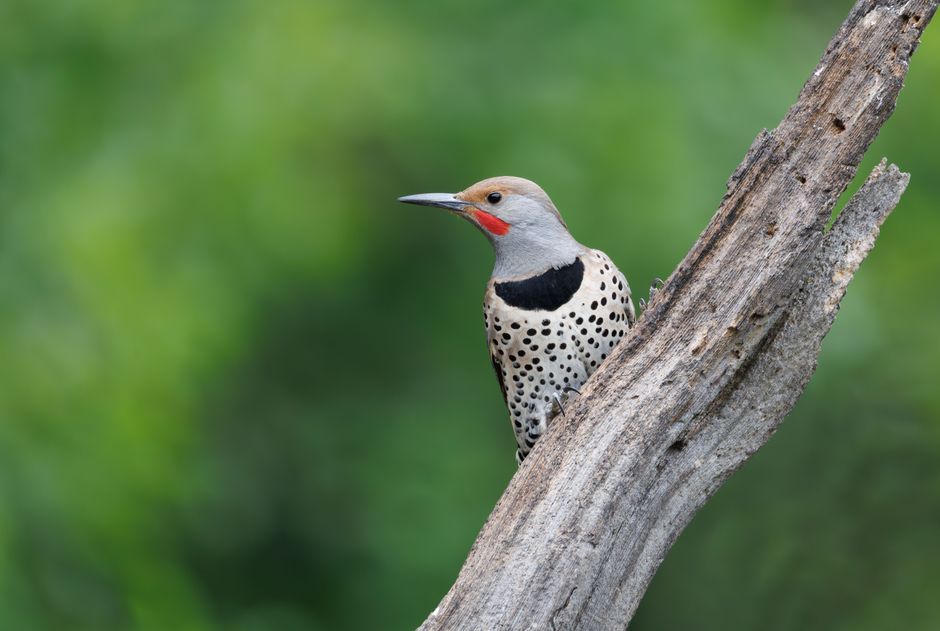
Why Woodpeckers Don't Get Concussions Despite Hammering
By TriviaOwl, Animals Desk — Published August 2, 2026
Table of Contents
- Key Takeaways
- The Anatomy of Impact Resistance
- The Mechanics of the Perfect Strike
- Comparing Woodpecker Species and Their Adaptations
- What Recent Research Reveals
- Engineering Inspiration from Nature
- Frequently Asked Questions
Imagine slamming your head into a solid tree trunk 20 times per second. For most animals, including humans, this would result in catastrophic brain injury within moments. Yet woodpeckers perform this feat thousands of times daily without so much as a headache. These remarkable birds have evolved one of nature's most sophisticated shock-absorption systems, protecting their brains from forces that would leave other creatures with severe concussions. Understanding why woodpeckers don't get concussions despite hammering trees relentlessly reveals an extraordinary example of evolutionary engineering.
The physics involved are staggering. When a woodpecker strikes a tree, it experiences deceleration forces exceeding 1,200 times the force of gravity—roughly 1,200 g's. For comparison, humans lose consciousness at around 5 g's, and anything above 100 g's typically causes severe brain trauma. The secret lies not in a single adaptation, but in a suite of specialized features working together.
Key Takeaways
- Woodpeckers endure impact forces exceeding 1,200 g's—more than 200 times what would cause human brain injury.
- Their skulls contain spongy bone that absorbs shock, while their brains fit tightly inside with minimal cerebrospinal fluid to prevent bouncing.
- A specialized hyoid bone wraps around the skull like a seatbelt, distributing impact forces away from the brain.
- These birds strike trees up to 12,000 times per day while foraging for insects and creating nesting cavities.
- The woodpecker's straight, chisel-like bill transfers force directly along the spine rather than allowing rotational movement that causes concussions.
- Recent research suggests woodpeckers may accumulate some brain damage over time, challenging earlier assumptions about perfect protection.
The Anatomy of Impact Resistance
A woodpecker's skull is unlike that of any other bird species. The bone structure is dense yet spongy, particularly in the forehead and the back of the skull. This specialized tissue acts like a natural helmet, compressing slightly on impact to absorb energy before it reaches the brain. The skull bones are also oriented in a way that distributes force evenly across the surface rather than concentrating it in one area.
The brain itself sits in an extremely tight-fitting skull cavity with very little cerebrospinal fluid surrounding it. In humans and most animals, this fluid cushion allows the brain to move slightly within the skull—which is normally protective but becomes dangerous during rapid deceleration. The woodpecker's snug brain placement prevents this internal collision entirely. Think of it as the difference between an egg loose in a box versus one wrapped tightly in foam.
Perhaps most remarkable is the hyoid bone, a structure that in most birds simply supports the tongue. In woodpeckers, this bone has evolved into a elaborate wraparound system that extends from the bill, loops over and behind the skull, and even passes through the right nostril in some species. This creates a natural shock absorber and seatbelt that helps redirect impact forces around the brain and down through the body.
The Mechanics of the Perfect Strike
Woodpeckers don't just have protective equipment—they've mastered the technique of striking without causing rotational brain movement. Concussions in humans typically result not from straight-on impacts but from rotational forces that twist the brain inside the skull. A woodpecker's bill strikes in a perfectly straight line, perpendicular to the tree surface. This direct approach channels force straight back through the neck and spine.
The timing matters too. Each peck lasts only about 0.5 milliseconds. The bird pulls its head back and strikes again before the tree can vibrate significantly, maximizing the effectiveness of each blow while minimizing prolonged exposure to震vibration. Between strikes, specialized muscles in the neck tense and relax with precise timing to control both the force and direction of impact.
Different woodpecker species have adapted their hammering behavior to match their habitat and prey. Larger species like the pileated woodpecker can excavate deep into hardwood trees, while smaller species might focus on softer wood or dead trees where insects are more accessible.
Comparing Woodpecker Species and Their Adaptations
| Species | Average Pecks Per Second | Primary Habitat | Typical Tree Preference |
|---|---|---|---|
| Pileated Woodpecker | 15-20 | Mature forests | Large hardwoods and conifers |
| Downy Woodpecker | 13-16 | Mixed woodlands | Dead branches and softer wood |
| Red-bellied Woodpecker | 15-19 | Deciduous forests | Oak and hickory trees |
| Acorn Woodpecker | 12-15 | Oak woodlands | Dead limbs for granaries |
What Recent Research Reveals
For decades, scientists assumed woodpeckers suffered no brain damage whatsoever. Recent wildlife research has complicated this picture. Studies examining the brains of deceased woodpeckers have found accumulations of tau protein, the same substance associated with chronic traumatic encephalopathy in human athletes who suffer repeated head impacts. This discovery has sparked debate about whether woodpeckers truly escape unscathed or simply tolerate damage that would be catastrophic in other creatures.
The tau protein findings don't necessarily mean woodpeckers experience impairment. These birds continue to function normally throughout their lives, successfully foraging, breeding, and surviving in their natural habitat. The protein accumulation might represent a different biological process in avian brains compared to mammals, or it could be damage that woodpeckers can sustain without functional consequences.
What remains undisputed is that woodpeckers possess extraordinary adaptations. Their behavior in nature demonstrates remarkable animal intelligence—they communicate through drumming patterns, remember the locations of thousands of cached food items, and adjust their pecking intensity based on wood density.
Engineering Inspiration from Nature
Scientists and engineers have studied woodpecker anatomy to develop better protective equipment for humans. The insights have influenced designs for:
- Improved sports helmets that better prevent concussions by distributing impact forces
- Shock-absorption systems for sensitive electronic equipment
- Flight data recorders (black boxes) that can survive extreme impacts
- Protective packaging for shipping fragile items
The woodpecker's combination of material properties and geometric design offers lessons that purely human engineering might never have discovered. By studying how these creatures solve the problem of repetitive high-impact forces, researchers gain insights applicable far beyond wildlife biology.
Frequently Asked Questions
How many times can a woodpecker peck in a single day?
A woodpecker can peck between 8,000 and 12,000 times per day while foraging for food and excavating nesting cavities. This extraordinary number accumulates throughout hours of active feeding and territory maintenance behavior.
Do woodpeckers ever get headaches from pecking?
Scientists have found no evidence that woodpeckers experience headaches or pain from their pecking behavior. Their specialized anatomy appears to prevent the types of tissue damage and inflammation that cause pain in mammals after head impacts.
Can other bird species peck like woodpeckers without injury?
No, other bird species lack the specialized skull structure, hyoid bone configuration, and brain positioning that protect woodpeckers. Attempting similar behavior would likely result in severe injury or death for birds without these adaptations.
What would happen if a human tried to peck like a woodpecker?
A human attempting woodpecker-like head impacts would suffer immediate and severe brain injury, likely losing consciousness after just a few strikes. The forces involved far exceed what human anatomy can withstand, even with protective equipment.
The next time you hear the rhythmic drumming of a woodpecker echoing through the forest, you're witnessing millions of years of evolution solving one of biomechanics' toughest challenges. These remarkable animals remind us that nature often engineers solutions far more elegant than anything we might design from scratch—and that the line between durability and damage in the animal kingdom remains more complex than we once imagined.