







The Hidden Story of Why Sharks Predate Trees on Earth
By Trivia Owl, Staff Writer — Published November 22, 2026
Table of Contents
- Key Takeaways
- When Sharks First Appeared: The Ordovician Seas
- The Arrival of Trees: Earth's Green Revolution
- Comparing Evolutionary Timelines
- Why Sharks Have Survived So Long
- What This Tells Us About Earth's History
- Frequently Asked Questions
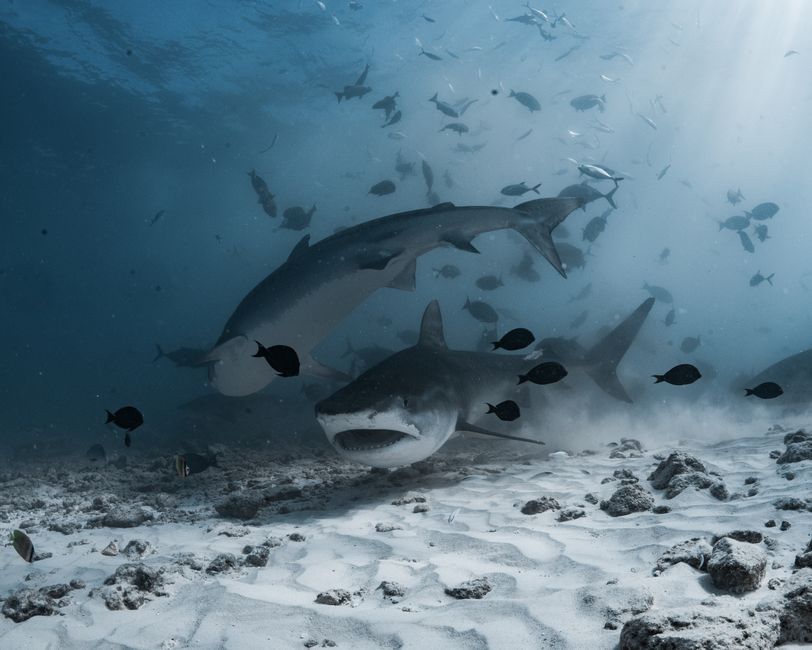
Sharks have been cruising through Earth's oceans for roughly 450 million years. Trees, on the other hand, didn't appear until about 350 million years ago. That's a gap of 100 million years—meaning sharks are older than trees by a timespan longer than the entire Age of Dinosaurs. This hidden story sharks carry in their evolutionary history reveals one of nature's most surprising trivia facts: the ocean's apex predators swam alongside primitive fish long before forests ever existed on land. It's an amazing reminder that life in the seas developed complex forms far earlier than the towering woodlands we now take for granted.
Understanding this timeline requires us to explore deep time, discover the fossil record, and examine how both sharks and trees evolved in dramatically different environments. The curiosity this fact sparks often leads to a single question: how did sharks survive so long, and what makes their story so remarkable?
Key Takeaways
- Sharks evolved approximately 450 million years ago during the Ordovician period, while trees appeared around 350 million years ago in the Devonian period.
- The 100-million-year gap between sharks and trees is longer than the entire reign of dinosaurs on Earth.
- Early sharks had cartilaginous skeletons that rarely fossilized, making their evolutionary history challenging to trace but well-documented through teeth and scales.
- The first trees, like Archaeopteris, transformed Earth's atmosphere by producing oxygen and creating soil, fundamentally changing terrestrial life.
- Sharks survived five mass extinction events, including the one that wiped out the dinosaurs 66 million years ago.
- This comparison highlights how ocean ecosystems developed complex predator-prey relationships millions of years before land ecosystems became similarly diverse.
When Sharks First Appeared: The Ordovician Seas
The earliest shark ancestors emerged during the Ordovician period, roughly 450 million years ago. These ancient fish bore little resemblance to modern great whites or hammerheads. They were small, primitive, and lacked many features we associate with today's sharks. But they possessed the defining characteristic: a skeleton made of cartilage rather than bone.
Cartilage is lighter and more flexible than bone, giving sharks an evolutionary advantage in aquatic environments. It allows for efficient movement and reduces energy expenditure while swimming. The trade-off? Cartilage doesn't fossilize well. Most of what scientists know about early sharks comes from fossilized teeth, scales, and occasional impressions in ancient rock. These durable teeth, constantly replaced throughout a shark's lifetime, have left an extensive record spanning hundreds of millions of years.
By the Devonian period—often called the "Age of Fishes"—sharks had diversified into numerous forms. Some grew armor-like scales. Others developed bizarre jaw structures. The oceans teemed with experimental body plans, many of which have no living descendants today. Sharks were already established predators when the first tetrapods began their tentative crawl onto land.
The Arrival of Trees: Earth's Green Revolution
Trees didn't exist for most of Earth's history. For billions of years, land remained barren except for microbial mats and, eventually, small plants hugging the ground. The first tree-like plants, such as Archaeopteris, appeared around 350 million years ago during the Devonian period. These weren't quite trees in the modern sense—they reproduced via spores rather than seeds—but they grew tall woody trunks and branching structures.
The emergence of trees revolutionized Earth's surface. Their roots broke down rock into soil. Their leaves photosynthesized at unprecedented scales, pumping oxygen into the atmosphere. This oxygen boost may have enabled the evolution of larger insects and animals. Forests created entirely new habitats, sheltering organisms that would never have survived on the previously exposed landscape.
The Carboniferous period, which followed, saw vast swamp forests covering much of the land. These forests would eventually become the coal deposits humans mine today. But even during this explosion of plant life, sharks continued their reign in the oceans, largely unaffected by the terrestrial transformation happening above the waterline.
Comparing Evolutionary Timelines
| Organism | First Appearance | Millions of Years Ago | Key Feature |
|---|---|---|---|
| Sharks | Ordovician Period | ~450 | Cartilaginous skeleton |
| Trees | Devonian Period | ~350 | Woody trunks, extensive roots |
| Dinosaurs (earliest) | Triassic Period | ~230 | Upright posture, varied sizes |
| Flowering Plants | Cretaceous Period | ~130 | Flowers, fruit for seed dispersal |
| Humans (Homo sapiens) | Pleistocene Epoch | ~0.3 | Large brain, bipedalism |
Why Sharks Have Survived So Long
Sharks owe their longevity to several factors. Their cartilaginous skeletons require less calcium than bone, making them adaptable to different ocean chemistries. They possess incredibly sensitive electroreception organs called ampullae of Lorenzini, which detect electrical fields produced by other organisms. This sensory advantage has helped them hunt effectively across changing environments.
Reproduction strategies vary widely among shark species. Some lay eggs. Others give live birth. This diversity allowed different lineages to exploit different ecological niches. When mass extinctions struck—and sharks have survived at least five major ones—some species always managed to persist.
Their role as apex predators also matters. Sharks occupy the top of marine food webs, regulating populations of prey species. This position insulates them somewhat from competition with other organisms. While individual species have gone extinct, the broader shark lineage has proven remarkably resilient.
What This Tells Us About Earth's History
The fact that sharks predate trees illustrates how differently life evolved in ocean versus terrestrial environments. Marine ecosystems developed complexity early. Predation, symbiosis, and ecological niches were well-established in the seas while land remained relatively simple.
This disparity makes sense. Water provides buoyancy, stable temperatures, and dissolved nutrients. Early life originated in the oceans, giving marine organisms a head start measured in billions of years. Land presented harsher challenges: desiccation, temperature extremes, and the need for structural support against gravity. Complex terrestrial ecosystems required more evolutionary innovation.
The 100-million-year head start sharks enjoyed over trees reminds us that our forest-covered continents represent a relatively recent development in Earth's 4.5-billion-year history. The blue planet was truly blue for most of its existence, dominated by ocean life long before greenery spread across the land.
Frequently Asked Questions
Are modern sharks the same as ancient sharks?
No, modern sharks belong to different species than their ancient ancestors. However, the basic body plan—cartilaginous skeleton, multiple gill slits, and replaceable teeth—has remained successful for hundreds of millions of years, though many prehistoric shark species looked quite different from today's varieties.
What was Earth like when sharks first appeared?
During the Ordovician period, Earth's continents were arranged differently, mostly clustered in the southern hemisphere. The land was barren of plants taller than a few inches. The oceans, however, were filled with diverse invertebrates, early fish, and the first shark ancestors.
Did dinosaurs and early sharks coexist?
Yes, sharks existed for roughly 220 million years before dinosaurs appeared, and they shared the planet with dinosaurs for the entire Mesozoic Era. Sharks also survived the asteroid impact that ended the dinosaur reign 66 million years ago.
Why don't we find many shark fossils?
Cartilage decomposes quickly and rarely fossilizes, unlike bone. Most shark fossils consist of teeth and dermal denticles (tooth-like scales), which are harder and more likely to be preserved in sediment. Complete shark skeletons are exceptionally rare and scientifically valuable.
Next time you walk through a forest or spot a shark documentary, consider this: those fish were already ancient mariners when the first tree cast its first shadow on land. The hidden story sharks carry spans an almost unimaginable stretch of time, connecting us to an Earth that would be utterly alien to human eyes—yet one that set the stage for everything that followed.