










1 / 10 Questions
0 Points

Which Country Has The Most Time Zones?

Russia

United States

China

France

Points won
0
Correct score
0%

More Questions

11 Strange Facts About Immortal Jellyfish Aging Backward

Immortal jellyfish can reverse their aging process and potentially live forever. Discover 11 bizarre facts about nature's most remarkable survival

Did You Know Bigfoot Legends Started With Newspaper Hoax

Bigfoot legends trace back to a 19th-century newspaper hoax that sparked decades of sightings and folklore. Discover the surprising origins of this myth.

The Truth About Unicorns Based on Rhino Descriptions

Unicorn myths may have originated from medieval rhino descriptions. Discover how confused travelers turned exotic animals into legendary beasts.

More Articles

The Truth About Lightning: Hotter Than the Sun’s Surface

The Truth About Lightning: Hotter Than the Sun’s Surface

The Truth About Lightning: Hotter Than the Sun's Surface

By Trivia Owl, Staff Writer — Published September 1, 2026

Table of Contents

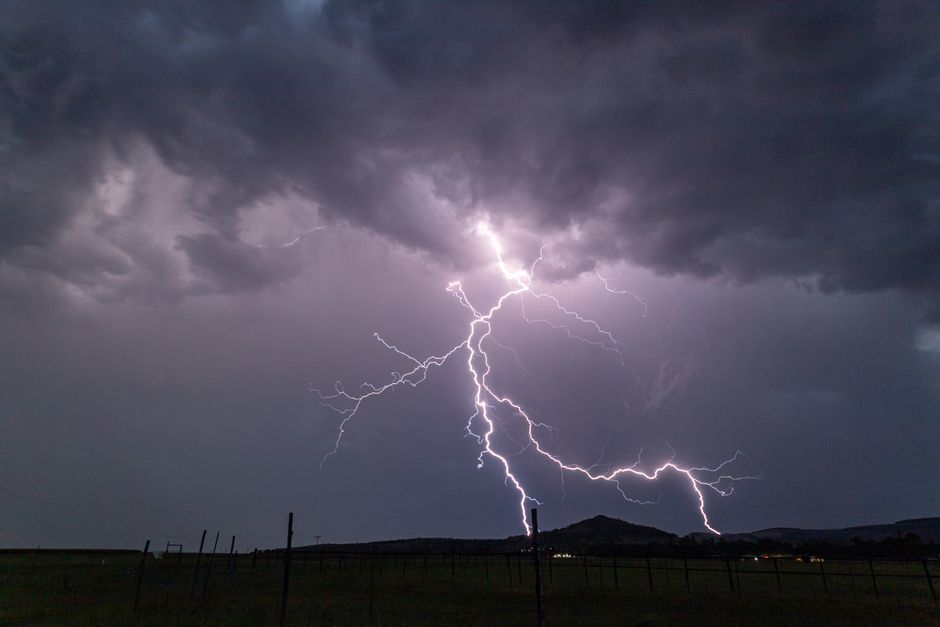
When a bolt of lightning tears through the sky, it creates temperatures that dwarf the heat you'd experience standing on the surface of our own star. This surprising truth about lightning reveals one of nature's most extreme phenomena: a lightning strike can reach temperatures around 30,000 Kelvin (roughly 53,540 degrees Fahrenheit), while the Sun's surface hovers at a comparatively cool 5,800 Kelvin. For a fraction of a second, the air channel through which lightning travels becomes five times hotter than the solar surface. It's an amazing fact that transforms how we understand these electrifying displays.

This incredible heat happens in an instant, lasting only milliseconds, but it's enough to trigger the explosive expansion of air we hear as thunder. The discovery of lightning's extreme temperature helps explain why these bolts can split trees, fuse sand into glass, and leave permanent scars on anything they strike.

Key Takeaways

  • Lightning strikes reach temperatures around 30,000 Kelvin, approximately five times hotter than the Sun's surface temperature of 5,800 Kelvin.
  • The extreme heat causes air to expand explosively, creating the shock wave we recognize as thunder.
  • A typical lightning bolt carries about 15,000 amperes of electrical current and transfers roughly one billion volts.
  • Earth experiences approximately 100 lightning strikes every single second, totaling about 8.6 million strikes per day.
  • Lightning can create fulgurites—hollow tubes of glass—when it strikes sandy soil, fusing silica particles together instantly.
  • The rapid heating and cooling cycle happens so quickly that a lightning channel returns to ambient temperature within microseconds.

The Truth About Lightning's Hotter-Than-the-Sun Temperature

How does a fleeting atmospheric discharge outpace the nuclear furnace at the heart of our solar system? The answer lies in understanding what we mean by "the Sun's temperature." The Sun isn't uniformly hot throughout. Its core burns at roughly 15 million Kelvin, where nuclear fusion transforms hydrogen into helium. But the visible surface—the photosphere—maintains a temperature of about 5,800 Kelvin.

Lightning's channel, by contrast, is a narrow conduit of superheated plasma typically only an inch or two wide. When electrons surge through this channel during a strike, they collide violently with air molecules. These collisions transfer kinetic energy into thermal energy at an extraordinary rate. Within microseconds, the air heats to around 30,000 Kelvin.

This temperature doesn't last. It can't. The surrounding cooler air acts as a massive heat sink, absorbing the thermal energy almost as quickly as it's generated. The entire heating and cooling cycle completes in less time than it takes to blink. But for that brief moment, the lightning channel truly outshines the Sun's surface.

Why Lightning Produces Thunder

The connection between lightning's heat and the thunder that follows is direct and dramatic. When air molecules heat to 30,000 Kelvin, they expand violently—faster than the speed of sound. This creates a shock wave that propagates outward from the lightning channel. We perceive this shock wave as thunder.

Because light travels much faster than sound, you see the lightning before you hear its accompanying thunder. Counting the seconds between flash and rumble, then dividing by five, gives you the approximate distance to the strike in miles. This simple calculation works because sound travels roughly one mile every five seconds through air at typical temperatures and pressures.

Comparing Nature's Extreme Temperatures

Phenomenon Temperature (Kelvin) Temperature (Fahrenheit)
Lightning bolt channel ~30,000 K ~53,540°F
Sun's core ~15,000,000 K ~27,000,000°F
Sun's surface (photosphere) ~5,800 K ~9,980°F
Sun's corona ~1,000,000 K ~1,800,000°F
Lava from volcano ~1,200 K ~1,700°F
Candle flame ~1,800 K ~2,800°F

The Electrical Power Behind the Heat

Lightning's temperature stems from its enormous electrical power. A typical lightning strike carries a current of about 15,000 amperes—roughly a thousand times the current that flows through a household electrical outlet. The voltage can exceed one billion volts as the bolt bridges the gap between cloud and ground.

Yet despite this impressive power, a lightning strike doesn't carry as much total energy as you might expect. Most of the electrical discharge lasts only a few ten-thousandths of a second. The entire energy content of a typical bolt equals roughly 250 kilowatt-hours—enough to power a 100-watt light bulb for about three months. Capturing and storing this energy remains impractical because of the brief, unpredictable nature of strikes.

Physical Evidence of Lightning's Heat

The intense temperature of lightning leaves behind tangible proof. When lightning strikes sandy soil or certain rocks, it can create fulgurites—branching, hollow tubes of natural glass. The heat fuses silica particles together in the shape of the lightning's path through the ground. Some fulgurites extend several feet into the earth, preserving a permanent record of the strike.

Trees struck by lightning often show a spiral pattern of damage along their trunks. The superheated sap and moisture inside the tree expand explosively, blowing bark outward in a characteristic twisting pattern. Metal objects can melt or weld together. Clothing can catch fire. The heat is real, immediate, and devastating.

Lightning Myths and Misconceptions

Many people believe lightning never strikes the same place twice. This is demonstrably false. Tall structures like the Empire State Building receive dozens of strikes annually. Any prominent feature in a landscape—a tree, tower, or building—can be struck repeatedly because it remains the most electrically attractive path to ground.

Another common misconception holds that rubber tires protect you from lightning while in a car. The tires provide no meaningful insulation. Instead, a car's metal frame creates a Faraday cage effect, channeling the electrical current around the exterior of the vehicle and into the ground. The occupants remain safe inside this protective shell, not because of the rubber below, but because of the metal around them.

Some believe that lightning only occurs during rainstorms. Dry thunderstorms, common in arid regions, produce lightning without significant precipitation reaching the ground. These strikes pose particular danger because they can ignite wildfires in dry vegetation.

Frequently Asked Questions

Is lightning really hotter than the Sun?

Lightning is hotter than the Sun's visible surface (photosphere) but not hotter than the Sun's core. A lightning channel reaches about 30,000 Kelvin, while the solar surface maintains roughly 5,800 Kelvin—making lightning about five times hotter than the Sun's surface.

How long does lightning's extreme heat last?

The peak temperature of a lightning strike lasts only microseconds to milliseconds. The channel heats and cools so rapidly that the entire thermal cycle completes faster than a human eye can perceive, though the light we see can persist slightly longer due to afterglow effects.

Can lightning create glass from sand?

Yes, when lightning strikes sandy soil, it can create fulgurites—hollow tubes of natural glass formed when the intense heat fuses silica particles together. These structures preserve the branching path of the lightning bolt through the ground and can extend several feet deep.

How many lightning strikes occur on Earth each day?

Scientists estimate that Earth experiences approximately 100 lightning strikes every second, totaling roughly 8.6 million strikes per day or about 3 billion strikes annually. The majority occur over land in tropical regions where thunderstorm activity is most frequent.

The next time you witness a thunderstorm, remember that each brilliant flash briefly outshines our Sun's surface in sheer temperature. These atmospheric fireworks represent some of the most extreme conditions naturally occurring on our planet, all compressed into channels narrower than your thumb and lasting less time than a heartbeat. Nature rarely demonstrates its raw power more vividly than in these fleeting moments when Earth touches temperatures normally reserved for stellar surfaces.

Hummingbird Heartbeat: Record-Breaking 1,200 Beats Per Minute

Hummingbird Heartbeat: Record-Breaking 1,200 Beats Per Minute

Hummingbird Heartbeat: Record-Breaking 1,200 Beats Per Minute

By TriviaOwl, Animals Desk — Published August 20, 2026

Table of Contents

Imagine your heart beating twenty times every single second. That's the reality for some of the world's smallest birds during peak activity. The hummingbird heartbeat record stands at an astonishing 1,200 beats per minute, a rate that would be instantly fatal to humans but is essential for these remarkable creatures. This extraordinary cardiovascular performance powers one of nature's most energy-demanding lifestyles, enabling flight patterns that no other bird can match.

These tiny animals have evolved one of the most efficient metabolic systems in the vertebrate world. Their hearts, no larger than a pencil eraser, pump with such ferocity that they've become a symbol of nature's ability to push biological limits to seemingly impossible extremes.

Key Takeaways

  • Hummingbird hearts can beat up to 1,200 times per minute during intense flight, roughly twenty beats every second.
  • At rest, their heart rate drops to around 250 beats per minute, still faster than most mammals during exercise.
  • The blue-throated mountain-gem hummingbird holds records among the largest hummingbird species with documented heart rates exceeding 1,200 beats per minute.
  • These birds consume up to twice their body weight in nectar daily to fuel their extreme metabolism.
  • Hummingbirds enter a hibernation-like state called torpor at night, slowing their heart rate to as low as 50 beats per minute to conserve energy.
  • Their heart represents approximately 2.5 percent of their total body weight, one of the largest heart-to-body ratios in the animal kingdom.

Why the Hummingbird Heartbeat Record Matters

The hummingbird heartbeat record isn't just a biological curiosity. It represents an evolutionary solution to one of flight's most demanding challenges. Hummingbirds are the only birds capable of sustained hovering and flying backward, maneuvers that require enormous amounts of energy. Their wing-beat frequency ranges from 50 to 80 times per second during normal flight, creating the characteristic hum that gives these species their name.

This type of flight demands oxygen delivery at rates that dwarf most other vertebrates. The cardiovascular system must supply fuel to wing muscles that can constitute up to 30 percent of the bird's total body mass. Every cell in those muscles needs constant glucose and oxygen, and any interruption would cause the bird to literally fall from the sky.

The heart itself is a marvel of compact efficiency. Unlike human hearts, which have relatively thick muscular walls, hummingbird hearts are thin-walled and beat with remarkable rapidity. The chambers fill and empty in fractions of a second, creating blood flow velocities that would damage the delicate vessels of larger animals.

Comparing Heart Rates Across the Animal Kingdom

Animal Resting Heart Rate (BPM) Active Heart Rate (BPM)
Hummingbird 250 1,200
Shrew 600 1,000
Mouse 500 700
Cat 120-140 220
Human 60-100 180
Elephant 30 50
Blue Whale 8-10 37

This comparison reveals a clear pattern in nature: smaller animals generally have faster heart rates. The relationship between body size and metabolic rate follows what scientists call allometric scaling. Tiny creatures lose heat rapidly due to their large surface-area-to-volume ratio, requiring faster metabolisms to maintain body temperature.

The Metabolic Cost of Being a Hummingbird

Sustaining a 1,200-beat-per-minute heart rate comes with staggering energy requirements. Hummingbirds have the highest metabolic rate of any vertebrate when adjusted for body mass. During active hours, these birds must visit hundreds or even thousands of flowers daily, consuming nectar that provides the sugar necessary to power their extreme lifestyle.

Their metabolism runs so hot that they would starve to death in hours without constant feeding. This explains their aggressive territorial behavior around food sources. A hummingbird defending a patch of flowers isn't being dramatic—it's protecting its survival. The energy budget is so tight that even a few hours without food during the day could be catastrophic.

To cope with nighttime fasting, hummingbirds have evolved torpor, a state of deep metabolic suppression. Their body temperature can drop by as much as 50 degrees Fahrenheit, and their heart rate plummets to around 50 beats per minute. This adaptation allows them to survive the night without feeding, though arousing from torpor in the morning requires a significant energy expenditure as the heart rate accelerates back to normal levels.

Habitat and Species Variations

More than 300 hummingbird species exist, ranging from the bee hummingbird—the world's smallest bird at just over two inches long—to the giant hummingbird, which reaches nearly nine inches. Heart rate records vary somewhat by species, with smaller species generally achieving higher peak rates than their larger relatives.

Wildlife researchers have documented that high-altitude species face additional cardiovascular challenges. In mountainous habitats where oxygen is scarce, hummingbirds have evolved larger hearts and higher blood oxygen-carrying capacity. These adaptations allow them to maintain their incredible flight performance even in thin air where other birds struggle.

The ruby-throated hummingbird, common across eastern North America, undertakes a migration that includes a nonstop 500-mile flight across the Gulf of Mexico. During this journey, the bird's cardiovascular system operates at near-maximum capacity for up to 20 hours, a feat of endurance that rivals any animal on Earth.

What This Means for Understanding Animal Physiology

Studying hummingbird cardiovascular systems has provided insights that extend beyond ornithology. Medical researchers have examined how these tiny hearts avoid the damage that rapid heart rates cause in mammals. Understanding the cellular mechanisms that protect hummingbird heart tissue from oxidative stress could inform treatments for human cardiac conditions.

The birds' ability to rapidly switch between extreme metabolic states—from torpor to full activity—also interests scientists studying metabolic disorders. How do these creatures avoid the equivalent of diabetes despite consuming enormous amounts of sugar? The answer lies in extraordinarily efficient insulin signaling and glucose processing systems that clear sugar from the bloodstream almost instantly.

Conservation efforts for many hummingbird species depend on understanding their unique physiological needs. Habitat loss affects these birds more severely than many other species because their high energy demands require abundant, reliable food sources. Protecting native flowering plants isn't just about aesthetics; it's about maintaining the ecological infrastructure that makes such extreme metabolisms possible.

Frequently Asked Questions

How fast does a hummingbird's heart beat compared to a human?

A hummingbird's heart can beat up to 1,200 times per minute during flight, while a human heart typically beats 60-100 times per minute at rest and rarely exceeds 180 during intense exercise. Even a resting hummingbird's heart beats around 250 times per minute, faster than most humans ever experience.

Can hummingbirds die from heart attacks?

Hummingbirds rarely die from heart attacks in the traditional sense because their cardiovascular systems are specifically adapted to handle extreme heart rates. However, they can die from cardiac failure if unable to meet their enormous energy needs, essentially starving to death when their hearts can no longer be fueled.

Which hummingbird species has the fastest heartbeat?

The smallest hummingbird species, particularly the bee hummingbird, are believed to achieve the highest heart rates due to their tiny size and extreme metabolic demands. However, precise measurements are difficult to obtain, and most documented records come from slightly larger species like the blue-throated mountain-gem.

How do hummingbirds survive with such fast heart rates?

Hummingbirds have evolved specialized cardiovascular adaptations including thin-walled but efficient hearts, extremely high capillary density in flight muscles, and cellular mechanisms that protect against oxidative damage. They also enter torpor at night, dramatically slowing their metabolism to conserve energy when feeding isn't possible.

The next time you see a hummingbird hovering at a flower, remember that you're watching one of evolution's most extreme cardiovascular experiments in action. That tiny chest contains a heart beating faster than you can count, sustaining a lifestyle that pushes the absolute limits of what vertebrate biology can achieve.