
9 Fascinating Facts About the Great Wall of China Length
By Trivia Daily, Staff Writer — Published September 15, 2026
Table of Contents
- Key Takeaways
- The Official Measurement That Shocked Historians
- Why the Wall China Length Varies by Dynasty
- Nine Surprising Truths About This Ancient Wonder
- Measuring an Impossible Monument
- Frequently Asked Questions
Stretching across mountains, deserts, and grasslands, the Great Wall of China stands as one of humanity’s most ambitious construction projects. But how long is this ancient wonder, really? The answer surprises most people. The wall China length has been measured, remeasured, and debated for centuries, revealing amazing truths that challenge what textbooks taught us. From hidden sections buried beneath farmland to walls built by different dynasties that never connected, the story of this monument’s true dimensions is far more complex and fascinating than a single number can capture.
Understanding the Great Wall’s length requires exploring not just miles and kilometers, but centuries of construction, preservation, and rediscovery. Let’s discover what makes measuring this architectural marvel so remarkably complicated.
Key Takeaways
- The official measurement of all Great Wall sections across all dynasties totals approximately 13,171 miles (21,196 kilometers), far exceeding most estimates.
- The Ming Dynasty wall, the most famous and well-preserved section, spans roughly 5,500 miles on its own.
- Natural barriers like mountains and rivers were incorporated as part of the defensive system, complicating length calculations.
- Many sections have been lost to erosion, agriculture, and urban development over the centuries.
- The wall isn’t a single continuous structure but rather multiple walls built by different dynasties over 2,000 years.
- Some portions were built in parallel lines, creating overlapping defensive networks that add to the total distance.
The Official Measurement That Shocked Historians
For decades, guidebooks claimed the Great Wall stretched about 4,000 miles. That figure seemed impressive enough. Then in 2012, China’s State Administration of Cultural Heritage released findings from a comprehensive archaeological survey that had taken five years to complete. The result? A staggering 13,171 miles of walls, trenches, and natural defensive barriers constructed across multiple dynasties.
This measurement included every section ever built, from the earliest walls constructed during the Warring States period (7th century BCE) through the Ming Dynasty (1368-1644 CE). The survey team used advanced technologies including GPS and infrared mapping to locate sections buried under sand, overgrown by vegetation, or incorporated into modern buildings. Many of these segments had been completely forgotten by local populations.
The revelation fundamentally changed how historians view the scale of ancient Chinese engineering. What seemed like a single monumental project was actually centuries of separate construction efforts spread across a territory larger than Western Europe.
Why the Wall China Length Varies by Dynasty
Different Chinese dynasties built walls in different locations for different strategic purposes. The Qin Dynasty connected existing state walls around 221 BCE, creating the first unified defensive line. The Han Dynasty extended these fortifications westward into the Gobi Desert to protect Silk Road trade routes. The Ming Dynasty, responding to Mongol threats, constructed the most extensive and durable sections, many of which tourists visit today.
These walls rarely followed the same path. Some dynasties prioritized protecting northern borders against nomadic invasions. Others focused on securing trade corridors or defending newly conquered territories. The result resembles overlapping layers of fortification rather than a single continuous barrier.
| Dynasty | Approximate Length | Primary Purpose |
|---|---|---|
| Qin Dynasty | 3,100 miles | Unified defense against northern tribes |
| Han Dynasty | 6,200 miles | Protected Silk Road trade routes |
| Ming Dynasty | 5,500 miles | Defense against Mongol invasions |
Nine Surprising Truths About This Ancient Wonder
1. Natural Features Count Toward the Total Distance
Ancient engineers were pragmatic. Why build a wall where a steep mountain or raging river already provided a natural barrier? Significant portions of the Great Wall’s defensive system incorporated cliffs, rivers, and mountain ridges. These natural obstacles were integrated into military strategy and are counted in official measurements. This approach saved resources and labor while creating an effective defensive network that worked with the landscape rather than against it.
2. Multiple Parallel Walls Exist in Some Regions
In strategic areas, builders constructed two, three, or even four parallel walls to create layered defenses. The northern Beijing region contains several overlapping wall systems built during different periods. Each line served a specific purpose: outer walls for early warning, middle walls for initial defense, and inner walls protecting key cities and supply routes. These parallel structures significantly increase the total measured length.
3. About One-Third Has Vanished Completely
Time has not been kind to much of the Great Wall. Roughly 30 percent of the Ming Dynasty wall has disappeared due to natural erosion, intentional demolition, or conversion into building materials by local communities. Farmers have dismantled sections to clear land for agriculture. Modern construction projects have paved over ancient fortifications. What remains today represents only a fraction of what once stood.
4. The Wall Never Actually Kept Invaders Out
Despite its imposing presence, the Great Wall failed its primary military purpose repeatedly throughout history. Mongol forces under Genghis Khan breached it in the 13th century. The Manchu armies walked through in 1644, ending the Ming Dynasty. The wall’s real value lay not in being an impenetrable barrier but in slowing invaders, providing elevated observation points, and facilitating troop movement along its length. It was a sophisticated military communication and logistics network disguised as a wall.
5. Some Sections Sit at Extreme Altitudes
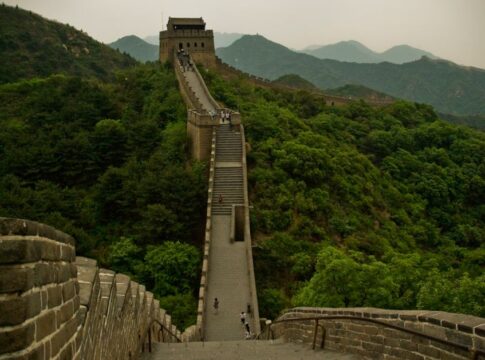
The Great Wall doesn’t follow flat terrain. Sections climb to elevations exceeding 5,000 feet above sea level, traversing some of China’s most challenging mountain ranges. Building on steep slopes required innovative engineering solutions including foundation systems anchored into bedrock and drainage channels to prevent water damage. The physical demands on construction workers at these altitudes were extraordinary.
6. Width Varies Dramatically Along Its Length
Not all sections were built equally. The most fortified Ming Dynasty sections near Beijing measure 15 to 30 feet wide at the base, wide enough for five horses to ride side by side. Earlier walls in remote regions might be only 10 feet wide. Some deteriorated sections have narrowed to barely three feet across. This variation reflects different strategic priorities, available resources, and construction periods spanning two millennia.
7. Construction Materials Changed With Geography
Builders used whatever materials were locally available. In mountainous regions, workers quarried stone. Across the Loess Plateau, they packed earth and gravel. Desert sections incorporated reeds and tamarisk branches. The famous brick-and-stone sections tourists photograph represent only the Ming Dynasty construction in resource-rich areas. Most of the wall was built from far humbler materials that have weathered poorly over centuries.
8. Modern Technology Keeps Discovering Lost Sections
Satellite imagery and aerial surveys continue revealing previously unknown wall segments. In 2012, researchers discovered sections in the Gobi Desert buried under sand dunes. Ground-penetrating radar has located walls hidden beneath centuries of accumulated soil. Each discovery adds to our understanding of the wall’s true extent. The official length measurement may increase further as technology improves and remote regions receive more thorough archaeological attention.
9. The Wall Is Actually Visible From Space (Sort Of)
The popular myth claims astronauts can see the Great Wall from the moon. That’s false—it’s far too narrow. However, astronauts in low Earth orbit have photographed sections under ideal lighting conditions, though it requires knowing exactly where to look. The wall appears as a thin line, no more visible than highways or other large human structures. The myth persists because the idea captures our imagination about the wall’s scale, even if the physics don’t support it.
Measuring an Impossible Monument
Calculating the Great Wall’s length presents unique challenges that go beyond simply measuring distance. Archaeologists must decide what counts as “wall” versus “ruins” versus “completely gone.” Should trenches and earthworks be included? What about beacon towers that stood isolated from wall sections? Different methodologies produce different results, which explains why sources cite varying numbers.
The 2012 survey attempted to create a comprehensive inventory by including every defensive structure associated with the Great Wall system across all historical periods. This approach treats the monument as an evolving defensive network rather than a single construction project. The resulting 13,171-mile figure represents the cumulative effort of countless dynasties, millions of workers, and over 2,000 years of construction.
Preservation efforts now focus on documenting and protecting what remains before more sections disappear. UNESCO designated the Great Wall a World Heritage Site in 1987, recognizing both its historical significance and its endangered status. Chinese authorities have implemented stricter regulations against damaging wall sections, though enforcement in remote areas remains challenging.
Frequently Asked Questions
How long would it take to walk the entire Great Wall?
Walking the complete 13,171-mile length would take approximately 18 months of continuous hiking at 25 miles per day. However, many sections are inaccessible, destroyed, or located in restricted military zones, making a complete end-to-end journey impossible. Most hikers focus on restored sections near Beijing.
What is the oldest section of the Great Wall still standing?
The oldest surviving sections date to the Warring States period, around the 7th century BCE, though these early walls exist only as earthen ruins in remote areas. The oldest brick-and-stone sections accessible to visitors were built during the Ming Dynasty, starting in the 14th century.
Is the Great Wall really one continuous structure?
No, the Great Wall consists of many separate walls built by different dynasties that rarely connect to each other. Significant gaps exist between sections, some spanning hundreds of miles. The “Great Wall” is better understood as a defensive network rather than a single continuous barrier.
How many people died building the Great Wall?
Estimates vary widely, but historians believe hundreds of thousands of workers died during construction across all dynasties. The harsh working conditions, remote locations, and dangerous construction methods made wall building extremely hazardous. Many laborers were conscripted peasants, soldiers, or prisoners.
The true length of the Great Wall continues to inspire curiosity precisely because it defies simple measurement. Each new survey uncovers forgotten sections, each archaeological study revises our understanding, and each visitor discovers that this ancient wonder exceeds whatever number they’d heard before. Perhaps the wall’s greatest achievement isn’t its length at all, but its ability to still surprise us after thousands of years.