









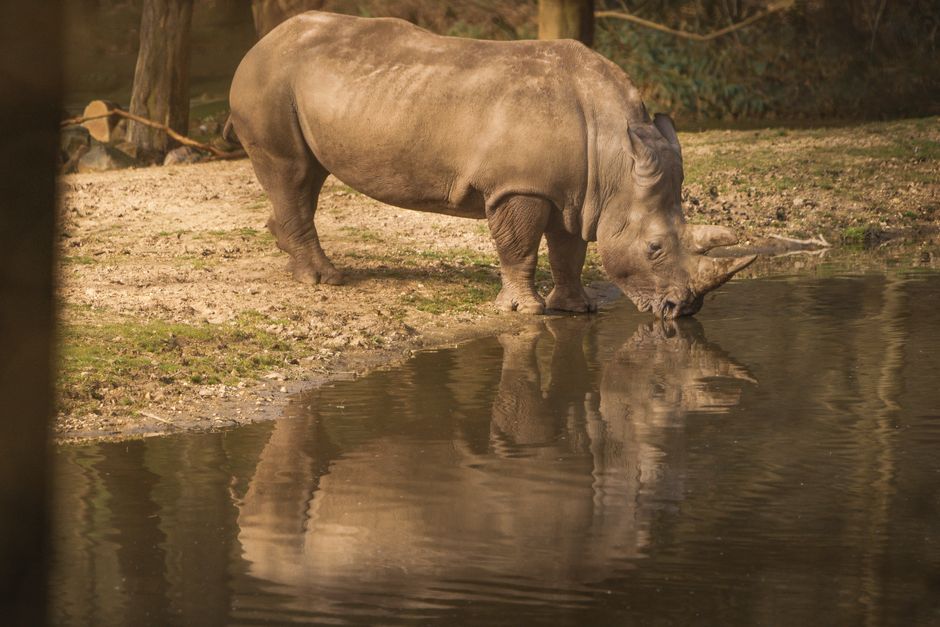
Unicorn Legend Origins: The Rhinoceros Misidentification
By Trivia Daily, Staff Writer — Published August 21, 2026
Table of Contents
- Key Takeaways
- How Unicorn Legend Origins Trace Back to Ancient Misidentifications
- The Elasmotherium Connection
- Medieval Europe's Unicorn Horn Trade
- Marco Polo's Reality Check
- Comparing Real One-Horned Animals
- Cultural Transformations of the Myth
- Frequently Asked Questions
The majestic unicorn, with its spiraling horn and pure white coat, has captivated human imagination for millennia. But the unicorn legend origins might surprise you—these mythical creatures likely stem from confused reports of very real animals. Travelers' tales of one-horned beasts, filtered through centuries of cultural telephone, transformed stocky rhinoceroses into elegant, magical horses. This fascinating case of mistaken identity reveals how myths emerge from fragments of truth, distorted by distance, language barriers, and the human tendency to embellish.
The connection between unicorns and rhinos isn't just speculation. Ancient texts describe "unicorns" with characteristics that match no horse but fit rhinoceroses perfectly: thick, gray skin, a love of wallowing in mud, and a decidedly un-dainty temperament.
Key Takeaways
- Ancient Greek and Roman writers described unicorns based on secondhand accounts of Indian rhinoceroses, creating a mythology rooted in real animals.
- The elasmotherium, an extinct giant rhinoceros with a massive single horn, may have survived long enough to inspire early unicorn stories in Eurasia.
- Medieval Europeans believed unicorn horns (actually narwhal tusks) could detect and neutralize poison, selling them for astronomical sums.
- Marco Polo reported seeing "unicorns" in Southeast Asia, then described them as ugly, mud-loving creatures—clearly rhinoceroses, not the elegant beasts Europeans imagined.
- The biblical translation of the Hebrew word "re'em" as "unicorn" in the King James Bible cemented the creature's place in Western culture, though the word likely referred to wild oxen.
How Unicorn Legend Origins Trace Back to Ancient Misidentifications
When Greek physician Ctesias returned from Persia around 400 BCE, he brought tales of wild asses in India with white bodies, purple heads, and a single horn projecting from their foreheads. He claimed drinking from their horns protected against poison and disease. Ctesias never visited India himself—he compiled reports from Persian travelers who had ventured east. These descriptions, passing through multiple languages and cultures, likely started as accounts of Indian rhinoceroses.
The confusion makes sense. Imagine trying to describe a rhinoceros to someone who had never seen one, using only words, across language barriers. The animal's massive size, unusual horn, and exotic origin would make it seem almost mythical. Details would shift with each retelling. The thick, gray hide might become white in translation. The single horn would remain the most striking feature.
Roman naturalist Pliny the Elder described the "monoceros" (one-horn) as having the body of a horse, head of a stag, feet of an elephant, tail of a boar, and a single black horn. This jumbled description reads like a committee's attempt to reconstruct an animal from conflicting reports. The elephant feet suggest rhinoceros influence—no horse has feet remotely resembling an elephant's.
The Elasmotherium Connection
An even more intriguing possibility involves the elasmotherium, sometimes called the "Siberian unicorn." This extinct rhinoceros species stood over six feet tall at the shoulder and sported an enormous horn that may have reached six feet in length. Unlike modern rhinos with their relatively modest horns, the elasmotherium's single horn would have been truly spectacular.
For decades, scientists believed elasmotherium died out 350,000 years ago. Recent fossil discoveries pushed that timeline forward dramatically. Some specimens may have survived until roughly 29,000 years ago, overlapping with human populations in Eurasia. If ancient peoples encountered these massive, genuinely unicorn-like creatures, the stories would have persisted through oral tradition, eventually merging with rhinoceros reports from distant lands.
The combination of living rhinoceros accounts and inherited memories of elasmotherium could explain why unicorn legends appear across such diverse cultures. The myth had multiple sources of reinforcement.
Medieval Europe's Unicorn Horn Trade
Medieval Europeans never saw unicorns, but they desperately wanted their horns. The supposed magical properties—neutralizing poison, purifying water, curing disease—made unicorn horns more valuable than gold. Royalty and nobles paid fortunes for these treasures, which they displayed as status symbols and used as primitive medical devices.
There was just one problem: these "unicorn horns" came from narwhals. The narwhal, a whale species native to Arctic waters, grows a single spiraling tusk that can exceed eight feet in length. When Scandinavian and Russian traders brought these tusks south, European buyers accepted them as genuine unicorn horns. The spiral pattern seemed to confirm the magical nature of the object.
The deception wasn't necessarily intentional. Many traders probably didn't know narwhals existed. They purchased mysterious spiral horns from northern sources and sold them as unicorn horns because that's what buyers wanted. Queen Elizabeth I reportedly owned a narwhal tusk valued at £10,000—enough to buy a castle.
Marco Polo's Reality Check
When Marco Polo traveled through Southeast Asia in the 13th century, he encountered what locals called unicorns. His description shattered European fantasies. These "unicorns," he wrote, were nothing like the delicate creatures of legend. They had thick legs like elephants, hair like buffalo, and spent their time wallowing in mud. They were ugly and dangerous.
Polo had seen Javan rhinoceroses. His honest account should have ended the unicorn myth, but Europeans simply concluded that Asian unicorns must be a different, inferior species. The "true" unicorn—white, graceful, pure—remained safely in the realm of imagination, untainted by muddy reality.
This selective belief reveals how powerful myths can be. When facts contradicted the legend, people adjusted the facts rather than abandoning the myth.
Comparing Real One-Horned Animals
| Animal | Horn/Tusk Length | Geographic Range | Contribution to Unicorn Legend |
|---|---|---|---|
| Indian Rhinoceros | 8-24 inches | South Asia | Primary source of ancient Greek and Roman unicorn descriptions |
| Javan Rhinoceros | 10 inches (often smaller) | Southeast Asia | The "unicorn" Marco Polo described in his travels |
| Elasmotherium (extinct) | Up to 6 feet (estimated) | Eurasia | Possible source of ancient Eurasian unicorn folklore |
| Narwhal | 5-10 feet | Arctic waters | Source of medieval "unicorn horns" sold across Europe |
Cultural Transformations of the Myth
As the unicorn legend traveled west from India through Persia and into Europe, it transformed. The rhinoceros's bulk melted away. Its gray hide whitened. Its aggressive temperament softened into gentleness. Medieval European artists, who had never seen either a rhinoceros or a unicorn, depicted the creature based on cultural ideals rather than zoological reality.
Christian symbolism adopted the unicorn as a representation of purity and Christ himself. The famous unicorn tapestries, woven in the late 15th century, show an elegant white creature in a garden setting—about as far from a mud-wallowing rhinoceros as imagination allows. The myth had completely severed from its origins.
This transformation wasn't unique to unicorns. Many legendary creatures started as garbled reports of real animals. Dragons may derive from dinosaur fossil discoveries or exaggerated crocodile accounts. The kraken likely originated with giant squid sightings. Humans have always struggled to accurately communicate encounters with unfamiliar animals, and the gaps fill with imagination.
Frequently Asked Questions
Did unicorns ever actually exist?
No single-horned horse ever existed, but the elasmotherium—a giant rhinoceros species with one massive horn—lived until roughly 29,000 years ago and may have inspired early unicorn legends. Modern rhinoceroses, particularly the Indian species, contributed to ancient descriptions of unicorns.
Why did people believe unicorn horns had magical powers?
Medieval Europeans attributed magical properties to unicorn horns (actually narwhal tusks) based on ancient texts claiming they could neutralize poison and cure disease. The rarity and exotic appearance of these spiral tusks reinforced belief in their supernatural powers, making them status symbols for royalty.
What animal is most responsible for the unicorn legend?
The Indian rhinoceros is the primary source of ancient Greek and Roman unicorn descriptions. Travelers' secondhand reports of these one-horned creatures from India were filtered through multiple languages and cultures, transforming the stocky, gray rhinoceros into the elegant white unicorn of mythology.
When did people stop believing unicorns were real?
Belief in unicorns persisted well into the Renaissance, with many educated Europeans accepting their existence until the 17th century. Scientific exploration and better zoological knowledge gradually revealed that "unicorn horn" came from narwhals and that unicorn descriptions matched known rhinoceros species.
The next time you see a unicorn on a child's backpack or a corporate logo, remember the muddy, short-tempered rhinoceros that started it all. The most enchanting myths often have the most surprising origins—and sometimes the truth is just as fascinating as the legend, even if it's considerably less elegant and spends more time wallowing in swamps.