
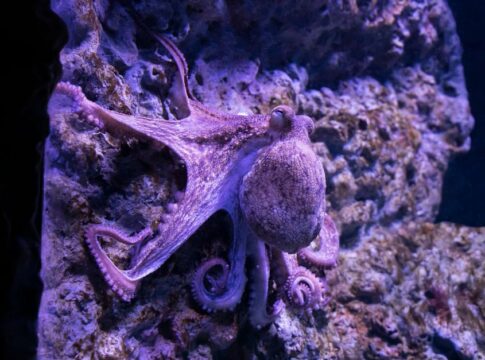
7 Bizarre Facts About Octopus Intelligence and Camouflage
By Trivia Daily, Staff Writer — Published September 29, 2026
Table of Contents
- Key Takeaways
- Understanding Bizarre Octopus Intelligence
- The Seven Most Bizarre Facts
- Comparison of Octopus Species Intelligence
- Why Octopus Intelligence Evolved Differently
- Frequently Asked Questions
Octopuses are among the ocean’s most enigmatic creatures, and for good reason. These eight-armed cephalopods possess bizarre octopus intelligence that rivals many vertebrates, combined with camouflage abilities that seem almost supernatural. What makes these facts particularly fascinating is how different octopus brains are from our own—yet they solve puzzles, use tools, and disappear before your eyes. If you’ve ever wondered what makes an octopus so remarkable, prepare to discover some truly surprising truths about these underwater geniuses.
From neurons distributed throughout their arms to skin that changes color faster than you can blink, octopuses challenge everything we thought we knew about animal cognition and adaptation. Let’s explore the amazing science behind these curious creatures.
Key Takeaways
- Octopuses have two-thirds of their neurons located in their arms, allowing each limb to act semi-independently
- Their camouflage changes in less than a second, despite octopuses being colorblind
- These cephalopods can squeeze through any opening larger than their hard beak, the only rigid part of their body
- Octopuses use tools, solve mazes, and demonstrate observational learning by watching other octopuses
- Their blood is blue due to copper-based hemocyanin instead of iron-based hemoglobin
- Each octopus arm can taste what it touches through chemoreceptors in the suckers
Understanding Bizarre Octopus Intelligence
The octopus brain operates on an entirely different blueprint than mammalian intelligence. While humans centralize most neural processing in our skulls, octopuses distribute roughly 500 million neurons throughout their bodies—with approximately two-thirds residing in their eight arms. This decentralized nervous system means each arm possesses a remarkable degree of autonomy, capable of executing complex movements and reactions without direct instruction from the central brain.
This distributed intelligence allows for multitasking that would overwhelm a centralized brain. One arm might explore a crevice for food while another manipulates a shell for shelter and yet another monitors for predators. Scientists have observed severed octopus arms continuing to react to stimuli and even attempting to bring food toward where the mouth would have been, demonstrating just how much processing power resides in the limbs themselves.
Researchers studying cephalopod cognition have documented octopuses opening childproof containers, navigating complex mazes, and recognizing individual human caretakers. Some species have been observed carrying coconut shells or clamshells to use as portable shelters—a clear example of tool use once thought exclusive to vertebrates. The octopus demonstrates that intelligence can evolve along radically different pathways, challenging our vertebrate-centric definitions of what it means to be smart.
The Seven Most Bizarre Facts
1. Octopuses Are Colorblind Masters of Color Matching
Here’s a paradox that puzzled scientists for years: octopuses create elaborate, color-coordinated camouflage displays despite having only one type of light-detecting protein in their eyes, making them functionally colorblind. Recent research suggests they may “see” with their skin itself. Octopus skin contains the same light-sensitive proteins found in eyes, allowing their skin to detect light independently of the brain. This means an octopus might sense the colors around it through its entire body surface, bypassing the visual system entirely. The exact mechanism remains under investigation, but this distributed light sensing could explain how a colorblind animal produces such accurate chromatic camouflage.
2. Each Arm Contains More Neurons Than the Central Brain
While an octopus has roughly 500 million neurons total—comparable to a dog—only about 180 million reside in the central brain. The remaining 320 million neurons are distributed among the eight arms, with each arm containing approximately 40 million neurons. This gives each limb processing power equivalent to the entire nervous system of a small mammal. The arms can perform complex reflex actions, coordinate movement, and even solve simple problems without waiting for commands from headquarters. When an octopus reaches into a crevice it cannot see, the arm essentially explores autonomously, making decisions about what to grab and what to avoid based on touch and taste.
3. Their Suckers Can Taste Everything They Touch
Octopus suckers aren’t just for gripping—they’re sophisticated sensory organs covered in chemoreceptors that function like taste buds. When an octopus touches something, it simultaneously tastes it, gathering chemical information about whether an object is food, friend, foe, or something else entirely. This combination of touch and taste in a single organ is nearly unique in the animal kingdom. An octopus exploring a rocky reef is essentially tasting its environment with hundreds of sensory-rich suckers, building a chemical map of its surroundings. This explains how octopuses can hunt successfully in complete darkness, identifying prey by chemical signature alone.
4. They Can Squeeze Through Impossibly Small Spaces
An octopus has only one hard structure in its entire body: a parrot-like beak made of chitin, located where the eight arms meet. Everything else—including the skull protecting the brain—is soft and malleable. This means an octopus can squeeze through any opening larger than its beak, which is typically about the size of the creature’s eye. Large octopuses have been documented squeezing through openings the diameter of a coin. This escape artistry makes them notoriously difficult to keep in aquariums, as they can exploit the smallest gaps in tank lids or plumbing to make their getaway. Their boneless flexibility is a major reason they’ve survived for millions of years in predator-rich oceans.
5. Octopus Camouflage Changes in Less Than a Second
The speed of octopus color change defies human perception. Using specialized skin cells called chromatophores, iridophores, and leucophores, an octopus can transform its appearance in as little as 200–300 milliseconds—faster than a human eye-blink. Chromatophores are elastic sacs filled with pigment, surrounded by muscle cells that can expand or contract them. Layered beneath are iridophores that reflect light to create iridescent blues and greens, and leucophores that scatter light to produce white tones. The octopus controls millions of these cells simultaneously, creating patterns ranging from smooth sandy textures to bumpy coral imitations. This isn’t just color change—they can alter skin texture too, raising or flattening papillae to match their surroundings three-dimensionally.
6. They Demonstrate Observational Learning and Personality
Octopuses learn by watching other octopuses—a cognitive ability called observational learning that’s relatively rare in invertebrates. Laboratory experiments have shown that an octopus can watch another individual solve a puzzle, then replicate the solution when given the same challenge. Even more intriguing, researchers consistently observe individual personality differences: some octopuses are bold and curious, others shy and cautious, even when raised in identical conditions. These personalities remain consistent over time, suggesting genuine behavioral traits rather than random variation. Some captive octopuses have been known to take likes or dislikes to specific people, squirting water at handlers they seem to dislike while behaving cooperatively with others.
7. Their Blood Is Blue and Less Efficient Than Ours
Octopus blood appears blue because it uses copper-based hemocyanin to transport oxygen instead of the iron-based hemoglobin found in vertebrates. Hemocyanin dissolves directly in the blood plasma rather than being contained in cells, giving octopus blood its distinctive blue color when oxygenated. This system works reasonably well in cold, oxygen-rich water, but it’s significantly less efficient than hemoglobin at binding oxygen. This is one reason octopuses are sensitive to temperature changes and low-oxygen conditions—their respiratory system operates with narrower margins than ours. When water temperatures rise or oxygen levels drop, octopuses quickly become lethargic. This copper-based blood chemistry is shared with other cephalopods and most arthropods, representing an entirely different evolutionary solution to the oxygen-transport problem.
Comparison of Octopus Species Intelligence
| Species | Notable Intelligence Feature | Typical Habitat |
|---|---|---|
| Giant Pacific Octopus | Largest species; demonstrates complex problem-solving and memory | North Pacific coastal waters |
| Common Octopus | Most studied species; shows tool use and observational learning | Mediterranean and Atlantic coasts |
| Mimic Octopus | Impersonates other species; demonstrates behavioral flexibility | Indo-Pacific tropical waters |
| Coconut Octopus | Documented carrying coconut shells as portable shelters | Western Pacific Ocean |
Why Octopus Intelligence Evolved Differently
Cephalopods and vertebrates last shared a common ancestor roughly 600 million years ago—a simple worm-like creature with minimal neural capacity. This means octopus intelligence evolved completely independently from mammalian, avian, or fish intelligence. The evolutionary pressures that shaped octopus cognition were unique to their ecological niche: soft-bodied predators in complex reef environments, lacking shells or other armor, requiring both hunting skills and predator evasion.
Their short lifespans—most species live only one to two years—might seem incompatible with developing intelligence, which typically favors long-lived species that benefit from accumulated learning. However, octopuses compensate with rapid development and intense learning during their brief lives. They’re also largely solitary, meaning they cannot rely on social learning from parents or groups. Each octopus must figure out survival independently, creating strong selective pressure for flexible, adaptive intelligence.
Frequently Asked Questions
Can octopuses recognize individual human faces?
Yes, research indicates octopuses can distinguish between individual humans, responding differently to people based on past interactions. They appear to use visual cues and possibly behavioral patterns to identify specific individuals, even among people wearing similar clothing.
How long does an octopus typically live?
Most octopus species live only one to two years, with some smaller species living as briefly as six months. The giant Pacific octopus is an exception, living three to five years. All octopuses die shortly after reproduction, with females typically dying after their eggs hatch.
Do octopuses feel pain?
Scientific evidence strongly suggests octopuses experience pain. They possess nociceptors (pain receptors), demonstrate pain-avoidance learning, and show behavioral changes when injured. Several countries, including the United Kingdom, now include cephalopods in animal welfare legislation based on their capacity to experience suffering.
Why don’t octopuses live longer if they’re so intelligent?
Octopus lifespan is controlled by the optic glands, which release hormones that trigger senescence after reproduction. Researchers who surgically removed these glands found octopuses lived significantly longer, suggesting the short lifespan is genetically programmed rather than a consequence of their biology. The evolutionary reasons for this remain debated.
The next time you encounter an octopus—whether in an aquarium, documentary, or tidepool—remember you’re looking at an alien intelligence shaped by a completely different evolutionary path. These creatures remind us that nature experiments with countless solutions to the challenges of survival, and consciousness itself may have more forms than we ever imagined.