











1 / 10 Questions
0 Points

What chamber of the heart pumps blood to the body?

Right atrium

Left ventricle

Right ventricle

Left atrium

Points won
0
Correct score
0%

More Questions

The Truth About Hiccups: What Really Causes Them

Discover the real hiccup causes behind those annoying spasms. Learn what triggers diaphragm contractions and why your body reacts this way.

7 Strange Facts About Immortal Jellyfish Reversing Age

Immortal jellyfish can reverse their aging process and potentially live forever. Discover 7 bizarre facts about this tiny marine creature's unique biology.

What moldable toy compound was rebranded from Kutol’s wallpaper cleaner?

What moldable toy compound was rebranded from Kutol's wallpaper cleaner? Question 1: What moldable toy compound was rebranded from Kutol's wallpaper cleaner? A. Play-Doh B. Floam C. Gak D....

More Articles

Top 10 Weirdest Things About Cryogels

Top 10 Weirdest Things About Cryogels

⏱️ 6 min read

Top 10 Weirdest Things About Cryogels

In the fascinating world of materials science, cryogels stand out as some of the most peculiar and intriguing substances ever developed. These extraordinary materials are formed through a unique process called cryotropic gelation, where gel formation occurs at sub-zero temperatures. The result is a material with properties so unusual that they continue to baffle and inspire scientists across multiple disciplines. From their sponge-like architecture to their remarkable ability to bounce back from extreme compression, cryogels represent a frontier in biomaterials research that challenges our understanding of what synthetic materials can achieve. Here are the ten weirdest things about these remarkable substances.

1. They're Born in Freezing Conditions

Unlike most gels that form at room temperature or above, cryogels require freezing temperatures to come into existence. The synthesis process involves cooling a precursor solution below its freezing point, typically between -12°C and -20°C. During this freeze-thaw cycle, ice crystals form and act as porogens, creating the unique structure that defines cryogels. Once thawed, these ice crystals leave behind an interconnected network of large pores. This counterintuitive manufacturing process—creating something by freezing it—represents one of the most unusual production methods in materials science.

2. They Have Giant Pores That You Can See

While most hydrogels have microscopic pores measured in nanometers or small micrometers, cryogels feature macropores ranging from 10 to 200 micrometers in diameter. These pores are so large that they're visible under a simple optical microscope, and the interconnected network resembles a complex highway system for cells and molecules. This supermacroporous structure gives cryogels an appearance similar to a frozen sponge, with vast open spaces that account for up to 90% of the material's volume.

3. You Can Squeeze Them Like a Stress Ball

Perhaps the most striking characteristic of cryogels is their exceptional mechanical resilience. These materials can be compressed to a fraction of their original size—sometimes up to 90% compression—and will spring back to their original shape within seconds. This sponge-like elasticity is extraordinarily unusual for hydrogel materials, which typically fracture or permanently deform under mechanical stress. The thick pore walls formed during the cryogelation process provide the structural integrity necessary for this remarkable property, making cryogels nearly indestructible under normal handling conditions.

4. They Work as Molecular Traffic Controllers

The large, interconnected pores in cryogels allow for convective flow rather than just diffusion-based transport. This means that fluids, cells, and molecules can move through the material like vehicles on a highway rather than slowly seeping through like water in sand. This property is particularly weird because most gel materials rely solely on diffusion, making them relatively slow for mass transfer applications. Cryogels can process large volumes of liquid rapidly, making them ideal for applications in chromatography, cell culture, and water purification.

5. Cells Love Living in Them

In tissue engineering applications, cryogels demonstrate an uncanny ability to support cell growth and proliferation. Cells not only attach to the pore walls but can migrate throughout the three-dimensional structure with remarkable ease. The material's elasticity mimics the mechanical properties of natural tissue, while the large pores provide adequate space for cell colonies and allow for efficient nutrient and waste exchange. This biocompatibility is so effective that cells often behave more naturally in cryogel scaffolds than in traditional culture dishes, exhibiting more physiologically relevant characteristics.

6. They Can Be Made from Almost Anything

The versatility of cryogel chemistry is truly bizarre. Scientists have successfully created cryogels from natural polymers like gelatin, chitosan, and alginate, as well as synthetic polymers including polyacrylamide and polyethylene glycol. Even more unusual, researchers have developed composite cryogels incorporating nanoparticles, carbon nanotubes, and even living cells within the gel matrix itself. This chemical flexibility means that cryogels can be custom-designed for specific applications, with properties tailored to match exact requirements.

7. They Can Clean Contaminated Water

Cryogels exhibit remarkable capabilities as adsorbent materials for removing pollutants, heavy metals, and pathogens from water. By functionalizing the pore surfaces with specific chemical groups, scientists can create cryogels that selectively capture target contaminants while allowing clean water to flow through. The weird part? These materials can be wrung out like a sponge, the contaminants can be recovered, and the cryogel can be reused multiple times without significant loss of performance. This regenerative capability is highly unusual for adsorbent materials, which typically become saturated and must be disposed of after single use.

8. They Remember Their Shape

Cryogels demonstrate a form of "shape memory" that seems almost intelligent. After being deformed, compressed, or even cut into pieces, these materials will return to their original configuration when released or, in some cases, when triggered by specific stimuli like temperature changes or pH shifts. This property stems from the elastic polymer network formed during cryogelation, which stores mechanical energy during deformation and releases it upon trigger activation. The phenomenon is particularly pronounced in cryogels compared to other smart materials, making them excellent candidates for actuators and controlled release systems.

9. They Can Conduct Electricity

While hydrogels are typically electrical insulators, cryogels can be engineered to conduct electricity by incorporating conductive polymers or nanoparticles within their structure. These conductive cryogels maintain the beneficial properties of standard cryogels—mechanical resilience, biocompatibility, and macroporosity—while adding electronic functionality. This bizarre combination of properties makes them useful for applications ranging from biosensors to electronic skin for robotics. The ability to create a soft, squishy material that conducts electricity defies common assumptions about how conductive and mechanical properties typically correlate.

10. They Can Survive in Extreme Environments

The durability of cryogels extends beyond mechanical stress to include chemical and biological extremes. These materials can withstand harsh chemical treatments, including exposure to strong acids, bases, and organic solvents that would dissolve or degrade conventional hydrogels. They can operate across wide temperature ranges, from sub-zero conditions to elevated temperatures exceeding 60°C. Some cryogels can even be freeze-dried and rehydrated multiple times without losing their structural integrity or functionality—a property almost unheard of in hydrogel materials and particularly useful for storage and transport of biomedical products.

Conclusion

Cryogels represent one of the most peculiar and promising classes of materials in modern science. From their paradoxical birth in freezing conditions to their exceptional mechanical resilience, extraordinary pore structure, and remarkable versatility, these materials continue to surprise researchers with new applications and properties. Whether serving as scaffolds for tissue engineering, platforms for drug delivery, filters for water purification, or components in biosensors, cryogels demonstrate that the weirdest materials often prove to be the most useful. As scientists continue to explore and optimize these fascinating substances, the list of weird and wonderful properties will undoubtedly grow, cementing cryogels' place as one of the oddest and most valuable discoveries in materials science.
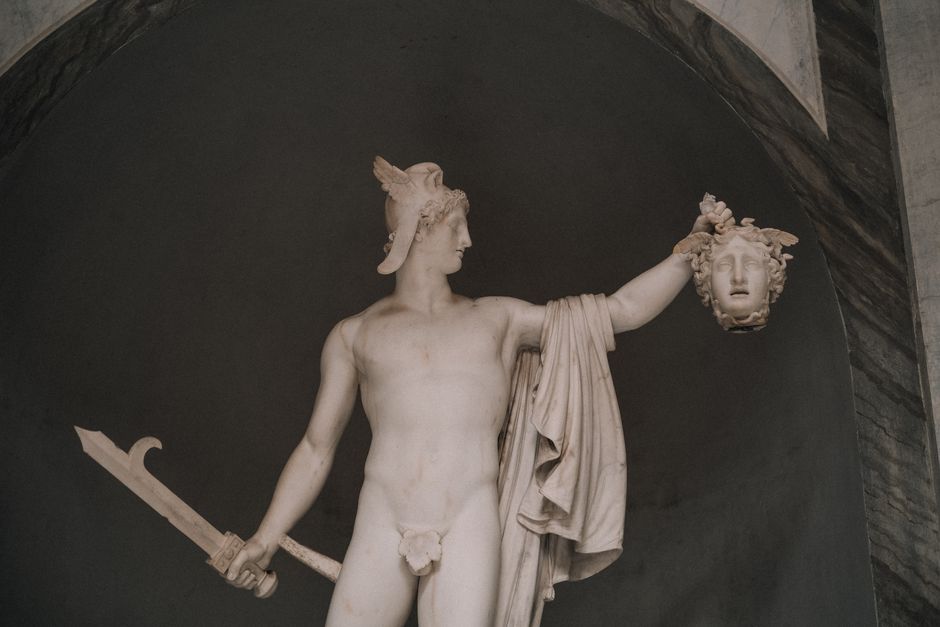
Medusa Myth: What Ancient Greeks Really Feared

Medusa Myth: What Ancient Greeks Really Feared

Medusa Myth: What Ancient Greeks Really Feared

By TriviaOwl, Staff Writer — Published August 13, 2026

Table of Contents

The medusa myth ancient Greeks told around their fires wasn't just a monster story. It was a mirror reflecting deep anxieties about power, gender, and the gaze itself. While most people know Medusa as the snake-haired woman who turned onlookers to stone, the original myth carries layers of meaning that ancient audiences understood instinctively. This fascinating tale reveals surprising truths about what terrified one of history's most influential civilizations.

Medusa wasn't always a monster. Discover how this transformation story became one of mythology's most enduring symbols, and explore the amazing facts behind a figure who still captivates our curiosity today.

Key Takeaways

  • Medusa was the only mortal among three Gorgon sisters, making her uniquely vulnerable to Perseus despite her terrifying powers.
  • Earlier Greek traditions depicted Gorgons as protective symbols on shields and temples, not purely evil creatures.
  • The myth encoded ancient Greek fears about female power, divine punishment, and the dangerous act of looking where one shouldn't.
  • Medusa's severed head retained its petrifying power even after death, becoming a weapon for both Perseus and Athena.
  • The story reflects real anxieties about vision and vulnerability that resonated deeply in ancient Greek culture.
  • Modern interpretations have reclaimed Medusa as a symbol of survival and feminine rage against violation.

The Medusa Myth Ancient Greeks Actually Told

Most retellings begin with Medusa as a monster, but the complete narrative is more complex. According to later Roman poet Ovid's version, Medusa was once a beautiful maiden who served as a priestess in Athena's temple. The sea god Poseidon violated her in that sacred space. Rather than punishing Poseidon, Athena transformed Medusa into a creature so hideous that anyone who looked directly at her turned to stone.

This version raises uncomfortable questions about divine justice. Why punish the victim? Ancient audiences might have understood this as Athena protecting Medusa by making her dangerous, though modern readers often see it differently. The transformation gave Medusa power, however terrible. No one could harm her without facing petrification.

Medusa lived in exile with her immortal sisters, Stheno and Euryale, at the edge of the known world. All three had brass hands, golden wings, and serpents for hair. But only Medusa could die. This detail matters. The hero Perseus could only succeed because one Gorgon was mortal. He used Athena's polished shield as a mirror, approaching Medusa while she slept and severing her head without meeting her gaze directly.

What the Petrifying Gaze Really Represented

The Greeks were obsessed with looking and being looked at. Their culture valued public life, rhetoric, and visible achievement. To be turned to stone by a gaze was to lose everything that made someone human in Greek society—movement, speech, action.

Stone in Greek thought represented permanence but also death. Statues honored the dead or commemorated heroes frozen in idealized moments. Medusa's power inverted this: she created unwilling monuments, trapping victims in their final moment of terror. The myth warned against forbidden sight. Some knowledge was too dangerous to witness directly.

Interestingly, Medusa imagery appeared on Greek shields, temple pediments, and even ovens. The apotropaic (evil-averting) use of her face suggests Greeks believed the Gorgon could protect as well as destroy. Her image scared away threats. This dual nature—protective and deadly—makes Medusa more nuanced than a simple villain.

The Aftermath: A Severed Head That Kept Its Power

Death didn't end Medusa's story. Perseus carried her head in a special bag, using it as a weapon. When the sea monster Cetus threatened Andromeda, Perseus revealed Medusa's face and turned the creature to stone. Later, he used it against his enemies at King Polydectes' court, petrifying them all.

Eventually, Perseus gave the head to Athena, who mounted it on her aegis—the divine shield or breastplate. This made Athena even more fearsome in battle. The goddess who transformed Medusa now wore her face as armor. From Medusa's blood, according to myth, sprang both the winged horse Pegasus and the giant Chrysaor. Even in death, she generated new mythic life.

This persistent power after decapitation fascinated ancient audiences. It suggested that some forces, once unleashed, can never be fully contained or destroyed. The head became a talisman, a reminder that danger could be harnessed and redirected.

Comparing Medusa Across Greek Sources

Source Period Medusa's Origin Moral Focus
Archaic Greek (8th-6th century BCE) Born monstrous; Gorgon sister Heroic achievement through cleverness
Classical Greek (5th-4th century BCE) Primarily protective symbol Apotropaic magic; warding evil
Roman (Ovid, 1st century CE) Beautiful woman transformed Divine punishment; tragic victim

Hidden Fears in the Myth

What did ancient Greeks really fear when they told Medusa's story? Several anxieties intertwine:

  • Female autonomy: A woman who could destroy men with her gaze represented power outside male control.
  • Sexual violation: The Ovid version acknowledges rape but displaces consequences onto the victim, reflecting uncomfortable social realities.
  • Divine capriciousness: Gods punished mortals for divine crimes, reminding Greeks of their vulnerability to forces beyond understanding.
  • The limits of heroism: Even Perseus needed divine help—Athena's shield, Hades' cap of invisibility, Hermes' winged sandals—to succeed.
  • Mortality itself: Medusa died because she was mortal, unlike her sisters, highlighting the fragility of human existence.

These themes made the myth endlessly retellable. Each generation found new meanings in the snake-haired figure whose glance meant death.

Frequently Asked Questions

Was Medusa always depicted as evil in Greek mythology?

No. Early Greek art often showed Gorgons as protective figures on shields and temples, warding off evil rather than embodying it. The purely villainous interpretation developed gradually, particularly through later heroic narratives focused on Perseus.

Why could Perseus kill Medusa but not her immortal sisters?

Medusa was the only mortal Gorgon among the three sisters. Greek myths often featured this pattern—one vulnerable member in an otherwise invincible group—to make heroic victory possible while maintaining the threat's supernatural power.

What happened to people who looked at Medusa's reflection?

According to the myth, viewing Medusa indirectly through a reflection, like Perseus did with his polished shield, allowed someone to see her without being petrified. Only direct eye contact triggered the transformation to stone.

Did ancient Greeks believe Medusa was a real creature?

Greeks understood myths as meaningful stories rather than literal history. Medusa existed in their cultural imagination as a symbol and cautionary tale, much like modern audiences understand fictional characters as "real" within their narrative worlds without believing they walked the earth.

The medusa myth endures because it touches something primal: the fear of being seen, the power of the gaze, and the tragedy of transformation. What ancient Greeks feared in Medusa's story still resonates—the vulnerability of being looked at, judged, and frozen in someone else's perception. Perhaps that's the most petrifying power of all.