










1 / 10 Questions
0 Points

What moldable toy compound was rebranded from Kutol's wallpaper cleaner?

Play-Doh

Floam

Gak

Kinetic Sand

Points won
0
Correct score
0%

More Questions

The Truth About Hiccups: What Really Causes Them

Discover the real hiccup causes behind those annoying spasms. Learn what triggers diaphragm contractions and why your body reacts this way.

7 Strange Facts About Immortal Jellyfish Reversing Age

Immortal jellyfish can reverse their aging process and potentially live forever. Discover 7 bizarre facts about this tiny marine creature's unique biology.

What moldable toy compound was rebranded from Kutol’s wallpaper cleaner?

What moldable toy compound was rebranded from Kutol's wallpaper cleaner? Question 1: What moldable toy compound was rebranded from Kutol's wallpaper cleaner? A. Play-Doh B. Floam C. Gak D....

More Articles

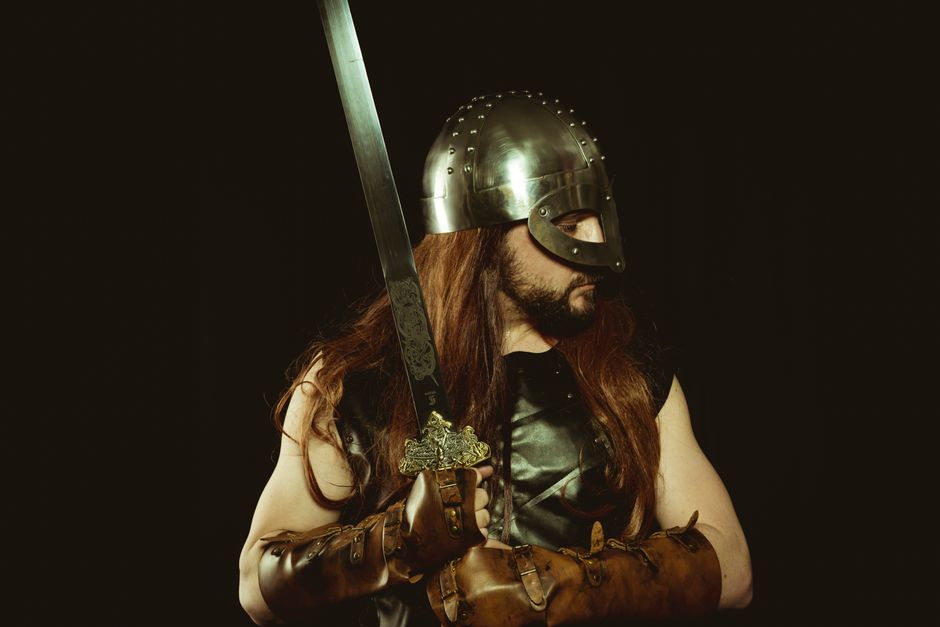
Did Vikings Really Wear Horned Helmets into Battle

Did Vikings Really Wear Horned Helmets into Battle

Did Vikings Really Wear Horned Helmets into Battle

By Trivia Daily, Staff Writer — Published September 27, 2026

Table of Contents

The image of a fierce Viking warrior charging into battle with a horned helmet is one of history's most enduring icons. From Halloween costumes to sports team logos, the horned helmet has become synonymous with Norse raiders. Yet this iconic symbol is actually one of history's most persistent myths. The surprising truth is that Vikings didn't wear horned helmets into battle—in fact, there's no archaeological evidence they wore them at all during the Viking Age.

This fascinating piece of historical trivia reveals how popular culture can reshape our understanding of the past. The real story behind this myth is far more interesting than the fiction, involving 19th-century opera productions, romantic nationalism, and the way we construct historical memory.

Key Takeaways

  • No archaeological evidence supports the idea that Vikings wore horned helmets in combat during the Viking Age (roughly 793–1066 CE).
  • The horned helmet myth gained popularity in the 1800s, particularly through Richard Wagner's opera productions depicting Norse mythology.
  • Real Viking helmets were simple, practical iron caps designed to protect warriors without hindering vision or balance in battle.
  • Horned helmets did exist in pre-Viking Scandinavian cultures, but they were ceremonial objects used thousands of years before the Viking Age.
  • The myth persists today in popular culture, from sports mascots to children's toys, despite historians' efforts to correct the record.
  • This misconception demonstrates how artistic interpretations can become accepted as historical fact over time.

Why Vikings Wear Horned Helmets Became a Popular Myth

The horned helmet fantasy took root during the Romantic period of the 1800s, when Europeans became fascinated with their medieval past. Artists and writers of this era often prioritized dramatic effect over historical accuracy. They wanted their Vikings to look exotic, fearsome, and distinctly "barbaric" to contrast with contemporary civilization.

The myth received its biggest boost from costume designer Carl Emil Doepler, who created elaborate horned helmets for the premiere of Richard Wagner's opera cycle "Der Ring des Nibelungen" in 1876. These striking designs captured public imagination. Soon, horned helmets appeared in paintings, illustrations, and popular histories throughout Europe and America. The image spread so effectively that it became the default visualization of Viking warriors.

Publishers loved the dramatic silhouette. A horned helmet instantly communicated "Viking" to readers, making it a convenient visual shorthand in everything from textbooks to comic strips. The more the image appeared, the more "true" it seemed to general audiences.

What Real Viking Helmets Actually Looked Like

Archaeological discoveries paint a very different picture of Viking headgear. Only a handful of Viking-era helmets have survived, and they're remarkably practical in design. The most complete example, the Gjermundbu helmet discovered in Norway in 1943, is a simple rounded iron cap with a nose guard. No horns. No wings. Just functional protection.

These helmets were expensive to produce and likely worn only by wealthy warriors or chieftains. Most Viking fighters probably went into battle without any helmet at all, relying instead on leather caps or simply their own hair and courage. The helmets that did exist were designed with combat effectiveness in mind—smooth surfaces that could deflect blows rather than ornamental projections that could be grabbed or knocked.

Horns would have been a serious liability in combat. They'd add weight, throw off balance, provide easy handholds for opponents, and potentially trap weapons. Vikings were practical warriors who valued equipment that kept them alive, not theatrical accessories.

The Real Origins of Horned Helmets in Scandinavia

Interestingly, horned helmets do have ancient Scandinavian roots—just not Viking ones. Bronze Age artifacts from Scandinavia, dating to roughly 1500–500 BCE, include ceremonial horned helmets. These elaborate pieces were almost certainly used for religious rituals rather than warfare. They're beautiful works of craftsmanship, but they predate the Viking Age by well over a thousand years.

These ceremonial helmets demonstrate that pre-Viking Nordic cultures did create horned headgear, but for spiritual purposes. When 19th-century artists conflated these ancient ritual objects with Viking warriors, they created a historical mashup that stuck in popular consciousness. The Vikings themselves would have viewed these Bronze Age artifacts as ancient relics from their distant ancestors.

How Historical Myths Take Root and Persist

The horned helmet myth illustrates a broader pattern in how historical misconceptions spread. Once an image becomes established in popular culture, it's remarkably resistant to correction. Children learn the horned helmet image early. It appears in toys, cartoons, and casual references. By the time people encounter accurate historical information, the false image is already deeply embedded.

Museums and historians have worked for decades to debunk this myth, yet it persists. The Minnesota Vikings football team still features horned helmets in their logo. Viking-themed restaurants and attractions continue to use the imagery. The myth has become more powerful than the reality because it serves a cultural function—it gives us an instantly recognizable symbol for a complex historical culture.

This phenomenon isn't unique to Vikings. Many popular historical images—from Columbus discovering a flat earth to medieval people being universally filthy—are similarly inaccurate but culturally entrenched. They reveal as much about our own time's needs and assumptions as they do about the past we're supposedly depicting.

Frequently Asked Questions

What did Vikings actually wear on their heads in battle?

Most Vikings likely fought without helmets, as they were expensive. Wealthy warriors wore simple iron caps, sometimes with nose guards or eye protection, made from iron plates riveted together. These practical designs prioritized protection and mobility over decoration.

Why do we associate horned helmets with Vikings if they never wore them?

The association comes from 19th-century Romantic art and opera, particularly costume designs for Wagner's operas in the 1870s. These dramatic visualizations captured public imagination and spread through popular culture, eventually becoming the default image despite lacking historical basis.

Did any ancient warriors actually wear horned helmets into battle?

While ceremonial horned helmets existed in various cultures, wearing them in actual combat was extremely rare due to practical disadvantages. Horns add weight, unbalance the helmet, and provide opponents with something to grab—making them tactical liabilities rather than advantages.

How many actual Viking helmets have archaeologists found?

Remarkably few complete Viking helmets survive—only a handful from the entire Viking Age. The Gjermundbu helmet from Norway is the most complete example. This scarcity suggests helmets were rare, valuable items rather than standard equipment for all warriors.

The next time you see a horned helmet in a Viking costume or logo, you'll know you're looking at Victorian fantasy rather than medieval reality. This enduring myth reminds us that history is constantly being rewritten—not just by new discoveries, but by each generation's imagination and needs. The real Vikings were remarkable enough without the horns.

Why Goosebumps Happen: The Evolutionary Leftover Explained

Why Goosebumps Happen: The Evolutionary Leftover Explained

Why Goosebumps Happen: The Evolutionary Leftover Explained

By TriviaOwl, Staff Writer — Published August 18, 2026

Table of Contents

Your skin prickles during a scary movie. Tiny bumps rise on your arms when you hear a beautiful song. You've probably wondered why goosebumps happen at all—and the answer reveals a fascinating evolutionary story. This curious bodily response is a leftover from our furrier ancestors, a reflex that once served a vital purpose but now mostly just makes us look like plucked chickens. Discover the surprising biology behind this everyday phenomenon and explore why your body still clings to this ancient defense mechanism.

The technical term for goosebumps is piloerection, and it's far more interesting than you might expect. From fear responses to emotional reactions, this tiny skin change connects us to millions of years of mammalian history.

Key Takeaways

  • Goosebumps are triggered by the arrector pili muscles, which contract and pull hair follicles upright in response to cold or emotion.
  • This reflex evolved to help furry mammals appear larger when threatened and to trap warm air for insulation in cold conditions.
  • Humans inherited this response from ancestors who had much more body hair, making it largely obsolete for modern humans.
  • The same neural pathways that cause goosebumps are connected to the fight-or-flight response controlled by the sympathetic nervous system.
  • Goosebumps can be triggered by cold, fear, strong emotions like awe or nostalgia, and even certain types of music.
  • The response is involuntary and controlled by the autonomic nervous system, which means you cannot consciously prevent or summon goosebumps on command.

Why Goosebumps Happen: Evolutionary Origins and Biology

Every hair follicle on your body is attached to a tiny muscle called the arrector pili. When your brain perceives a threat, feels cold, or experiences intense emotion, your sympathetic nervous system sends signals to these muscles. They contract. The hair stands up. The skin around each follicle bunches into a small bump. That's piloerection.

For our mammalian relatives covered in thick fur, this response serves two critical functions. When a cat encounters a threat, its fur stands on end, making it appear significantly larger and more intimidating to predators or rivals. You've seen this if you've ever watched a frightened cat puff up to nearly twice its normal size. The same principle applies to porcupines, bears, and countless other mammals. Appearing bigger can mean the difference between scaring off a threat and becoming lunch.

The second function is thermal regulation. When you're cold and your body hair stands up, it creates tiny pockets of air close to the skin. These air pockets act as insulation, trapping body heat and keeping the animal warmer. Birds fluff their feathers using the same principle. For a thick-furred mammal in a cold environment, this can provide meaningful protection against hypothermia.

Humans, however, lost most of our body hair somewhere between two and three million years ago as our ancestors adapted to life on the African savanna. We developed other cooling mechanisms like increased sweat glands. But we kept the goosebump reflex. Evolution doesn't remove features that aren't actively harmful, even when they no longer serve their original purpose. Our sparse body hair can't trap much warmth or make us look intimidating, but the neural wiring remains.

The Brain Chemistry Behind the Bumps

The sympathetic nervous system controls your automatic responses to stress, danger, and environmental changes. When activated, it releases neurotransmitters and hormones including adrenaline and norepinephrine. These chemical messengers travel through your bloodstream and trigger various physical responses: your heart rate increases, your pupils dilate, and yes, your arrector pili muscles contract.

This explains why goosebumps often accompany other fight-or-flight responses. You might notice them when you're startled, watching a suspenseful film, or experiencing a near-miss while driving. Your body is preparing for action, drawing on ancient programming that once helped your ancestors survive genuine physical threats.

What's particularly curious is that positive emotions can trigger the same response. Listening to powerful music, witnessing an act of kindness, or experiencing profound beauty can all cause goosebumps. Researchers believe this happens because these experiences activate similar neural pathways—the emotional intensity triggers the sympathetic nervous system even though there's no actual threat present.

Common Triggers: From Temperature to Tears

Cold remains the most reliable trigger for goosebumps. When your skin temperature drops, thermoreceptors send signals to your hypothalamus, which coordinates the body's response to maintain core temperature. Goosebumps are just one part of this response, along with shivering and reduced blood flow to the extremities.

Emotional triggers are more complex and individual. Some people get goosebumps from specific musical passages—often moments with unexpected harmonies or dramatic crescendos. Others experience them during touching moments in films or when hearing stories of human courage. The phenomenon even has a name in some languages: frisson, from the French word for shiver.

Fear and surprise activate goosebumps through the most direct evolutionary pathway. When something startles you, your brain doesn't take time to analyze whether you're actually in danger. It triggers the full suite of defensive responses immediately. By the time you realize the "snake" was just a garden hose, your skin is already prickling.

Goosebumps Across the Animal Kingdom

Piloerection isn't unique to mammals. Birds display a similar response when they fluff their feathers. The mechanism differs slightly—birds use muscles attached to feather follicles—but the purposes align: thermoregulation and appearing larger to threats. A cold bird will puff up to trap warm air, while a threatened bird may adopt the same posture to seem more formidable.

Animal Primary Function Effectiveness
Porcupine Defense display (quills stand erect) Highly effective deterrent
Cat Threat display and warmth Significantly increases apparent size
Chimpanzee Social signaling and warmth Moderate visual impact
Human Vestigial (minimal function) Negligible practical benefit

Among primates, our closest relatives like chimpanzees and gorillas still have enough body hair for piloerection to serve noticeable purposes. A silverback gorilla can look even more imposing when its hair stands on end. Humans represent the extreme end of this spectrum—we have the reflex without the hair to make it functionally useful.

Why We Can't Control Them

You can't give yourself goosebumps through willpower alone, and you can't suppress them when they occur. That's because the autonomic nervous system operates below conscious control. It manages functions your body needs to perform automatically: breathing, digestion, heart rate, and yes, piloerection.

This involuntary nature is actually crucial to the system's original purpose. In a genuine emergency, you don't have time to consciously decide to look bigger or conserve heat. Your body needs to react instantly. The same automatic quality means goosebumps can reveal emotional states you might prefer to hide—a fact that makes them honest signals of genuine feeling.

Frequently Asked Questions

Can goosebumps occur without any obvious trigger?

Yes, goosebumps can appear spontaneously due to subtle temperature changes, random neural activity, or emotional responses you're not consciously aware of. Your body constantly monitors internal and external conditions, sometimes reacting before your conscious mind registers a stimulus.

Do all humans experience goosebumps equally?

Individual variation exists in how easily people experience goosebumps and which triggers are most effective. Some people rarely get them, while others experience them frequently from music, emotion, or cold. Genetic factors and individual nervous system sensitivity likely play roles.

Are goosebumps the same as chills during fever?

Fever-related chills involve similar mechanisms but serve a different purpose. Your body raises its temperature set point during illness, and chills with piloerection are attempts to generate and conserve heat to reach that higher target temperature, helping fight infection.

Do animals without hair or fur get goosebumps?

Hairless mammals like elephants and whales lack the arrector pili muscles and don't experience piloerection. Reptiles and amphibians, being cold-blooded, don't have this mammalian response at all, though some can alter their skin texture through different mechanisms.

Next time you feel that telltale prickling on your arms, remember you're experiencing a direct link to your evolutionary past. Your body is attempting a defense strategy that worked brilliantly for your ancestors but now serves mainly as a reminder that we carry our history in every cell. That's the real wonder of goosebumps—not what they do for us now, but what they reveal about where we came from.