
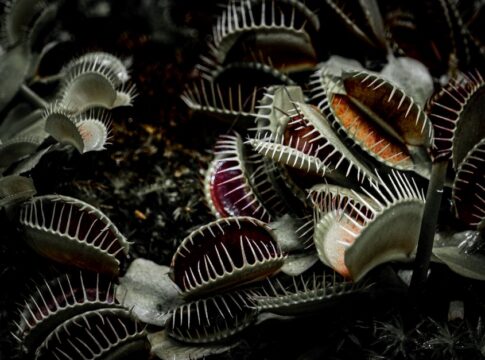
How Venus Flytraps Count to Five Before Closing
By Trivia Daily, Staff Writer — Published October 31, 2026
Table of Contents
- Key Takeaways
- The Trigger Hair System and Initial Counting
- Counting Beyond Closure: Three Through Five
- The Electrical Memory System
- Comparing Carnivorous Plant Trigger Mechanisms
- Why This Discovery Matters for Plant Science
- The Energy Economics of Counting
- Frequently Asked Questions
The Venus flytrap doesn’t just snap shut at the first touch. This carnivorous plant possesses a remarkable ability to count mechanical stimuli, waiting for at least two touches of its trigger hairs before closing—and scientists have discovered it can count as high as five to determine how much digestive enzyme to produce. Among the most surprising facts in botany, this counting mechanism reveals that plants can perform basic arithmetic without a brain or nervous system. The discovery that venus flytraps count challenges everything we thought we knew about plant intelligence.
This fascinating curiosity emerged from research showing that the plant uses electrical signals similar to animal nerve impulses. Each touch generates an action potential, and the plant “remembers” these signals for about twenty seconds, adding them together to make decisions about closing and digestion.
Key Takeaways
- Venus flytraps require two trigger hair touches within approximately twenty seconds before their traps snap shut, filtering out false alarms like raindrops.
- The plant continues counting touches after closing, using numbers three, four, and five to regulate digestive enzyme production and nutrient absorption.
- Each touch generates an electrical action potential similar to nerve signals in animals, despite the plant having no nervous system.
- The counting mechanism saves energy by preventing the trap from closing on non-nutritious objects and calibrating digestion to prey size.
- This mathematical ability demonstrates a form of short-term memory and information processing in plants previously thought impossible.
- The Venus flytrap is native only to a small region within a 60-mile radius of Wilmington, North Carolina.
The Trigger Hair System and Initial Counting
Inside each Venus flytrap leaf, six tiny trigger hairs stand guard. When an insect brushes against one hair, the plant faces a dilemma: Is this a meal or a false alarm? Closing the trap costs significant energy—the plant must pump water and change cell pressure rapidly. A wasted closure means the trap remains closed for days while it resets, during which time it cannot catch prey.
The solution is elegant. One touch isn’t enough. The flytrap waits for a second touch within roughly twenty seconds before committing to closure. This two-touch minimum filters out raindrops, falling debris, and other non-food stimuli. An actual insect, crawling around inside the trap, will inevitably brush against the hairs multiple times.
The speed of closure is astonishing—about one-tenth of a second, making it one of the fastest movements in the plant kingdom. But that impressive snap is only the beginning of the counting process.
Counting Beyond Closure: Three Through Five
Here’s where the amazing trivia gets even more interesting. After the trap closes on its prey, the Venus flytrap keeps counting. The struggling insect continues to trigger the sensitive hairs, and these additional stimuli tell the plant important information about its catch.
At touch three, the trap seals tightly, forming an airtight stomach. The gaps between the interlocking “teeth” close completely, preventing digestive juices from leaking out. Touch four signals the plant to begin producing digestive enzymes. Touch five ramps up enzyme production further and activates nutrient transport mechanisms.
This graduated response makes biological sense. A large, protein-rich insect will struggle more, generating more touches and warranting greater investment in digestion. A tiny prey item triggers fewer touches, so the plant produces proportionally less enzyme. It’s an efficient system that matches resource expenditure to potential nutrient gain.
The Electrical Memory System
How does a plant without a brain count? The mechanism relies on calcium ions and electrical signals. Each trigger hair touch generates an action potential—a wave of electrical charge that spreads across the leaf. These signals are remarkably similar to the nerve impulses in animal nervous systems, though they travel much more slowly through plant tissue.
The Venus flytrap maintains a short-term memory of these electrical pulses. When the first action potential occurs, calcium ion channels open briefly. If a second touch happens within the memory window (approximately twenty seconds), the calcium concentration reaches a threshold that triggers the trap closure mechanism. After that window expires, the count resets to zero.
Scientists have measured these electrical signals directly, confirming that the plant literally adds up the touches. The more touches, the higher the cumulative electrical charge and calcium concentration. This allows the plant to distinguish between two touches (close the trap), three touches (seal it), and five or more touches (full digestive response).
Comparing Carnivorous Plant Trigger Mechanisms
| Plant Species | Trigger Mechanism | Closure Speed | Counting Ability |
|---|---|---|---|
| Venus Flytrap | Mechanical (trigger hairs) | 0.1 seconds | Counts up to 5+ touches |
| Sundew | Contact with sticky tentacles | Minutes to hours | Gradual response, no counting |
| Bladderwort | Trigger hair activates trap door | 0.001 seconds | Single trigger, no counting |
| Pitcher Plant | Passive (slippery surface) | N/A (passive trap) | No active mechanism |
Why This Discovery Matters for Plant Science
The Venus flytrap’s counting ability forces scientists to reconsider plant cognition. For centuries, the assumption held that complex information processing required brains or at least nervous systems. Plants were thought to be passive organisms, reacting to stimuli but not processing information.
This research reveals otherwise. The flytrap performs genuine computation: it receives inputs, stores information temporarily, performs addition, compares the sum to multiple thresholds, and executes different responses based on the results. That’s arithmetic.
Other plants may possess similar abilities we haven’t yet discovered. If a Venus flytrap can count to five, what other mathematical or logical operations might plants perform? Researchers are now exploring whether plants can learn, remember over longer periods, or even communicate mathematically with neighbors through root systems or chemical signals.
The Energy Economics of Counting
Understanding why venus flytraps count requires understanding their harsh native habitat. These plants evolved in nutrient-poor, acidic bogs where nitrogen and phosphorus are scarce. They turned to carnivory not by choice but necessity—insects provide the missing nutrients the soil cannot.
But carnivory is expensive. Producing digestive enzymes requires significant resources. A trap that closes unnecessarily wastes energy and loses days of potential hunting time. The counting mechanism minimizes these costs through smart filtering and proportional response.
The two-touch threshold eliminates most false alarms. The post-closure counting ensures the plant invests heavily only when the prize justifies the expense. It’s a finely tuned economic system evolved over millions of years, allowing the Venus flytrap to thrive where other plants struggle.
Frequently Asked Questions
Can you trick a Venus flytrap by touching it once and waiting?
Yes, if you wait more than about twenty seconds between touches, the plant’s memory resets and it won’t close. The electrical charge dissipates and the calcium ion concentration returns to baseline, so the first touch is essentially forgotten.
What happens if a Venus flytrap closes on nothing?
The trap will reopen within 12 to 24 hours after detecting no continued struggle (no additional touches beyond the initial two). This allows the plant to minimize energy loss from false closures, though it still costs the plant valuable hunting time.
Do Venus flytraps die after closing a certain number of times?
Individual traps can only close about four to seven times during their lifespan before the leaf dies, but the plant itself continues producing new traps. Each trap has a limited energy budget for the rapid closure mechanism.
Are there other plants that can count?
Some Mimosa species appear to count repeated touches before fully closing their leaves, though the mechanism is less well studied. Scientists are actively researching whether other carnivorous plants and touch-sensitive species possess similar counting abilities.
The Venus flytrap’s ability to count serves as a humbling reminder that intelligence takes many forms. No brain required—just elegant chemistry, electrical signals, and millions of years of evolutionary refinement. Next time you see one of these botanical marvels, remember there’s a mathematician at work beneath those snapping jaws.