
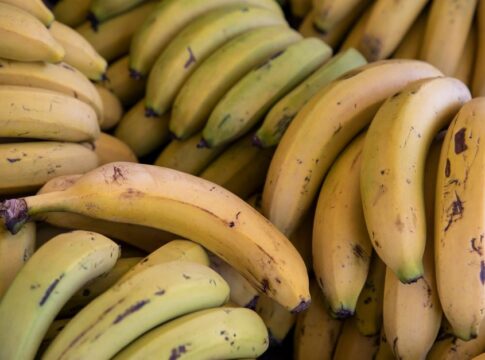
7 Surprising Facts About Bananas Being Radioactive Fruits
By Trivia Daily, Staff Writer — Published November 10, 2026
Table of Contents
- Key Takeaways
- Understanding Why Bananas Are Radioactive Fruits
- The Seven Amazing Facts About Radioactive Bananas
- Natural Radioactivity in the World Around Us
- Frequently Asked Questions
Your morning smoothie comes with a side of radiation. Bananas, one of the world’s most popular fruits, contain naturally occurring radioactive isotopes that emit measurable radiation. Before you toss your fruit bowl, discover why this fascinating quirk of nature is completely harmless and what it reveals about the radioactive world we live in every single day.
The story of bananas being radioactive fruits opens a window into nuclear physics, health myths, and the surprising science hiding in plain sight. These yellow powerhouses pack potassium—and with it, a tiny dose of radiation that scientists actually use as a measurement unit.
Key Takeaways
- Bananas contain potassium-40, a naturally radioactive isotope that makes them measurably radioactive
- The “banana equivalent dose” is a real unit scientists use to explain radiation exposure to the public
- You would need to eat millions of bananas instantly to experience harmful radiation effects
- Many everyday foods contain similar or higher levels of natural radioactivity than bananas
- Your own body is naturally radioactive, containing roughly the same isotopes found in bananas
- Airport radiation detectors can theoretically detect truckloads of bananas passing through
Understanding Why Bananas Are Radioactive Fruits
Bananas earn their radioactive reputation from potassium-40, a naturally occurring isotope of potassium. About 0.012% of all potassium in nature exists as this radioactive variant, which has a half-life of roughly 1.25 billion years. Since bananas are exceptionally rich in potassium—containing about 358 milligrams in a medium fruit—they pack more radioactive material than many other common foods.
Potassium-40 undergoes radioactive decay, releasing beta particles and gamma rays as it transforms into calcium-40 or argon-40. This process happens continuously in every potassium-rich substance on Earth. The amount of radiation is minuscule. A single banana emits approximately 0.1 microsieverts of radiation, which is about one-hundredth of the dose you receive from a dental X-ray.
The fascinating trivia here: potassium-40 has been decaying since the formation of Earth itself. The isotope in your banana today is primordial, created in stellar nucleosynthesis billions of years ago, before our planet even existed.
The Seven Amazing Facts About Radioactive Bananas
1. Scientists Created the “Banana Equivalent Dose” to Explain Radiation
Nuclear physicists and health communicators developed the informal banana equivalent dose (BED) as an educational tool to help the public understand radiation exposure. One BED equals the radiation you receive from eating a single banana—about 0.1 microsieverts. This clever comparison makes abstract concepts concrete: a chest X-ray equals roughly 700 bananas, while a cross-country flight exposes you to about 400 banana-equivalents of cosmic radiation. The unit isn’t used in formal scientific work, but it brilliantly translates intimidating numbers into something everyone can visualize.
2. You Cannot Increase Your Radiation Levels by Eating More Bananas
Here’s where banana radioactivity gets interesting. Your body tightly regulates potassium levels through homeostasis, maintaining a constant concentration regardless of dietary intake. When you eat a banana, you don’t accumulate additional radioactive potassium—you simply excrete the excess through urine and other biological processes. Your body contains roughly 140 grams of potassium at all times, making you naturally radioactive whether you eat bananas or not. The human body itself emits about 280 times more radiation than a single banana, every single day.
3. Many Foods Are More Radioactive Than Bananas
Bananas dominate the radioactive food conversation, but they’re far from alone. Brazil nuts contain radium and emit significantly more radiation than bananas. Carrots, potatoes, lima beans, and red meat all contain potassium-40. Even drinking water carries trace amounts of radioactive elements. The table below compares common radioactive foods:
| Food Item | Approximate Radiation (microsieverts) | Radioactive Element |
|---|---|---|
| Brazil Nuts (single serving) | 0.24 | Radium-226, Radium-228 |
| Banana (medium) | 0.10 | Potassium-40 |
| Carrots (serving) | 0.03 | Potassium-40 |
| Potatoes (serving) | 0.04 | Potassium-40 |
4. Radiation Detectors Can Spot Large Banana Shipments
Sensitive radiation monitors at ports, borders, and security checkpoints can detect large quantities of bananas. In 2017, customs officials in Russia reportedly stopped a shipment after radiation alarms triggered—the cargo was simply a large container of bananas. While a single banana won’t set off detectors, concentrated shipments of thousands create a measurable radioactive signature. This amusing fact highlights both the sensitivity of modern detection equipment and the ubiquity of natural background radiation in everyday commerce.
5. The Radiation in Bananas Has Been Constant for Billions of Years
Potassium-40’s extraordinary half-life means the bananas your ancestors ate thousands of years ago were just as radioactive as yours today. The isotope decays so slowly that its concentration has remained essentially unchanged throughout human history. This same isotope exists in Earth’s crust, oceans, and atmosphere, contributing to the natural background radiation that has bathed all life on this planet since the beginning. Scientists even use potassium-40 decay for potassium-argon dating, a technique that helps determine the age of ancient rocks and fossils.
6. You Would Need to Eat 10 Million Bananas at Once for Lethal Radiation Exposure
Mathematical curiosity leads to an absurd calculation: to receive a lethal radiation dose from bananas alone, you would need to consume roughly 10 million bananas simultaneously. The impossibility isn’t just the quantity—it’s the timeframe. Because your body constantly regulates and excretes potassium, eating bananas over time cannot build up dangerous radiation levels. You would actually die from potassium overdose (hyperkalemia) or simple physical obstruction long before radiation became a concern. The lethal dose of bananas is about 400 eaten rapidly, due to potassium toxicity, not radiation.
7. Banana Radiation Helped Debunk a Nuclear Smuggling Myth
The concept of banana equivalent dose emerged partly to combat public misconceptions about radiation after nuclear incidents and in discussions of nuclear security. When people worry about trace radioactive contamination, scientists point to bananas as proof that we safely coexist with low-level radiation constantly. This comparison has proven particularly useful in explaining why background radiation spikes near natural granite formations or at high altitudes are completely harmless—they’re often equivalent to eating a few extra bananas.
Natural Radioactivity in the World Around Us
Bananas represent just one example of natural radioactivity that permeates our environment. Cosmic rays bombard Earth constantly from space. Radon gas seeps from soil and rocks. Building materials like granite and concrete contain uranium and thorium. Even the air you breathe contains radioactive carbon-14, created by cosmic ray interactions in the upper atmosphere.
The average person receives about 2,400 microsieverts of natural background radiation annually—equivalent to eating roughly 24,000 bananas spread throughout the year. This exposure comes from cosmic rays, radon, terrestrial radiation from rocks and soil, and internal sources like potassium-40 in your own tissues. Life evolved in this radioactive environment, developing repair mechanisms to handle low-level radiation damage to DNA.
Interestingly, certain locations expose residents to much higher natural radiation than others. People living in Kerala, India, or Ramsar, Iran, experience natural background radiation levels ten times higher than the global average due to local geology rich in thorium and radium. Studies of these populations show no increased health risks, suggesting humans tolerate natural radiation remarkably well.
Frequently Asked Questions
Are bananas dangerous to eat because of radiation?
No, bananas are completely safe. The tiny amount of radiation from potassium-40 poses no health risk whatsoever. Your body naturally contains the same radioactive isotopes and regulates potassium levels regardless of banana consumption.
Can eating bananas help you pass a radiation test?
No. The radiation from bananas is far too small to affect radiation screening results. Your body maintains constant potassium levels through homeostasis, so eating extra bananas won’t increase your radioactivity in any measurable way.
Why do scientists use bananas to explain radiation?
Bananas provide a relatable, everyday reference point for understanding abstract radiation measurements. The banana equivalent dose helps people grasp that small amounts of radiation are natural, common, and harmless when put in familiar context.
What other foods are naturally radioactive?
Brazil nuts, carrots, potatoes, lima beans, red meat, and even drinking water contain trace amounts of radioactive elements like potassium-40 and radium. Brazil nuts are actually more radioactive than bananas due to their radium content.
The next time you peel a banana, remember you’re holding a tiny, harmless piece of nuclear physics. This everyday fruit connects you to cosmic processes billions of years old, revealing that radiation isn’t just something in power plants or medical equipment—it’s woven into the fabric of nature itself, as ordinary as breakfast.