









9 Strange Facts About Platypuses Laying Eggs as Mammals
By Trivia Owl, Staff Writer — Published October 17, 2026
Table of Contents
- Key Takeaways
- Strange Platypuses Laying Eggs: The Monotreme Mystery
- The Platypus Anatomy: A Biological Puzzle
- 9 Astonishing Facts About Platypus Egg-Laying
- Frequently Asked Questions
The platypus is one of nature's most bewildering creations. This Australian oddity defies nearly every rule we expect mammals to follow, laying eggs like a reptile while nursing its young with milk. When European scientists first examined a platypus specimen in 1798, many believed it was an elaborate hoax—a taxidermist's prank stitched together from spare parts. Yet these strange platypuses laying eggs are entirely real, and the more we discover about them, the more fascinating they become.
These egg-laying mammals belong to an ancient group called monotremes, representing an evolutionary branch that split from other mammals roughly 166 million years ago. Their bizarre combination of features offers a living window into how early mammals might have lived and reproduced.
Key Takeaways
- Platypuses are one of only five mammal species that lay eggs instead of giving birth to live young.
- They produce milk for their babies but have no nipples—milk seeps through pores in the skin.
- Male platypuses possess venomous spurs on their hind legs, making them one of the few venomous mammals.
- Platypus eggs are soft and leathery, similar to reptile eggs, and incubate for about 10 days.
- The females typically lay only one to three eggs per breeding season, curling around them to keep them warm.
- Baby platypuses hatch blind, hairless, and completely dependent on their mother for several months.
Strange Platypuses Laying Eggs: The Monotreme Mystery
Only five species on Earth share the platypus's egg-laying mammal status: the platypus itself and four species of echidnas. Together, these creatures form the monotreme group, a word derived from Greek meaning "single opening"—referring to their cloaca, a single opening used for reproduction, urination, and defecation, much like birds and reptiles. This anatomical feature alone sets them apart from all other living mammals.
Monotremes represent an ancient lineage. While most mammals evolved to give birth to live young—either as tiny, underdeveloped babies (marsupials) or fully-developed infants (placental mammals)—monotremes retained the egg-laying reproduction of their distant ancestors. Scientists believe this reproductive strategy was once far more common among early mammals during the Mesozoic Era, when dinosaurs still roamed the Earth.
The Platypus Anatomy: A Biological Puzzle
The platypus body plan seems assembled from a committee that couldn't agree. It sports a duck-like bill, a beaver's tail, otter feet, and lays eggs. But each feature serves a specific purpose honed by millions of years of evolution in Australian waterways.
The bill is perhaps the most remarkable adaptation. Covered in electroreceptors, it can detect the tiny electrical fields generated by muscle contractions in prey animals. When hunting underwater with eyes and ears closed, a platypus relies entirely on this sixth sense to locate shrimp, insect larvae, and worms buried in stream beds. The bill contains around 40,000 electroreceptor cells, making it one of the most sensitive biological sensors in the animal kingdom.
| Platypus Feature | Similar To | Actual Function |
|---|---|---|
| Bill | Duck beak | Electroreception for hunting |
| Tail | Beaver tail | Fat storage and swimming rudder |
| Feet | Otter webbing | Powerful swimming propulsion |
| Fur | Seal coat | Waterproofing and insulation |
9 Astonishing Facts About Platypus Egg-Laying
1. Platypus Eggs Are Sticky and Soft, Not Hard Like Bird Eggs
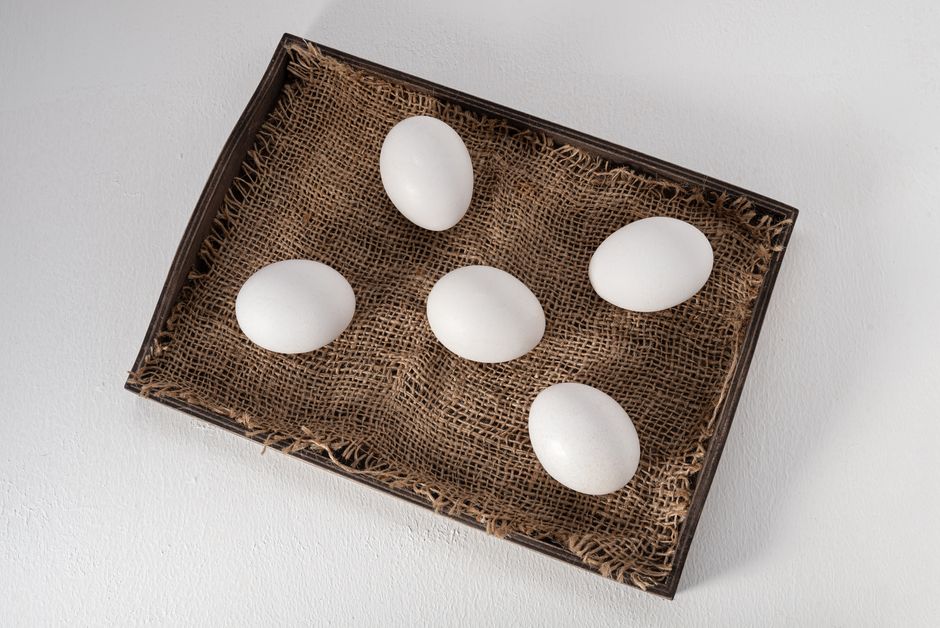
Unlike the calcified shells of bird eggs, platypus eggs have soft, leathery shells similar to reptile eggs. The shells are also slightly sticky when first laid, which helps them adhere to each other and prevents them from rolling away in the burrow. Each egg is roughly the size of a jelly bean, measuring about 17 millimeters in diameter. The mother typically lays one to three eggs per breeding season, and they remain pliable throughout the incubation period.
2. Mothers Incubate Eggs by Curling Around Them
Female platypuses don't sit on their eggs like birds. Instead, they curl their body around the eggs, holding them against their belly with their tail. This position allows the mother to maintain the eggs at a constant temperature of around 32 degrees Celsius (90 degrees Fahrenheit). She rarely leaves the nesting burrow during the 10-day incubation period, relying on fat reserves stored in her tail to sustain her.
3. Baby Platypuses Have an Egg Tooth
When ready to hatch, baby platypuses use a specialized egg tooth—a small, sharp projection on their snout—to break through the leathery shell. This temporary structure falls off shortly after hatching. The hatchlings emerge blind, hairless, and utterly helpless, measuring only about 2.5 centimeters long. They're among the most vulnerable newborns in the mammal world.
4. They Produce Milk Without Nipples
Here's where things get truly strange. Platypuses are mammals, so they nurse their young with milk. But they have no nipples or teats. Instead, milk is secreted through pores in the skin on the mother's abdomen, forming pools in grooves in her fur. The babies lap up this milk from the fur, a feeding method found nowhere else among mammals. The milk itself is highly nutritious and contains unique antibacterial proteins that scientists are studying for potential medical applications.
5. Males Become Venomous During Breeding Season
Male platypuses possess hollow spurs on their hind legs connected to venom glands. During breeding season, these glands swell and produce a cocktail of proteins strong enough to kill small animals and cause excruciating pain in humans. While this venom isn't typically fatal to people, it can cause swelling that lasts for weeks and pain severe enough that conventional painkillers often prove ineffective. Scientists believe males use this venom primarily to compete with rivals during mating season.
6. Platypuses Have Ten Sex Chromosomes
Most mammals have two sex chromosomes: XX for females and XY for males. Platypuses have ten—five X and five Y chromosomes in males. This extraordinarily complex sex determination system shares more in common with birds than with other mammals, providing another clue to their ancient evolutionary origins. The discovery of this chromosome arrangement has helped scientists understand how sex determination evolved differently across animal groups.
7. They Can Store Sperm for Weeks
Female platypuses have developed the ability to store sperm in their reproductive tract for extended periods before fertilization occurs. This adaptation allows them to time egg-laying for optimal environmental conditions, ensuring that babies hatch when food is abundant. The exact mechanisms of this sperm storage remain an active area of research.
8. Juveniles Stay in the Burrow for Months
After hatching, baby platypuses remain in the nesting burrow for three to four months before venturing into the water. During this extended childhood, they depend entirely on their mother's milk. She continues to produce milk throughout this period, and the young grow rapidly, developing their waterproof fur and learning the skills they'll need for independent life. By the time they emerge, they're nearly 80 percent of their adult size.
9. Platypuses Glow Under UV Light
In a recent discovery that surprised even experienced platypus researchers, scientists found that platypus fur exhibits biofluorescence—it glows blue-green under ultraviolet light. While the purpose of this trait remains unknown, it adds yet another layer to the platypus's already impressive collection of oddities. Researchers speculate it might play a role in communication or navigation in low-light conditions, but the true function remains a mystery.
Frequently Asked Questions
Are platypuses the only mammals that lay eggs?
No, platypuses share this trait with four species of echidnas (spiny anteaters). Together, these five species comprise all living monotremes, the only egg-laying mammals on Earth.
How long do platypus eggs take to hatch?
Platypus eggs incubate for approximately 10 days before hatching. This is considerably shorter than most bird eggs but similar to some reptile species.
Why did platypuses evolve to lay eggs instead of giving live birth?
Platypuses retained egg-laying from their ancient ancestors because this reproductive strategy remained advantageous in their ecological niche. The isolation of Australia allowed monotremes to thrive without competition from placental mammals that dominated other continents.
Can you keep a platypus as a pet?
No, keeping platypuses as pets is illegal. They're protected species in Australia, and they have highly specialized dietary and habitat requirements that make captivity extremely difficult. Only accredited zoos and research facilities may house them.
The platypus reminds us that evolution doesn't follow a single path toward complexity or "improvement." Sometimes, the strangest combinations—eggs and milk, venom and electroreception—create something perfectly adapted to its world. These peculiar creatures have survived for millions of years in Australian waterways, outlasting countless species that seemed more "advanced." Their continued existence proves that in nature, weird works.