
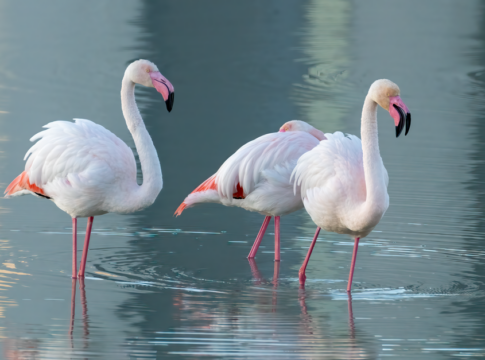
The Hidden Story of Why Flamingos Are Actually Pink
By Trivia Daily, Staff Writer — Published November 20, 2026
Table of Contents
- Key Takeaways
- The Hidden Story Flamingos Tell Through Their Diet
- The Parental Color Sacrifice
- Comparing Flamingo Species and Their Shades
- The Role of Color in Flamingo Society
- What Happens Without the Right Diet
- Frequently Asked Questions
Flamingos weren’t born pink. In fact, these iconic birds hatch with gray or white feathers, and their famous rosy hue develops over time through one of nature’s most fascinating dietary transformations. The hidden story flamingos carry in their vibrant plumage reveals a surprising truth: you quite literally are what you eat. This amazing curiosity of the animal kingdom offers a perfect example of how pigments from food can completely alter an animal’s appearance, making flamingos living proof that diet shapes more than just health.
The secret lies in their meals. These wading birds spend hours each day filtering water through specialized beaks, consuming algae, crustaceans, and other tiny organisms rich in carotenoid pigments. Without this specific diet, flamingos would remain a dull gray-white throughout their lives, never developing the brilliant pink and red shades we associate with them.
Key Takeaways
- Flamingos are born gray or white and only become pink through their diet of carotenoid-rich foods like algae and small crustaceans.
- The same pigments that make flamingos pink also color carrots orange and tomatoes red—carotenoids are widespread in nature.
- Flamingo parents actually lose some of their pink coloration when feeding their young, as they secrete carotenoid-rich “crop milk” to nourish chicks.
- Different flamingo species display varying shades from pale pink to deep crimson depending on their specific diet and habitat.
- Captive flamingos require carefully supplemented diets to maintain their color, or they gradually fade to white.
- The intensity of a flamingo’s color can indicate its health and feeding success, making brighter birds more attractive to potential mates.
The Hidden Story Flamingos Tell Through Their Diet
The transformation from gray to pink happens through a biochemical process involving carotenoids, the same class of pigments responsible for the orange in carrots and the red in tomatoes. When flamingos consume algae such as spirulina, or feast on brine shrimp and other small crustaceans, they ingest these natural pigments. The carotenoids are then metabolized in the liver and deposited in the skin, feathers, and even the fat tissue of the birds.
This isn’t a quick process. Young flamingos can take two to three years to develop their full adult coloration, gradually shifting from juvenile gray to the pink spectrum as they master the feeding techniques required to filter enough carotenoid-rich food from their aquatic environments. The birds use their uniquely adapted beaks, which contain comb-like structures called lamellae, to strain tiny organisms from water and mud.
What makes this story even more interesting is that different flamingo species achieve different shades based on their geographical location and available food sources. Caribbean flamingos, for instance, tend to display brighter coral-pink and red tones due to their diet rich in beta-carotene. Meanwhile, lesser flamingos in Africa often show deeper pink hues from consuming spirulina algae, which contains different carotenoid compounds.
The Parental Color Sacrifice
One of the most remarkable facts about flamingo coloration involves reproduction. Both male and female flamingos produce a nutrient-rich secretion called crop milk to feed their young, similar to the process in pigeons. This crop milk is packed with carotenoids, fat, and protein, providing essential nutrition for rapidly growing chicks.
The cost? Parents literally fade during the breeding season. As they transfer carotenoid-rich milk to their offspring, their own vibrant plumage becomes noticeably paler. This visible sacrifice demonstrates parental investment in a way few other species can match—the birds quite literally give their color to their young. Once the chicks are weaned and the parents resume their normal feeding routine, their pink coloration gradually returns over subsequent months.
Comparing Flamingo Species and Their Shades
| Species | Primary Color Range | Main Carotenoid Source |
|---|---|---|
| Greater Flamingo | Pale pink to white with red wing coverts | Crustaceans, mollusks, algae |
| Caribbean Flamingo | Bright coral-pink to red | Beta-carotene from brine shrimp |
| Chilean Flamingo | Pale pink with bright red joints | Diatoms and small crustaceans |
| Lesser Flamingo | Deep pink to red | Spirulina and blue-green algae |
| Andean Flamingo | Pale pink with yellow legs | Diatoms from high-altitude lakes |
The Role of Color in Flamingo Society
Color isn’t just for show in flamingo communities. The intensity of a bird’s pink hue serves as a honest signal of its health, feeding ability, and overall fitness. Brighter flamingos have demonstrated superior foraging skills, accessing abundant food sources and efficiently metabolizing carotenoids. During courtship displays, these vibrant individuals attract more attention from potential mates.
Flamingos perform elaborate group courtship dances, and the brightest birds often occupy central positions in these displays. Research has shown that flamingos with more intense coloration tend to breed more successfully and raise healthier offspring. The color becomes a form of natural advertisement: “I’m an excellent forager, and I can find the resources needed to raise strong young.”
This creates an interesting feedback loop. Successful feeding produces bright coloration, which attracts better mates, leading to offspring that may inherit superior foraging behaviors. Meanwhile, paler individuals might struggle to compete for breeding opportunities, though they’re not necessarily unhealthy—they may simply inhabit areas with fewer carotenoid-rich food sources.
What Happens Without the Right Diet
Zoos and wildlife parks learned this lesson the hard way. Early captive flamingos often lost their characteristic pink color, fading to white or pale gray within a year or two. This puzzled caretakers until scientists discovered the dietary connection. Modern facilities now supplement flamingo diets with spirulina, synthetic carotenoids, or specially formulated feeds containing the necessary pigments.
Some zoos even add natural sources like dried shrimp or specific algae to maintain authentic coloration. Without these supplements, captive flamingos would remain healthy but visually transform into completely different-looking birds. This discovery has proven crucial not just for aesthetic purposes in zoos, but also for understanding flamingo nutrition and breeding success in captivity.
Frequently Asked Questions
Are baby flamingos pink when they hatch?
No, flamingo chicks hatch with gray or white downy feathers and only develop pink coloration over two to three years as they consume carotenoid-rich foods. Their beaks are also straight at birth and gradually curve as they mature.
Can flamingos lose their pink color?
Yes, flamingos will gradually fade to white or gray if they don’t consume enough carotenoid-rich food. This happens naturally during breeding when parents feed their young, and it occurs permanently in captivity without proper dietary supplements.
Do flamingos eat shrimp to stay pink?
Flamingos eat brine shrimp and other small crustaceans as part of their diet, but they also consume algae, diatoms, and other microscopic organisms. The carotenoids in all these foods contribute to their pink coloration, not just shrimp alone.
Why are some flamingos more red than pink?
The specific shade depends on the types of carotenoids in their diet, which varies by species and location. Lesser flamingos consuming spirulina algae often appear deeper red, while greater flamingos eating different food sources display paler pink tones.
The next time you see a flamingo, remember you’re looking at a living canvas painted by its environment. These birds don’t just live in their habitats—they wear them, transforming invisible chemical compounds into one of nature’s most recognizable displays. It’s a reminder that the boundaries between an animal and its ecosystem can be beautifully, vividly blurred.