
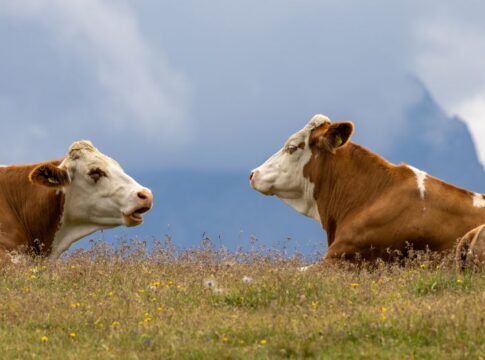
Did You Know Cows Have Best Friends and Get Stressed
By Trivia Daily, Staff Writer — Published November 12, 2026
Table of Contents
- Key Takeaways
- The Science Behind Bovine Friendships and Stress
- Cow Communication and Emotional Expression
- Individual Personalities Shape Social Lives
- Comparing Stress Responses Across Farm Animals
- Myths and Misconceptions About Cattle Intelligence
- Frequently Asked Questions
Cows might seem like simple, placid creatures content to graze in fields all day, but recent research reveals a surprisingly complex emotional world beneath those calm exteriors. These gentle giants form close bonds with specific herd members, experience genuine stress when separated from their companions, and display personalities as distinct as any household pet. The fascinating trivia about cows friends stressed behaviors challenges everything we thought we knew about farm animals and invites us to discover just how intelligent and emotionally sophisticated these animals truly are.
Scientists studying cattle behavior have documented remarkable social patterns that mirror human friendships. Cows choose preferred companions and seek them out consistently, spending hours grooming each other and resting side by side. When separated from their best friends, cows show measurable signs of anxiety including elevated heart rates, increased cortisol levels, and behavioral changes. This amazing research has profound implications for animal welfare and our understanding of emotional intelligence in non-human species.
Key Takeaways
- Cows form long-lasting friendships with specific herd members and actively seek out their preferred companions throughout the day.
- Separation from best friends causes measurable stress responses in cattle, including elevated heart rates and increased cortisol production.
- Cows housed with their friends produce more milk and show reduced anxiety compared to those kept with unfamiliar animals.
- Individual cows display distinct personalities ranging from bold and curious to shy and cautious, influencing their social relationships.
- Cattle communicate through at least 10 different vocalizations, each conveying specific meanings to their herd mates.
- Mother cows and their calves can recognize each other’s calls even after months of separation.
The Science Behind Bovine Friendships and Stress
Research conducted at institutions including the University of Northampton has revealed that cows don’t simply tolerate whichever animals happen to share their pasture—they actively choose friends. Scientists observed cattle consistently pairing up with the same individuals, grooming each other, lying down together, and even synchronizing their movements when grazing. These aren’t random pairings. Cows demonstrate clear preferences, often maintaining the same friendships for years.
The stress response when friends are separated is both behavioral and physiological. Studies measuring heart rate variability in cattle found that cows placed in unfamiliar situations with their best friends showed significantly lower stress indicators than those facing the same situation alone or with strangers. Their heart rates remained steadier, and they exhibited calmer body language. Cortisol levels, the primary stress hormone, spiked noticeably when cows were isolated from their preferred companions but remained normal when friends stayed together.
This social bonding isn’t just emotionally interesting—it has practical implications. Dairy farmers who keep cows with their established friendship groups report higher milk yields. Stressed cattle produce less milk, and the quality can suffer. When cows feel secure with familiar companions, they eat more consistently, rest better, and show fewer signs of illness. The economic and ethical benefits of respecting these social bonds are becoming impossible to ignore.
Cow Communication and Emotional Expression
Cattle possess a surprisingly sophisticated communication system. Researchers have identified distinct vocalizations for different situations: low-frequency calls when a mother seeks her calf, higher-pitched sounds expressing frustration or fear, and gentle moos during friendly interactions. Each cow’s voice is unique enough that herd members can identify individuals by sound alone.
Body language plays an equally important role. Cows express affection by licking and grooming their friends, focusing especially on areas the other cow cannot easily reach. They position their ears forward when interested and alert, flatten them back when stressed or aggressive. Tail swishing can indicate irritation with flies or, when more vigorous, displeasure with their current situation. Even the way a cow holds her head communicates mood and intention to observant herd mates.
What’s truly surprising is the depth of memory involved. Mother cows separated from their calves at weaning—a standard farming practice—can recognize their offspring’s calls up to two years later. This long-term memory extends to both positive and negative experiences, influencing how cows respond to familiar people, places, and other animals they encounter again.
Individual Personalities Shape Social Lives
Anyone who works closely with cattle knows that each animal has a distinct personality. Some cows are natural leaders, bold and curious, always first to investigate new objects in their environment. Others are followers, cautious and shy, preferring to let braver herd members test unfamiliar situations first. These personality differences remain consistent over time and influence everything from feeding behavior to social relationships.
Bold cows tend to form friendships with other confident individuals, creating social subgroups within larger herds. Shy cows often pair with similarly cautious companions. This personality-based sorting isn’t absolute, but the pattern appears frequently enough that researchers consider it a genuine aspect of cattle social structure. Interestingly, mixed-personality pairs do form, and these relationships can be just as strong as same-personality friendships.
Intelligence varies among individual cows too. Some learn to operate simple mechanisms like levers for food rewards after just a few trials. Others solve spatial problems quickly or remember complex routes through their environment. This cognitive diversity, combined with personality differences, makes each cow’s social experience unique within the herd.
Comparing Stress Responses Across Farm Animals
| Animal | Social Bonding | Stress When Isolated | Memory Duration |
|---|---|---|---|
| Cattle | Form lasting friendships with specific individuals | High (elevated cortisol, reduced milk production) | Years (recognize individuals long-term) |
| Pigs | Complex hierarchies, preferred companions | Very high (aggressive behavior, health issues) | Years (excellent long-term memory) |
| Sheep | Strong flock bonding, recognize faces | Extreme (panic responses, vocalization) | Years (remember up to 50 sheep faces) |
| Chickens | Pecking order, some individual preferences | Moderate (increased vocalization) | Months (recognize flock members) |
Myths and Misconceptions About Cattle Intelligence
The stereotype of cows as dim-witted, emotionless animals persists despite mounting evidence to the contrary. One common myth suggests cows lack the cognitive capacity for complex emotions. The reality? Cattle experience a range of feelings including joy, fear, anxiety, and affection. They celebrate by jumping and running when released into fresh pasture—a behavior farmers call “frolicking” that serves no purpose except expressing excitement.
Another misconception holds that cows don’t recognize individual humans. In fact, cattle remember specific people for years, responding positively to those who treated them gently and avoiding or showing fear toward those who handled them roughly. This memory extends to other species too; cows can distinguish between friendly and threatening dogs, different handlers, and even specific veterinarians.
Perhaps the most damaging myth is that individual animal welfare doesn’t matter in large-scale farming because cows are interchangeable units. The science of bovine friendships and stress responses proves otherwise. Each cow is an individual with preferences, memories, and emotional needs that directly affect her health and productivity. Treating cattle as sentient beings with social requirements isn’t just ethical—it’s economically sensible.
Frequently Asked Questions
How do cows choose their best friends?
Cows select friends based on personality compatibility, age, and positive interactions like mutual grooming. They gravitate toward individuals with similar temperaments and maintain these preferences consistently over time, often keeping the same best friends for years.
Can cows die from loneliness or stress?
While cows rarely die directly from loneliness, chronic stress from social isolation weakens their immune systems, reduces food intake, and increases susceptibility to disease. Prolonged stress can contribute to serious health problems that may shorten lifespan.
Do cows recognize their owners?
Yes, cows recognize individual humans by sight, smell, and voice, remembering specific people for years. They respond more calmly to familiar handlers they trust and may show fear or avoidance toward those associated with negative experiences.
How many friends does a typical cow have?
Most cows maintain close relationships with two to four preferred companions within their herd, though they recognize and interact peacefully with many more individuals. The size of a cow’s social circle depends on herd size and individual personality.
The next time you pass a field of grazing cattle, look closer at their interactions. Those aren’t random groupings—they’re friendship networks as real and meaningful as any you’ll find in more traditionally “intelligent” animals. Understanding that cows experience genuine emotional bonds and suffer real stress when those bonds break transforms how we think about these remarkable creatures and our responsibilities toward them.