
⏱️ 6 min read
Did You Know? 10 Facts About The Loch Ness Monster
The Loch Ness Monster, affectionately known as “Nessie,” stands as one of the world’s most enduring and captivating cryptozoological mysteries. For nearly a century, this alleged creature has sparked imagination, scientific inquiry, and heated debate about what might lurk beneath the murky waters of Scotland’s most famous loch. Whether believer or skeptic, the legend of Nessie has woven itself into the fabric of popular culture and Scottish heritage. Here are ten fascinating facts about this legendary beast that continue to intrigue people worldwide.
1. Ancient Origins Predate Modern Sightings
While many associate the Loch Ness Monster with 20th-century accounts, references to mysterious creatures in the loch date back much further. The earliest recorded sighting appears in a biography of Saint Columba from 565 AD, written by Adomnán. According to the text, the Irish monk encountered a large beast in the River Ness and commanded it to retreat, saving a swimmer from attack. This ancient account suggests that tales of strange creatures in these Scottish waters have persisted for over 1,400 years, long before modern monster hunters arrived with cameras and sonar equipment.
2. The Famous 1934 “Surgeon’s Photograph” Was a Hoax
Perhaps the most iconic image associated with Nessie is the 1934 photograph taken by London physician Robert Kenneth Wilson. The picture appeared to show a long-necked creature emerging from the water and became the definitive representation of the monster for decades. However, in 1994, Christian Spurling confessed on his deathbed that the photograph was an elaborate hoax. The “monster” was actually a toy submarine fitted with a sculpted head and neck, created by Marmaduke Wetherell and his stepson Spurling as revenge against the Daily Mail, which had humiliated Wetherell over a prior Nessie investigation.
3. Loch Ness Contains More Freshwater Than All Lakes in England and Wales Combined
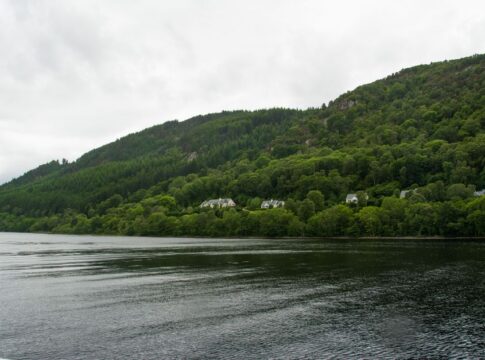
Understanding the sheer size and depth of Loch Ness helps explain why the mystery has endured so long. The loch stretches approximately 23 miles in length and reaches depths of nearly 800 feet at its deepest point. It contains an estimated 263 billion cubic feet of water, more than all the freshwater lakes in England and Wales combined. The water’s high peat content makes it extremely murky, with visibility often limited to just a few feet. These conditions create the perfect environment for a legend to thrive, as comprehensive searches remain extraordinarily challenging despite modern technology.
4. Over 1,000 Sightings Have Been Recorded
Since systematic record-keeping began, more than 1,000 eyewitness accounts of the Loch Ness Monster have been documented. These reports describe various characteristics, though most commonly mention a large body, long neck, and one or more humps breaking the water’s surface. Witnesses range from local residents to tourists, police officers to scientists. The Official Loch Ness Monster Sightings Register maintains detailed records of these encounters, including dates, locations, and descriptions. While skeptics attribute most sightings to misidentified logs, boat wakes, or swimming deer, the sheer volume of reports keeps the legend alive.
5. Scientific Expeditions Have Used Cutting-Edge Technology
Numerous scientific investigations have attempted to solve the Loch Ness mystery using increasingly sophisticated equipment. In 1987, Operation Deepscan employed a flotilla of boats equipped with sonar to sweep the entire loch. In 2003, the BBC funded an extensive search using 600 sonar beams and satellite tracking. Most recently, in 2018, scientists conducted environmental DNA sampling throughout the loch to catalog all biological organisms present. While these expeditions have ruled out the presence of large, unknown animals according to most scientists, they have failed to completely extinguish speculation and belief in Nessie’s existence.
6. The Plesiosaur Theory Remains Popular Despite Scientific Impossibility
Many Nessie enthusiasts believe the creature could be a surviving plesiosaur, a marine reptile that lived during the age of dinosaurs and went extinct approximately 66 million years ago. The long-necked appearance described in many sightings aligns with plesiosaur anatomy, making this theory appealing. However, scientists reject this hypothesis for several reasons: plesiosaurs were marine creatures that couldn’t survive in freshwater, they were air-breathing reptiles that would need to surface regularly (making them easily observable), and Loch Ness was formed only about 10,000 years ago after the last Ice Age, making continuous habitation impossible.
7. Nessie Generates Significant Economic Impact
The Loch Ness Monster has become an economic powerhouse for the Scottish Highlands. Tourism related to Nessie generates an estimated £41 million annually for the local economy, supporting hotels, restaurants, tour operators, and gift shops throughout the region. The village of Drumnadrochit alone hosts multiple Nessie-themed attractions, including museums and exhibition centers. Boat tours of the loch specifically marketed as monster-hunting expeditions remain consistently popular. This economic incentive ensures that whether or not Nessie exists, the legend will continue to be promoted and celebrated as an integral part of Scottish tourism.
8. Seismic Activity Could Explain Some Sightings
Loch Ness sits along the Great Glen Fault, a major geological fault line that runs through the Scottish Highlands. Scientists have proposed that seismic activity along this fault could create unusual water disturbances, including standing waves or seiches that might be misinterpreted as a large creature moving through the water. Additionally, underwater landslides caused by seismic activity could generate sudden surface disturbances. Pockets of gas released from the loch bottom due to geological processes might also create bubbling effects or floating debris that witnesses could mistake for a living creature.
9. The 2019 DNA Study Suggested Giant Eels
The comprehensive environmental DNA study conducted by Professor Neil Gemmell from New Zealand’s University of Otago in 2019 yielded intriguing results. While the study found no evidence of plesiosaurs, prehistoric reptiles, sharks, or sturgeon, it did detect significant amounts of eel DNA throughout the loch at various depths. Gemmell suggested that some sightings might be explained by exceptionally large eels, though he emphasized that the DNA evidence cannot determine the size of the organisms present. European eels are common in Loch Ness, and while they typically grow to moderate sizes, the possibility of unusually large specimens cannot be completely dismissed.
10. Nessie Has Legal Protection
In a quirky legal twist, the Loch Ness Monster enjoys official protection under Scottish law. In 1933, the same year modern Nessie mania began, the Secretary of State for Scotland expressed concern that hunters might harm the creature and issued instructions that it should not be killed. This protection was never formally revoked. Additionally, if Nessie were proven to exist, it would automatically receive protection under various wildlife conservation laws. This legal status reflects the cultural significance of the legend and Scotland’s commitment to preserving its most famous mythical resident, whether real or imagined.
Conclusion
The Loch Ness Monster represents far more than a simple cryptozoological curiosity. These ten facts reveal a phenomenon that intersects history, science, economics, and cultural identity. From ancient monastic texts to modern DNA analysis, from admitted hoaxes to unexplained sonar readings, the legend of Nessie continues to evolve while maintaining its essential mystery. Whether the monster exists as a flesh-and-blood creature, a series of misidentifications, or purely as a cultural construct, its impact on our collective imagination remains undeniable. The murky waters of Loch Ness guard their secrets well, ensuring that debates about what might or might not lurk in the depths will continue to captivate future generations of believers, skeptics, and the simply curious.