
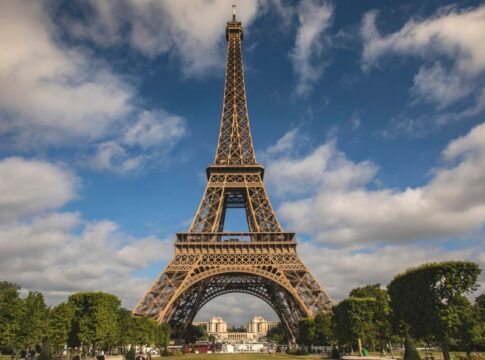
The Eiffel Tower Grows Taller in Summer: Why It Happens
By TriviaOwl, Staff Writer — Published August 9, 2026
Table of Contents
- Key Takeaways
- Why the Eiffel Tower Grows: Understanding Thermal Expansion
- How Gustave Eiffel Planned for Movement
- Comparing Thermal Expansion Across Famous Structures
- Everyday Examples of Thermal Expansion
- Measuring the Tower’s Growth
- Frequently Asked Questions
Standing tall in the heart of Paris, the iconic Eiffel Tower isn’t quite as fixed in height as you might think. This surprising fact delights tourists and trivia lovers alike: the Eiffel Tower grows taller in summer, expanding by several inches when temperatures rise. It’s a fascinating example of physics in action, transforming one of the world’s most recognizable landmarks into a living lesson about how materials respond to heat. You’re witnessing thermal expansion on a monumental scale—literally.
The tower can grow up to approximately six inches taller during the hottest summer days compared to the coldest winter nights. This isn’t magic or architectural trickery. It’s pure science, the inevitable consequence of heating nearly 10,000 tons of iron. Every metal structure on Earth behaves this way, but few do it as dramatically—or as measurably—as Gustave Eiffel’s masterpiece.
Key Takeaways
- The Eiffel Tower grows approximately six inches taller in summer due to thermal expansion of its iron framework.
- Heat causes iron atoms to vibrate more energetically, pushing them slightly farther apart and expanding the entire structure.
- The tower’s height can vary throughout a single day as temperatures fluctuate between morning cool and afternoon heat.
- Gustave Eiffel designed the structure with expansion joints and flexibility to accommodate these temperature-driven changes.
- The phenomenon demonstrates the same principle of thermal expansion that affects bridges, railroad tracks, and countless everyday objects.
- The tower’s position can also shift slightly as the sun heats one side more than another, causing uneven expansion.
Why the Eiffel Tower Grows: Understanding Thermal Expansion
Thermal expansion is one of physics’ most fundamental principles. When you heat a material, you’re adding energy to its atoms and molecules. This energy makes them vibrate more vigorously, requiring more space. In solids like iron, atoms are arranged in a crystalline lattice structure—imagine a three-dimensional grid. As temperature rises, these atoms push against their neighbors, causing the entire lattice to expand.
Iron, the primary material in the Eiffel Tower, has a coefficient of thermal expansion of about 12 millionths per degree Celsius. That sounds tiny. But when you’re working with a structure that was originally 300 meters (984 feet) tall and made of thousands of tons of iron, those millionths add up fast. A temperature swing of 30 degrees Celsius (54 degrees Fahrenheit) between winter and summer translates to roughly 15 centimeters (six inches) of vertical growth.
The expansion isn’t uniform across the structure. The side facing the sun heats up more than the shaded side, causing the tower to lean slightly away from the sun—sometimes by as much as seven inches at the top. As the day progresses and the sun’s position changes, the tower gently sways back and forth. It’s almost breathing.
How Gustave Eiffel Planned for Movement
When Gustave Eiffel designed his tower for the 1889 World’s Fair, he understood these physical realities. Engineers in the late 19th century were already familiar with thermal expansion—they’d seen railroad tracks buckle in summer heat and bridges crack in winter cold. Eiffel incorporated this knowledge into his design from the beginning.
The tower’s lattice framework isn’t rigid. It’s a masterpiece of calculated flexibility. The iron beams are connected with rivets and joints that allow for slight movement. This design prevents the catastrophic stress that would occur if the structure were completely rigid. When iron tries to expand but can’t, it generates enormous internal forces that can warp beams or snap connections. Eiffel’s genius was building in just enough give.
The base of the tower also includes expansion mechanisms. The massive iron legs rest on supports designed to accommodate shifting and settling. Over more than 130 years, these design choices have proven their worth. The tower has weathered countless temperature cycles without structural failure—a testament to engineering foresight.
Comparing Thermal Expansion Across Famous Structures
| Structure | Primary Material | Approximate Height Change | Temperature Factor |
|---|---|---|---|
| Eiffel Tower | Iron | Up to 6 inches (15 cm) | Summer vs. winter extremes |
| Gateway Arch (St. Louis) | Stainless steel | Up to 6 inches (15 cm) | Daily temperature variation |
| Burj Khalifa | Steel and concrete | Several inches (exact varies) | Desert temperature swings |
| Empire State Building | Steel | Up to 4 inches (10 cm) | Seasonal changes |
Everyday Examples of Thermal Expansion
The Eiffel Tower’s summer growth isn’t an isolated curiosity. Thermal expansion shapes the world around us in countless ways. Bridges include expansion joints—those bumpy gaps you drive over—specifically to accommodate length changes as temperatures shift. Without them, concrete roadways would crack and buckle.
Railroad tracks are laid with small gaps between sections for the same reason. In extreme heat, tracks without proper expansion allowances can warp into dangerous curves, a phenomenon railroad engineers call “sun kinks.” Power lines sag more in summer than winter because the metal cables expand and lengthen. Even sidewalks have those regular grooves cut into them partly to control where cracks form as the concrete expands and contracts.
You experience this principle every time you struggle to open a glass jar. Running hot water over the metal lid causes it to expand slightly, loosening its grip. Thermometers work because liquids like mercury or alcohol expand predictably with temperature. The phenomenon is so reliable that engineers use it for precision measurements and control systems worldwide.
Measuring the Tower’s Growth
Modern surveyors and engineers can measure the Eiffel Tower’s height changes with remarkable precision using laser measurement systems and GPS technology. These tools detect variations down to the millimeter, confirming what Eiffel himself predicted more than a century ago. The measurements reveal not just seasonal changes but daily fluctuations as the tower heats up in afternoon sun and cools overnight.
Weather stations on and near the tower track temperature constantly, creating a detailed record of how the structure responds to its environment. This data isn’t just trivia—it helps engineers monitor the tower’s structural health and predict maintenance needs. Any deviation from expected expansion patterns might signal a problem requiring investigation.
The tower also contracts in winter, though this receives less attention than its summer growth. When temperatures drop well below freezing, the iron lattice shrinks, pulling the structure down to its minimum height. The cycle repeats endlessly, year after year, with the tower dancing to the rhythm of Parisian seasons.
Frequently Asked Questions
How much does the Eiffel Tower actually grow in summer?
The Eiffel Tower can grow up to approximately six inches (15 centimeters) taller during the hottest summer days compared to cold winter temperatures. This variation occurs due to thermal expansion of the iron framework as it heats up.
Can you see the Eiffel Tower growing with your eyes?
No, the expansion happens too gradually and the change is too small to observe directly. The growth occurs over hours as temperatures rise, and six inches spread across a 1,000-foot structure isn’t visibly noticeable without precise measuring instruments.
Does thermal expansion damage the Eiffel Tower?
No, Gustave Eiffel designed the structure specifically to accommodate thermal expansion and contraction. The lattice framework includes joints and connections that allow controlled movement, preventing the stress damage that would occur in a completely rigid structure.
Do other tall buildings grow in summer too?
Yes, all metal and concrete structures experience thermal expansion. Skyscrapers, bridges, towers, and other large structures grow slightly in heat and shrink in cold, though the exact amount depends on their materials, height, and temperature variation.
The next time you gaze up at the Eiffel Tower—or any towering structure—remember that it’s not quite as permanent as it appears. These monuments breathe with the seasons, expanding and contracting in an endless cycle as old as the materials themselves. That gentle, invisible dance between physics and engineering makes them all the more remarkable.