
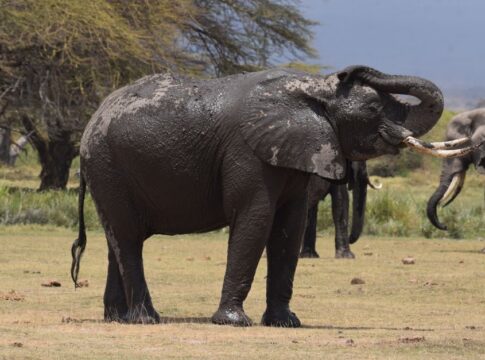
Why Elephants Never Forget: The Science Behind Memory
By Trivia Daily, Animals Desk — Published August 3, 2026
Table of Contents
- Key Takeaways
- The Anatomy of Elephant Memory
- Memory in Action: How Elephants Use Their Recall
- Comparing Memory Across Species
- The Emotional Dimension of Elephant Memory
- Debunking the Myth: What Elephants Actually Forget
- Frequently Asked Questions
The saying “elephants never forget” is more than just a colorful phrase—it’s rooted in observable animal behavior. These massive creatures possess remarkable cognitive abilities that allow them to remember locations, recognize individuals, and recall events across decades. Their brains, among the largest in the animal kingdom, contain specialized structures that process and store information with extraordinary efficiency. In nature, this memory serves critical survival functions, from finding water sources during droughts to maintaining complex social bonds within their herds.
Understanding why elephants never forget reveals fascinating insights into wildlife intelligence and how different species have evolved cognitive adaptations suited to their habitats and social structures.
Key Takeaways
- Elephant brains weigh approximately 11 pounds, making them the largest brain of any land animal, with a highly developed hippocampus responsible for memory processing.
- Elephants can recognize and remember up to 30 companion elephants by sight and scent, even after years of separation.
- Female elephants serve as repositories of ecological knowledge, remembering water sources and migration routes used decades earlier during previous droughts.
- These animals demonstrate episodic memory, recalling specific events and experiences from their past, not just learned behaviors.
- Elephant memory extends to recognizing human individuals, distinguishing between those who have helped or threatened them in the past.
- The temporal lobes in elephant brains are proportionally larger than in humans, providing enhanced capacity for memory storage and retrieval.
The Anatomy of Elephant Memory
An elephant’s brain contains roughly 257 billion neurons—three times more than the human brain. While many of these neurons are concentrated in the cerebellum for motor control, the cerebral cortex and hippocampus show remarkable development. The hippocampus, essential for forming and retrieving memories, is particularly enlarged in elephants compared to other animals.
The temporal lobes, which process sensory input and encode it into memories, occupy a greater proportion of the elephant brain than in humans. This anatomical advantage allows elephants to process vast amounts of information from their environment. They integrate data from multiple senses—smell, sight, sound, and even seismic vibrations detected through their feet—creating rich, multisensory memories.
Brain structure alone doesn’t tell the whole story. Elephants also possess a high degree of neuronal connectivity, with complex networks linking different brain regions. This connectivity enables them to associate current experiences with past events, a crucial ability for navigating their challenging habitats.
Memory in Action: How Elephants Use Their Recall
In the wild, elephant memory serves essential survival functions. Matriarchs—the oldest females who lead family groups—act as living libraries of ecological knowledge. During severe droughts, these experienced leaders remember distant water sources they visited decades earlier, sometimes as young calves. Research in African elephant populations has shown that families led by older matriarchs have higher survival rates during drought conditions, precisely because of this accumulated memory.
Social memory is equally impressive. Elephants live in complex societies where recognizing family members, allies, and potential threats matters tremendously. They remember the calls of other elephants and can distinguish between dozens of different individuals by voice alone. When elephants encounter the bones of deceased family members, they often pause to touch and examine them, suggesting they recall specific individuals even after death.
Navigation represents another critical application. Elephants migrate across vast territories, sometimes covering thousands of square miles annually. They remember seasonal patterns, knowing when and where food sources will be available. This mental map includes not just locations but temporal information—understanding that certain fruits ripen at specific times in particular places.
Comparing Memory Across Species
| Animal | Memory Strength | Notable Ability |
|---|---|---|
| Elephants | Decades-long recall | Remember migration routes and individuals after years |
| Dolphins | 20+ years | Recognize signature whistles of companions after decades |
| Chimpanzees | Years to decades | Exceptional spatial memory, remember tool locations |
| Crows | Years | Remember human faces and hold grudges |
| Dogs | Short to medium-term | Strong episodic-like memory for recent events |
The Emotional Dimension of Elephant Memory
Memory in elephants isn’t purely mechanical—it’s deeply intertwined with emotion. The elephant brain contains well-developed limbic structures, including an enlarged amygdala that processes emotional responses. This means elephants don’t just remember facts; they remember how events made them feel.
This emotional memory manifests in observable behaviors. Elephants who witnessed family members killed by poachers show signs of trauma when encountering humans years later. Conversely, elephants remember kindness. Sanctuary elephants recognize and show affection toward caretakers they haven’t seen in years. Some even remember and avoid specific locations where traumatic events occurred, suggesting they experience something akin to post-traumatic stress.
The combination of factual and emotional memory creates what researchers call episodic memory—the ability to mentally travel back in time and re-experience past events. This sophisticated cognitive ability was once thought unique to humans but is now recognized in several species, with elephants demonstrating particularly strong episodic recall.
Debunking the Myth: What Elephants Actually Forget
While elephant memory is extraordinary, the phrase “never forget” is hyperbolic. Like all creatures, elephants can and do forget, particularly information that isn’t regularly reinforced or emotionally significant. Young elephants must learn from their elders, indicating they aren’t born with perfect recall of everything they’ll need.
Elephant memory is also selective, prioritizing information crucial for survival and social cohesion. They’re more likely to remember the location of a reliable water source than trivial environmental details. Their memory serves evolutionary purposes rather than functioning as an infallible recording device.
The real marvel isn’t that elephants never forget—it’s that they remember what matters most with remarkable accuracy across impressive timespans. This selective, long-term memory represents an elegant adaptation to their ecological niche and social structure.
Frequently Asked Questions
How long can elephants actually remember things?
Elephants can retain memories for their entire lifespan, which can exceed 60 years in the wild. Documented cases show elephants recognizing individuals and locations after 20-30 years of separation, and matriarchs pass down knowledge of drought survival strategies they learned as young calves.
Do elephants really remember every elephant they meet?
Not every elephant, but they can remember up to several dozen individuals within their extended family groups and social networks. They recognize these elephants through multiple senses including sight, smell, and the unique rumbling calls each elephant produces.
Why did elephants evolve such powerful memories?
Strong memory provides survival advantages in elephants’ challenging habitats, where resources are scattered and seasonal. Remembering water sources during droughts, recognizing allies and threats, and maintaining complex social bonds all increase an elephant’s chances of survival and reproductive success.
Can elephants recognize humans they haven’t seen in years?
Yes, elephants can remember individual humans after long periods. They distinguish between people who treated them well or poorly, and can recognize specific individuals by sight, smell, and voice even after years apart, particularly if the interaction was emotionally significant.
The next time you hear someone praised for having a memory like an elephant, remember they’re invoking one of nature’s most impressive cognitive achievements. These gentle giants carry within their massive skulls a lifetime of experiences, relationships, and knowledge—a testament to how evolution shapes intelligence in ways perfectly suited to each species’ unique challenges.