
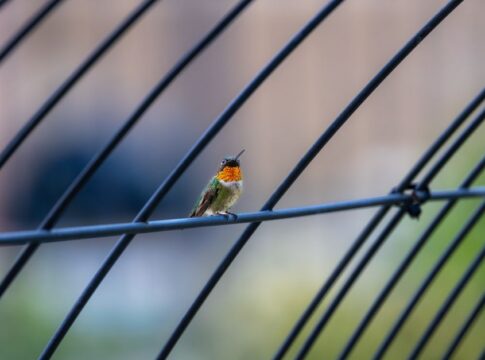
Why Hummingbirds Are the Only Birds That Fly Backwards
By Trivia Daily, Animals Desk — Published July 31, 2026
Table of Contents
- Key Takeaways
- The Biomechanics of Hummingbirds Birds Backwards Flight
- Wing Speed and Muscle Power
- Why Other Birds Cannot Fly Backwards
- Hummingbird Flight Capabilities Compared
- The Evolutionary Advantage of Reverse Flight
- Frequently Asked Questions
Among the thousands of bird species that grace our skies, only one group has mastered the art of reverse flight. Hummingbirds—those jewel-toned creatures that hover at your garden feeder—possess a flight capability unmatched in the avian world. While many birds can briefly move backwards by flapping frantically or falling with style, hummingbirds birds backwards flight is true, controlled, sustained reverse motion. It’s a talent that sets these tiny dynamos apart from eagles, sparrows, and every other feathered animal on Earth.
The secret lies in their radically different wing structure and movement. Most birds generate lift and thrust by flapping their wings up and down, which works beautifully for forward flight but makes backing up nearly impossible. Hummingbirds, however, have evolved a completely different approach to conquering the air.
Key Takeaways
- Hummingbirds are the only birds capable of sustained, controlled backward flight due to their unique wing structure and rotation ability.
- Their wings can rotate nearly 180 degrees at the shoulder, creating a figure-eight pattern that generates lift on both forward and backward strokes.
- These birds can beat their wings up to 80 times per second, allowing precise control in any direction including backwards, forwards, sideways, and hovering.
- The ball-and-socket shoulder joint in hummingbirds differs fundamentally from the hinge-like joint found in other bird species.
- Backward flight helps hummingbirds escape from flowers after feeding and navigate through dense vegetation in their natural habitat.
- This unique behavior evolved alongside their nectar-feeding lifestyle, requiring precise aerial maneuvering around delicate blooms.
The Biomechanics of Hummingbirds Birds Backwards Flight
Understanding why hummingbirds can fly backwards requires examining their remarkable wing anatomy. Unlike typical birds whose wings attach to their bodies with limited rotation, hummingbirds possess ball-and-socket shoulder joints similar to human shoulders. This design allows their wings to rotate in nearly any direction.
When a hummingbird flies backward, its wings trace a figure-eight pattern in the air. During both the forward and backward stroke, the wings generate lift by angling to push air in the desired direction. The wing bones themselves are extremely short and rigid, with most of the wing’s surface area coming from elongated hand bones and feathers. This creates what’s essentially a rotating paddle rather than a flapping appendage.
Most birds generate power only on the downstroke, with the upstroke serving as a recovery phase. Hummingbirds break this rule entirely. Both strokes produce thrust, giving them unparalleled control. When reversing, they simply adjust the angle of attack, tilting their wings to push air forward while the bird moves backward.
Wing Speed and Muscle Power
The athletic demands of this flight style are staggering. Hummingbird flight muscles make up approximately 25-30% of their total body weight—a proportion far higher than in other bird species. These powerful muscles drive wingbeat frequencies that vary by species, ranging from about 12 beats per second in the largest species to 80 beats per second in the smallest during courtship displays.
This incredible muscle performance requires enormous energy. Hummingbirds have the highest metabolic rate of any animal relative to their size. Their hearts can beat more than 1,200 times per minute during flight, and they must consume roughly half their body weight in nectar daily just to survive. The energy cost of hovering and backward flight is particularly high, which is why you’ll often see these creatures perched between feeding sessions.
Why Other Birds Cannot Fly Backwards
The vast majority of bird species are built for efficient forward flight. Their wing structure, muscle arrangement, and skeletal design all optimize for this single direction. When a typical bird needs to slow down or adjust position, it uses air braking, wing spreading, or brief backward hops—but not true reverse flight.
Several anatomical features prevent backward flight in most birds:
- Wing joints with limited rotational range that function more like hinges than ball-and-socket joints
- Asymmetrical feather design optimized for pushing air backward during the downstroke
- Muscle arrangements that provide power primarily during the downstroke, with minimal upstroke force
- Body proportions and tail structures designed for forward momentum and steering
- Wing loading ratios that favor speed and endurance over hovering and precise maneuvering
Some birds can momentarily flutter backward for a second or two, particularly when landing or startled. But this isn’t controlled flight—it’s more like stumbling through the air. Only hummingbirds can maintain backward flight for extended periods while remaining in complete control.
Hummingbird Flight Capabilities Compared
| Flight Ability | Hummingbirds | Most Other Birds |
|---|---|---|
| Backward Flight | Sustained and controlled | Not possible (brief fluttering only) |
| Hovering | Indefinite hovering capability | Very limited or impossible |
| Sideways Flight | Fully controlled | Not possible |
| Upside-Down Flight | Brief periods during dives | Not possible |
| Wingbeat Frequency | 12-80 beats per second | 2-15 beats per second |
The Evolutionary Advantage of Reverse Flight
This extraordinary ability didn’t evolve by accident. Hummingbirds feed almost exclusively on nectar from flowers, a lifestyle that demands precision aerial control. When a hummingbird inserts its long bill into a tubular flower, it must hold position perfectly while drinking. Once finished, backing away prevents damage to the delicate bloom and allows for a quick exit.
In their natural habitat—which ranges from Alaska to Tierra del Fuego—hummingbirds navigate through dense vegetation, darting between branches and leaves. The ability to fly in any direction, including backwards, lets them exploit food sources that other animals cannot easily access. This evolutionary specialization has been so successful that over 300 hummingbird species now exist, each adapted to specific flowers and ecological niches across the Americas.
Nature has produced other remarkable fliers—dragonflies can also fly backwards using a completely different mechanism—but among birds, hummingbirds stand alone. Their combination of speed, agility, and directional control represents one of evolution’s most impressive engineering achievements.
Frequently Asked Questions
Can any other birds fly backwards besides hummingbirds?
No other bird species can perform sustained, controlled backward flight like hummingbirds. While some birds may briefly flutter backward when startled or landing, only hummingbirds possess the anatomical adaptations necessary for true reverse flight.
How fast can hummingbirds fly backwards?
Hummingbirds typically fly backwards at slower speeds than their forward flight, usually around 10-15 miles per hour in reverse. Their forward flight can reach speeds of 30 miles per hour or more, with some species achieving even higher velocities during courtship dives.
Do hummingbirds fly backwards often or only rarely?
Hummingbirds use backward flight regularly as part of their daily behavior, particularly when departing from flowers after feeding. It’s a normal, frequent movement rather than a rare occurrence, though they spend more time hovering and flying forward overall.
What other unique flight abilities do hummingbirds have?
Beyond backward flight, hummingbirds can hover in place indefinitely, fly sideways, and even briefly fly upside-down during aggressive encounters or courtship displays. They’re also capable of extremely tight turns and rapid acceleration that would be impossible for conventionally-flying birds.
Next time you spot one of these remarkable creatures at a flower or feeder, take a moment to watch it reverse away after drinking. You’re witnessing a feat of biological engineering that took millions of years to perfect—and one that no other bird on the planet can match.