
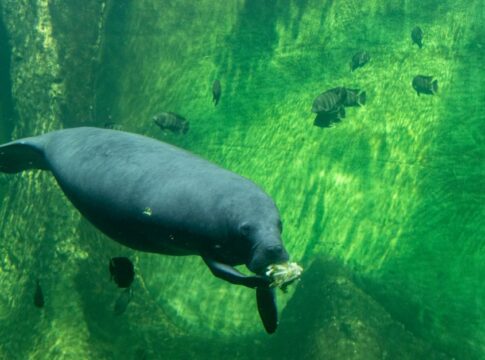
The Hidden Story of Mermaids Being Manatee Sightings
By Trivia Daily, Staff Writer — Published November 10, 2026
Table of Contents
- Key Takeaways
- Discovering the Hidden Story: Mermaids Meet Reality
- Why Sailors Saw What They Expected to See
- The Real Creatures Behind the Legend
- From Myth to Conservation
- Frequently Asked Questions
For centuries, sailors returned from ocean voyages with tales of enchanting mermaids glimpsed in distant waters. These mythical half-human, half-fish creatures captivated imaginations and filled maritime folklore. But the hidden story mermaids actually tell is far more surprising than fantasy—many of these legendary sightings were likely misidentified manatees. Yes, those gentle, rotund marine mammals swimming in shallow coastal waters became the basis for one of history’s most enduring myths. This fascinating case of mistaken identity reveals how human curiosity, limited visibility, and months at sea could transform an ordinary sea cow into an extraordinary legend.
The connection between manatees and mermaid myths isn’t mere speculation. Even Christopher Columbus documented seeing “mermaids” during his 1493 voyage to the Caribbean, though he noted they were “not as beautiful as depicted.” What he almost certainly observed were manatees, which are abundant in those waters. This amazing example of how facts become folklore demonstrates the power of expectation over observation.
Key Takeaways
- Manatees belong to the order Sirenia, named after the sirens of Greek mythology, directly linking them to mermaid legends.
- Christopher Columbus reported seeing three “mermaids” in 1493 that were “not half as beautiful as they are painted,” likely describing manatees.
- Manatees can stand vertically in shallow water and have two flippers that resemble arms, creating a vaguely humanoid silhouette from a distance.
- Female manatees nurse their young while holding them with their flippers, a behavior that could appear surprisingly human-like to distant observers.
- Poor visibility, long voyages at sea, and cultural expectations of finding exotic creatures all contributed to these cases of mistaken identity.
- The scientific classification “Sirenia” was established in the 1800s, acknowledging the historical connection between these animals and mermaid mythology.
Discovering the Hidden Story: Mermaids Meet Reality
The scientific order Sirenia includes manatees and dugongs, and the name itself acknowledges their mythological heritage. Ancient Greek sailors told stories of sirens—dangerous creatures who lured sailors to their doom with enchanting songs. When European explorers encountered these unfamiliar marine mammals, the connection seemed natural. These creatures lived in the sea, had fishlike tails, and occasionally surfaced in ways that could suggest something otherworldly to exhausted, homesick sailors.
Manatees exhibit several behaviors that could fuel mermaid legends. They surface to breathe every few minutes, often poking their whiskered snouts above water. In shallow areas, they sometimes stand on their tails, bringing their upper bodies vertical. From a rocking ship hundreds of feet away, through ocean spray and fading light, this posture might resemble a human torso rising from the waves. Their flippers, used to manipulate food and hold their young, could pass for arms at a distance.
Female manatees display particularly human-like maternal behavior. They cradle their calves while nursing, sometimes in an upright position. This tender scene, witnessed from afar by sailors unfamiliar with marine mammals, could easily be misinterpreted as a woman holding a child in the water. Add to this the fact that manatees were often spotted in warm, tropical waters where sailors expected to find exotic wonders, and the stage was set for legendary sightings.
Why Sailors Saw What They Expected to See
The psychology behind these sightings is just as interesting as the biology. Sailors on voyages lasting months or years experienced extreme isolation, vitamin deficiencies, and monotony. They also carried cultural baggage—stories of mermaids, sirens, and sea monsters that had been told for generations. When the human brain lacks clear visual information, it fills in gaps using expectations and prior knowledge. This phenomenon, called pareidolia, explains why we see faces in clouds or hear voices in white noise.
Maritime conditions made accurate observation nearly impossible. Ships rolled on waves, creating unstable viewing platforms. Salt spray and ocean glare limited visibility. Most sailors had never seen manatees before and had no frame of reference for these unusual creatures. But they had heard countless mermaid stories. Their brains, primed to recognize the familiar, transformed the unfamiliar manatee into something that matched their expectations.
The timing of sightings also played a role. Manatees are most active during dawn and dusk, when light conditions are poorest. These crepuscular hours create shadows and obscure details, making positive identification difficult. A manatee’s gray skin, viewed in dim light through ocean mist, could take on an almost luminous quality that enhanced its otherworldly appearance.
The Real Creatures Behind the Legend
Manatees are herbivorous marine mammals that spend their entire lives in water, primarily in shallow coastal areas, rivers, and estuaries. Three species exist: the West Indian manatee (found in the Caribbean and southeastern United States), the Amazonian manatee, and the West African manatee. Their closest living relatives are elephants, a surprising fact that becomes clearer when you examine their thick, wrinkled skin and the way they use their flexible lips to grasp vegetation.
These gentle giants can grow to 13 feet long and weigh up to 1,300 pounds. They spend most of their time grazing on seagrass and other aquatic plants, consuming up to 10% of their body weight daily. This constant eating explains why they’re often found in the same shallow, warm waters where sailors would anchor or pass slowly, increasing the likelihood of encounters.
| Manatee Feature | How It Could Suggest “Mermaid” |
|---|---|
| Vertical posture in shallow water | Resembles human torso emerging from waves |
| Two front flippers | Could appear arm-like from a distance |
| Rounded, whiskered face | Vaguely humanoid facial structure when wet |
| Maternal nursing behavior | Looks like a woman cradling a child |
| Gray, smooth skin | In certain light, could seem pale and human-like |
| Horizontal tail fluke | Matches traditional mermaid tail depictions |
From Myth to Conservation
Understanding the manatee-mermaid connection does more than bust an interesting myth—it highlights how these vulnerable creatures have intersected with human history for centuries. Today, all manatee species face conservation challenges. Boat strikes, habitat loss, and water pollution threaten their survival. The West Indian manatee is listed as threatened under the Endangered Species Act, while other species face similar or worse prospects.
Modern conservation efforts benefit from our improved understanding of these animals. Organizations like the Smithsonian and various marine research institutes study manatee behavior, migration patterns, and health. Unlike the sailors who mistook them for mermaids, today’s researchers use satellite tracking, underwater cameras, and genetic analysis to protect these remarkable mammals. The shift from mythologizing manatees to conserving them represents a triumph of scientific understanding over superstition.
Interestingly, some coastal communities have embraced the mermaid connection as a way to promote manatee conservation. By acknowledging the historical link between legend and reality, educators can capture public imagination while teaching about the real animals that need protection. The story becomes a gateway to environmental awareness—proof that truth can be as compelling as myth when properly told.
Frequently Asked Questions
Did sailors really mistake manatees for mermaids?
Yes, historical records including Christopher Columbus’s journals describe “mermaid” sightings that almost certainly were manatees. The combination of unfamiliar animals, poor viewing conditions, and cultural expectations led to these misidentifications.
Why are manatees called Sirenia?
The scientific order Sirenia is named after the sirens of Greek mythology, directly referencing the historical connection between these marine mammals and mermaid legends. The name was established by scientists in the 1800s who recognized this cultural link.
What do manatees actually look like up close?
Manatees are large, gray, rotund marine mammals with paddle-like flippers, whiskered faces, and horizontal tail flukes. They can weigh over 1,000 pounds and grow to 13 feet long, with wrinkled skin similar to their elephant relatives.
Are there any other animals mistaken for mythical creatures?
Yes, giant squids likely inspired kraken legends, oarfish may have spawned sea serpent tales, and rhinoceros could be the basis for some unicorn myths. Many legendary creatures have roots in real animals observed under poor conditions or by unfamiliar observers.
The next time you encounter a mermaid in art, literature, or film, remember the peaceful manatee grazing in shallow waters. These gentle herbivores, simply living their lives along tropical coasts, accidentally shaped one of humanity’s most enduring legends. Sometimes the truth behind the myth is every bit as wonderful as the fantasy—just in a completely different way.