
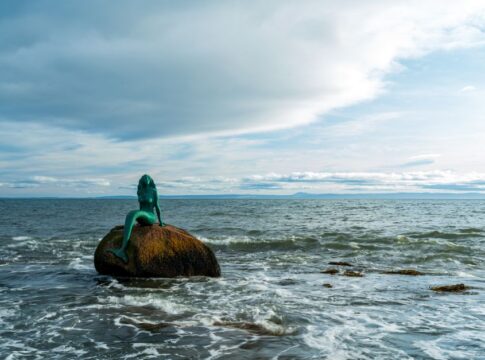
Why Mermaids Were Reported by Sailors Across Centuries
By TriviaOwl, Staff Writer — Published August 3, 2026
Table of Contents
- Key Takeaways
- Why Mermaids Reported by Sailors Were Actually Sea Mammals
- The Physical Toll of Long Sea Voyages
- Cultural Expectations and the Power of Belief
- Comparing Real Marine Mammals to Mermaid Descriptions
- When the Myth Began to Fade
- Frequently Asked Questions
For hundreds of years, sailors crossing vast oceans swore they’d seen mermaids—half-woman, half-fish creatures lounging on rocks or swimming alongside ships. These weren’t isolated incidents; mermaids reported by sailors appeared in ship logs, charts, and personal accounts from cultures around the globe. Even Christopher Columbus claimed to have spotted three mermaids off the coast of Hispaniola in 1493. But here’s the surprising truth: what these seafarers actually witnessed had nothing to do with mythical beings and everything to do with marine mammals, exhaustion, and the human brain’s remarkable ability to see what it wants to see.
The fascinating intersection of biology, psychology, and maritime history reveals why this myth persisted for so long—and what sailors were really looking at when they reported these enchanting encounters.
Key Takeaways
- Sailors most commonly mistook manatees and dugongs for mermaids, especially from a distance or in poor lighting conditions.
- Long voyages caused vitamin deficiencies, dehydration, and exhaustion that could trigger hallucinations and distorted perceptions.
- The human brain’s pattern-recognition system, combined with cultural expectations and folklore, primed sailors to interpret unfamiliar sights as familiar mythical creatures.
- Mermaid legends existed independently in coastal cultures worldwide long before extensive sea travel, reinforcing sailors’ beliefs when they encountered unusual marine life.
- Even respected explorers like Henry Hudson recorded mermaid sightings in official ship logs, lending credibility to the phenomenon.
- The myth declined sharply once marine biology became better understood in the 19th century and sailors could accurately identify sea mammals.
Why Mermaids Reported by Sailors Were Actually Sea Mammals
The most scientifically accepted explanation centers on a case of mistaken identity. Manatees and dugongs—large, slow-moving marine mammals—possess several characteristics that could fool exhausted sailors glimpsing them from afar. These creatures surface to breathe, sometimes holding their young to their chests while nursing, creating a vaguely humanoid silhouette. Their rounded heads, forward-facing eyes, and the way they use their flippers can suggest human-like movement, especially in choppy water or twilight conditions.
Manatees can grow to thirteen feet long and weigh over 1,000 pounds. When viewed from the deck of a ship at a distance, with only the head and upper body visible above water, the resemblance to a large, gray-skinned human becomes more plausible. Dugongs, their close relatives found in the Indian and Pacific Oceans, share similar features. Both species inhabit coastal waters and river mouths—exactly where ships would anchor or pass slowly, giving sailors extended observation time.
The Smithsonian Institution has documented how these marine mammals’ behavior patterns align perfectly with historical mermaid sightings. They’re curious animals that sometimes approach boats, they vocalize with eerie sounds that carry across water, and they inhabit tropical and subtropical regions where many famous mermaid encounters occurred. Female manatees nursing their calves present an especially compelling image when a sailor’s imagination fills in the gaps.
The Physical Toll of Long Sea Voyages
Maritime conditions before the 20th century created the perfect environment for sensory distortions. Sailors spent months at sea without fresh fruits or vegetables, leading to scurvy—a vitamin C deficiency that causes not just physical symptoms but also psychological effects including confusion and altered perception. Dehydration was constant. Sleep deprivation became routine during storms or when undermanned crews had to maintain watch schedules.
The monotony of endless ocean horizons plays tricks on the mind. Staring at waves for hours creates a hypnotic effect. The brain, starved for stimulation, begins interpreting ambiguous shapes more creatively. Add alcohol—a staple on ships where water often became contaminated—and you have conditions ripe for misidentification. Sailors weren’t lying; they genuinely believed they saw what they reported.
Heat stroke in tropical waters could cause delirium. The reflection of sunlight off water strains the eyes. Storms and rough seas meant sailors were often soaked, cold, and physically exhausted. Under these conditions, a floating log with seaweed draped over it might briefly appear to be something far more extraordinary.
Cultural Expectations and the Power of Belief
Sailors didn’t board ships with blank slates. They grew up hearing mermaid stories—tales passed down through generations in virtually every coastal culture. Greek sirens, Celtic selkies, African Mami Wata, Japanese ningyo—the mermaid archetype appears across human civilization. When sailors expected to see mermaids in distant waters, their brains were primed to interpret unusual sights through that lens.
This psychological phenomenon, known as confirmation bias, means people notice and remember information that confirms their existing beliefs. A sailor who’d heard dozens of mermaid tales would be more likely to interpret an ambiguous shape as a mermaid rather than an unknown animal. Once one crew member reported a sighting, others would be even more alert, creating a feedback loop of expectation and perception.
Ship captains recording these sightings in official logs gave them authority. When respected explorers documented mermaids, it validated the phenomenon for others. The fact that different crews from different nations reported similar creatures suggested a shared reality rather than individual hallucination—though we now understand they were all encountering the same marine mammals and experiencing similar perceptual conditions.
Comparing Real Marine Mammals to Mermaid Descriptions
| Characteristic | Historical Mermaid Reports | Manatee/Dugong Reality |
|---|---|---|
| Size | Human-sized or larger | 8-13 feet long, 400-1,300 pounds |
| Skin | Gray or pale, sometimes described as “fishy” | Gray, wrinkled, thick skin |
| Hair | Long flowing hair | Sparse bristles; seaweed often tangles on head |
| Behavior | Surfaces to breathe, holds young to chest | Must surface every 3-5 minutes; nurses young at chest |
| Tail | Fish-like tail | Horizontal paddle-shaped tail |
| Habitat | Coastal waters, river mouths | Shallow coastal waters, estuaries, slow rivers |
When the Myth Began to Fade
Mermaid sightings declined dramatically during the 19th century as marine biology emerged as a formal science. Naturalists began cataloging and describing sea creatures systematically. Sailors received better training in identifying marine life. Improved nutrition on ships—particularly after the British Royal Navy mandated citrus rations to prevent scurvy—meant fewer cases of delirium and sensory distortion.
Photography and later film documentation made it impossible for the myth to persist in its traditional form. Once people could see clear images of manatees and dugongs, the connection became obvious. Museums displayed specimens. Natural history illustrations circulated widely. The mystery dissolved in the light of scientific knowledge.
Yet the cultural appeal of mermaids never disappeared. They simply migrated from sailors’ reports into folklore, literature, and eventually popular entertainment. The myth transformed from a believed reality into a cherished story—which might be exactly where it belonged all along.
Frequently Asked Questions
Did sailors really believe they saw mermaids or were they making it up?
Most sailors genuinely believed their reports. The combination of unfamiliar marine mammals, harsh conditions causing sensory distortions, and cultural expectations created sincere misidentifications rather than deliberate fabrications.
Why don’t modern sailors report seeing mermaids?
Modern sailors have better nutrition, understand marine biology, possess identification guides, and lack the cultural expectation that mermaids exist. They correctly identify manatees, dugongs, and other sea life that previous generations mistook for mythical creatures.
Are manatees related to humans at all?
No, manatees are marine mammals more closely related to elephants than to humans or fish. Their distant evolutionary connection to land mammals gives them some superficially human-like features, but they’re entirely separate branches of the mammalian family tree.
Which famous explorers claimed to see mermaids?
Christopher Columbus reported seeing mermaids near Hispaniola in 1493, and Henry Hudson’s crew documented a mermaid sighting off Norway in 1608. Both descriptions match manatee or seal characteristics when examined with modern knowledge.
The next time you see a manatee lazily surfacing in coastal waters, consider how that same sight once launched a thousand myths. These gentle creatures, through no fault of their own, became the face of one of humanity’s most enduring maritime legends—proof that what we see depends as much on what we expect as on what’s actually there.