
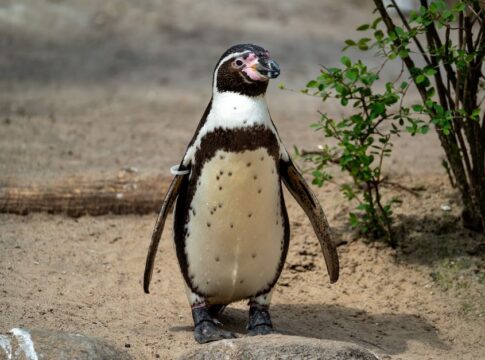
Why Penguins Cannot Taste Sweet Flavors Anymore
By Trivia Daily, Staff Writer — Published October 4, 2026
Table of Contents
- Key Takeaways
- How Penguins Cannot Taste Most Flavors
- The Antarctic Connection
- Eating Without Tasting
- When the Genes Disappeared
- Comparison of Taste Abilities Across Species
- Frequently Asked Questions
Imagine living in a world where chocolate, fruit, and cake all taste exactly the same as plain water. For penguins, this isn’t a hypothetical scenario—it’s their reality. These beloved flightless birds have lost the ability to taste sweetness, along with several other flavors most animals take for granted. Scientists have discovered that penguins cannot taste sweet flavors due to genetic mutations that occurred millions of years ago, leaving them with one of the most limited palates in the animal kingdom. This surprising evolutionary quirk reveals fascinating truths about how animals adapt to their environments in unexpected ways.
The story behind this culinary limitation involves genetics, evolution, and the harsh Antarctic environment where many penguin species make their home. What began as a scientific curiosity has become a window into understanding how taste evolves—and sometimes disappears entirely.
Key Takeaways
- Penguins lack functional genes for tasting sweet, umami, and bitter flavors, leaving them with only sour and salty taste receptors.
- The loss of taste genes likely occurred between 20 and 37 million years ago, long before modern penguin species evolved.
- Cold Antarctic temperatures may have contributed to these genetic changes, as taste receptors function poorly in freezing conditions.
- Penguins swallow fish whole without chewing, making complex taste perception unnecessary for survival.
- All 18 penguin species share these genetic deletions, suggesting the mutations occurred in their common ancestor.
- This evolutionary trade-off demonstrates that animals can lose traits that don’t contribute to survival advantages.
How Penguins Cannot Taste Most Flavors
Taste perception in vertebrates relies on specific genes that code for taste receptors on the tongue. Humans and most other animals have five basic taste categories: sweet, sour, salty, bitter, and umami (savory). Each category requires functional genes to produce the proteins that detect these flavors.
Genetic analysis has revealed that penguins carry broken or deleted versions of the genes responsible for sweet, umami, and bitter taste reception. These aren’t minor mutations—they’re complete deletions or frame-shift mutations that render the genes entirely nonfunctional. The Tas1r2 gene, which detects sweet compounds, is missing key segments. The Tas1r1 and Tas1r3 genes, which together form the umami receptor, are similarly compromised. Even the bitter taste receptor genes show extensive damage.
What remains? Penguins retain functional genes for sour and salty tastes. These two flavor categories are sufficient for their survival needs, helping them detect spoiled food (sour) and maintain electrolyte balance (salty).
The Antarctic Connection
Temperature plays a crucial role in this evolutionary mystery. Taste receptors are proteins, and like all proteins, they function best within specific temperature ranges. The taste receptor proteins in most animals work optimally around body temperature—roughly 37 degrees Celsius for mammals.
Penguins inhabit some of Earth’s coldest environments. Their mouths and tongues are significantly colder than those of warm-blooded animals living in temperate climates. Research suggests that at these low temperatures, taste receptors simply don’t work efficiently. If the receptors weren’t providing useful information anyway, evolution had no reason to maintain them.
This creates an interesting feedback loop. Once the genes began to deteriorate through random mutations, there was no selective pressure to preserve them. Penguins that lost taste function had no disadvantage compared to those that retained it, because the cold environment had already made those receptors unreliable.
Eating Without Tasting
The penguin feeding strategy makes elaborate taste perception unnecessary. Unlike humans who chew food and savor flavors, penguins are gulp feeders. They catch fish, squid, and krill, then swallow their prey whole and headfirst. The entire process takes seconds.
This feeding behavior means food spends minimal time in contact with the tongue. Even if penguins had functional taste receptors, they wouldn’t extract much flavor information from meals that bypass the taste buds so quickly. Evolution tends to eliminate traits that consume energy without providing benefits, and maintaining unused taste receptors fits that category perfectly.
Interestingly, penguins rely heavily on other senses while hunting. Vision is paramount—they can see clearly underwater and track fast-moving prey. They also use their keen sense of smell to navigate and possibly to identify their chicks among thousands in a crowded colony.
When the Genes Disappeared
Molecular clock analysis—a technique that estimates when genetic changes occurred based on mutation rates—suggests these taste genes became nonfunctional between 20 and 37 million years ago. This timing coincides with major climate shifts that made Antarctica progressively colder and more isolated.
The common ancestor of all modern penguins lived during this period. When the taste genes mutated in that ancestral population, every descendant species inherited the same deletions. This explains why all 18 penguin species, from the tiny Little Blue Penguin to the imposing Emperor Penguin, share the same taste limitations.
Genetic evidence from penguin fossils and living species has allowed researchers to trace these mutations through evolutionary time, creating a clear picture of when and how these birds lost their sense of taste.
Comparison of Taste Abilities Across Species
| Species | Sweet | Sour | Salty | Bitter | Umami |
|---|---|---|---|---|---|
| Humans | Yes | Yes | Yes | Yes | Yes |
| Penguins | No | Yes | Yes | No | No |
| Domestic Cats | No | Yes | Yes | Yes | Yes |
| Hummingbirds | Yes | Yes | Yes | No | Yes |
| Dolphins | No | No | Yes | No | No |
Frequently Asked Questions
Do penguins have taste buds at all?
Yes, penguins have taste buds, but they possess far fewer than most birds—typically only a few dozen compared to thousands in humans. These remaining taste buds can detect sour and salty flavors but lack the receptors for sweet, bitter, and umami tastes.
Can any other animals not taste sweetness?
Several carnivorous animals have lost the ability to taste sweetness, including domestic cats, sea lions, and some dolphin species. These animals evolved on meat-based diets where detecting sugars provided no survival advantage, leading to the loss of sweet taste receptor genes.
Would a penguin enjoy eating candy or fruit?
No, penguins would derive no pleasure from sweet foods because they lack the biological equipment to detect sweetness. Candy or fruit would taste bland to them, providing only texture and possibly salty or sour notes if those compounds were present.
Is this taste loss harmful to penguins?
Not at all. The loss of taste perception has no negative impact on penguin survival or health. Their diet consists entirely of marine animals that they swallow whole, making elaborate taste discrimination unnecessary. Evolution preserved only the taste abilities that serve practical purposes in their environment.
The penguin’s simplified palate reminds us that evolution isn’t about perfection—it’s about what works. In the icy waters of Antarctica, the ability to catch fish matters infinitely more than the ability to savor them. Next time you enjoy the complex flavors of your favorite meal, spare a thought for these remarkable birds who experience food in a fundamentally different way, yet thrive all the same.