
7 Surprising Facts About Redwoods Being Nearly Fireproof
By Trivia Daily, Staff Writer — Published September 16, 2026
Table of Contents
- Key Takeaways
- Why Redwoods Are Nearly Fireproof: The Science Behind Fire Resistance
- Redwood vs. Other Conifers: Fire Resistance Comparison
- Frequently Asked Questions
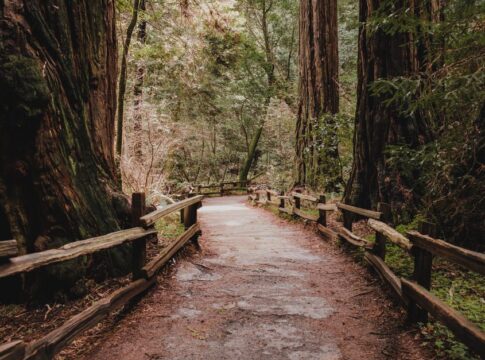
Walking through a redwood forest feels like stepping into a cathedral built by time itself. These towering giants, some over 300 feet tall, have witnessed centuries of history—including countless wildfires. Yet they stand, scarred but alive. The secret to their survival lies in remarkable adaptations that make redwoods nearly fireproof, defying the flames that would consume almost any other tree. What makes these ancient survivors so resilient? The answer is more fascinating than you might expect.
Discover the amazing biology, chemistry, and sheer tenacity that allow coast redwoods and giant sequoias to thrive where fire is not just a threat but a regular visitor. These surprising facts reveal why redwoods aren’t just fire-resistant—they’re practically designed for it.
Key Takeaways
- Redwood bark can grow over a foot thick, creating an insulating barrier against flames and extreme heat.
- The bark contains virtually no resin or pitch, substances that make most conifers highly flammable.
- Redwoods can resprout from dormant buds even after severe fire damage destroys their canopy.
- Their high moisture content—sometimes over 100% of dry weight—acts as natural fire retardant.
- Fire scars on redwoods serve as historical records, revealing centuries of wildfire patterns.
- Redwoods evolved alongside fire for millions of years, making flame resistance a survival trait.
Why Redwoods Are Nearly Fireproof: The Science Behind Fire Resistance
The term “nearly fireproof” might sound like exaggeration, but redwoods possess adaptations that border on the extraordinary. Coast redwoods (Sequoia sempervirens) and giant sequoias (Sequoiadendron giganteum) share similar fire-resistant traits, though they inhabit different regions of California. Both species developed these characteristics over millions of years in ecosystems where fire was—and remains—a natural part of the landscape.
Fire resistance in redwoods isn’t a single feature but a combination of physical and chemical defenses. Their thick, fibrous bark acts as armor. The high tannin content in their wood and bark makes them less palatable to insects and more resistant to decay, which indirectly helps with fire survival by keeping dead, flammable material from accumulating. The trees’ sheer size also plays a role—mature redwoods are so massive that even significant fire damage often fails to kill them.
Redwood vs. Other Conifers: Fire Resistance Comparison
| Tree Species | Bark Thickness (mature) | Resin Content | Fire Survival Rate |
|---|---|---|---|
| Coast Redwood | Up to 12 inches | Very low | Very high |
| Giant Sequoia | Up to 24 inches | Very low | Very high |
| Ponderosa Pine | 2-4 inches | High | Moderate |
| Douglas Fir | 4-12 inches | Moderate | Moderate |
| Lodgepole Pine | Less than 1 inch | Very high | Low |
1. Bark Thickness Reaches Extraordinary Proportions
Giant sequoia bark can exceed two feet in thickness on the oldest specimens, creating an insulating layer that protects the living tissue beneath. This fibrous, spongy bark contains air pockets that slow heat transfer, much like insulation in a building. When flames lick the trunk, the outer bark may char and blacken, but the cambium layer—where growth occurs—remains cool enough to survive. Coast redwoods typically have somewhat thinner bark, but still impressively thick compared to most trees. This adaptation alone gives redwoods an enormous advantage during wildfires, allowing them to withstand intense heat that would kill trees with thinner protection in minutes.
2. The Absence of Flammable Resins Sets Them Apart
Most conifer species produce resin or pitch, sticky substances that help seal wounds and deter pests. But these compounds are highly flammable. Pines, firs, and spruces can become torches when fire reaches them, their resin-rich wood burning hot and fast. Redwoods took a different evolutionary path. Their wood and bark contain minimal resin, making them far less likely to ignite or sustain combustion. This chemistry is a game-changer in fire ecology. While a pine forest might explode into crown fires that leap from tree to tree, a redwood grove experiences ground fires that burn the understory but leave the giants standing.
3. High Moisture Content Acts as Built-In Fire Retardant
Redwoods are famously thirsty trees, drawing massive amounts of water from fog, rain, and soil. Their wood can contain moisture levels exceeding 100% of its dry weight—meaning the water in the tree can actually outweigh the solid material. This saturation makes ignition incredibly difficult. Fire needs fuel, oxygen, and heat, but water disrupts this triangle. When flames contact moisture-laden redwood tissue, much of the heat energy goes toward evaporating water rather than raising the wood to combustion temperature. Even during California’s dry season, mature redwoods retain enough moisture to resist all but the most extreme fires.
4. Dormant Buds Enable Remarkable Post-Fire Recovery
Perhaps the most surprising adaptation is hidden beneath the bark: dormant epicormic buds that can remain viable for decades. When fire damages or destroys a redwood’s canopy, these sleeping buds awaken, sprouting new growth directly from the trunk. Within months of a severe fire, green shoots emerge from blackened bark, a phoenix-like resurrection. Coast redwoods can also resprout from their root systems, sending up new trunks even if the original tree dies. This regenerative capacity means that redwoods don’t just survive fire—they use it as an opportunity to renew themselves.
5. Fire Scars Become Living Historical Records
Walk through an old-growth redwood forest and you’ll notice something curious: many trees have hollow cavities or dramatic scars at their bases, blackened by ancient flames. These fire scars don’t heal the way wounds on other trees might. Instead, they remain as permanent markers, creating a readable timeline of past fires. Scientists study these scars to understand fire frequency and intensity over centuries. Some redwoods show evidence of surviving dozens of fires across their 2,000-year lifespans. The scars prove that these trees didn’t just endure occasional fires—they thrived in fire-prone ecosystems for millennia.
6. Evolutionary History Shaped Fire Resistance Over Millions of Years
Redwoods belong to an ancient lineage that dates back to the age of dinosaurs. Fossil evidence shows that redwood relatives once grew across much of the Northern Hemisphere, including regions where seasonal fires were common. Over millions of years, natural selection favored trees with thicker bark, less resinous wood, and regenerative abilities. The redwoods we see today are the descendants of those survivors, fine-tuned by eons of evolutionary pressure. Their fire resistance isn’t an accident—it’s the result of deep time sculpting life to fit its environment. Climate patterns, lightning strikes, and changing ecosystems all played roles in creating these nearly fireproof giants.
7. Fire Actually Benefits Redwood Ecosystems
Here’s an interesting twist: redwoods don’t just tolerate fire—they depend on it. Low-intensity fires clear away competing vegetation, return nutrients to the soil, and create gaps in the canopy where young redwoods can establish themselves. Fire suppression policies in the 20th century, though well-intentioned, allowed fuel loads to build up in redwood forests, increasing the risk of catastrophic fires. Modern forest management increasingly recognizes that allowing controlled burns or managing natural fires benefits redwood health. The trees’ fire resistance makes them ideal anchors for fire-adapted ecosystems, surviving blazes that reset the landscape around them while they stand tall and unchanged.
Frequently Asked Questions
Can redwoods actually burn down completely?
Yes, under extreme conditions such as prolonged drought, high winds, and accumulated fuel loads, even redwoods can be killed by fire. However, this is relatively rare compared to other tree species, and typically requires unusually severe fire conditions.
How long does it take for a redwood to grow its thick bark?
Redwood bark thickness increases gradually over centuries. Young redwoods have relatively thin bark and are more vulnerable to fire, but by the time they reach 100-200 years old, they’ve developed substantial protective layers that significantly improve their fire resistance.
Do coast redwoods and giant sequoias have the same fire resistance?
Both species are highly fire-resistant, but giant sequoias generally have thicker bark and inhabit drier environments where fire is even more frequent. Coast redwoods benefit from coastal fog and moisture, which provides additional fire protection through higher humidity levels.
What happens to wildlife during redwood forest fires?
Many animals in redwood ecosystems are adapted to fire and can flee or shelter in burrows, streams, or less-affected areas. The fire-resistant redwoods themselves provide refuge, as the area immediately around their trunks often remains cooler than surrounding burning vegetation.
The next time you stand before a redwood scarred by fire yet still reaching skyward, you’re witnessing a masterpiece of evolutionary engineering. These trees remind us that survival isn’t about avoiding challenges—sometimes it’s about being built to endure them, again and again, for thousands of years.