
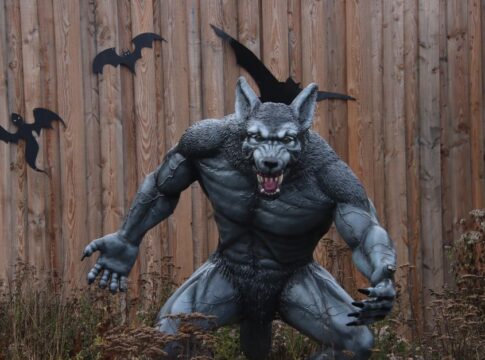
Werewolf Myths: 7 Surprising Facts About Lycanthropy Beliefs
By TriviaOwl, Staff Writer — Published August 12, 2026
Table of Contents
- Key Takeaways
- Understanding Werewolf Myths Lycanthropy Across Cultures
- Medical vs. Mythological Lycanthropy
- The Psychology Behind Shape-Shifting Fears
- Frequently Asked Questions
Imagine transforming into a ravenous wolf under the full moon, your humanity slipping away as fur sprouts and fangs emerge. This terrifying image has haunted cultures worldwide for millennia, yet the truth behind werewolf myths lycanthropy beliefs is far stranger than Hollywood suggests. From ancient curses to medical misdiagnoses, the fascinating history of shape-shifting legends reveals as much about human psychology as it does about folklore. Discover how these amazing tales evolved across continents and why they continue to captivate our collective imagination.
The word “lycanthropy” itself comes from Greek mythology—specifically King Lycaon, who allegedly served human flesh to Zeus and was punished by transformation into a wolf. But werewolf stories existed long before ancient Greece, and the surprising truths behind these beliefs challenge everything popular culture has taught us about moon-cursed monsters.
Key Takeaways
- Werewolf legends appear independently in cultures across every inhabited continent, suggesting deep psychological roots rather than simple cultural diffusion.
- Clinical lycanthropy is a recognized psychiatric condition where patients genuinely believe they’re transforming into animals—though no physical change occurs.
- Medieval European werewolf trials executed thousands of accused shape-shifters, often targeting the mentally ill, epileptics, and social outcasts.
- The full moon connection to werewolves is largely a modern invention popularized by 20th-century cinema rather than ancient folklore.
- Several real medical conditions, including hypertrichosis and rabies, likely contributed to historical werewolf sightings and accusations.
- Ancient Norse berserkers deliberately cultivated wolf-like battle personas through ritual and possibly psychoactive substances.
Understanding Werewolf Myths Lycanthropy Across Cultures
Werewolf legends aren’t uniquely European. Shape-shifting predator myths exist globally, adapted to local apex predators. In Africa, leopard-men terrorized communities. South American folklore featured jaguar transformations. Asian cultures developed tiger-people legends. This geographic distribution reveals something interesting: humans everywhere feared becoming the very predators that once hunted them.
The specific characteristics varied dramatically. European werewolves often transformed involuntarily, cursed or bitten into their condition. Slavic folklore described willing transformations, where individuals donned enchanted wolf pelts to gain supernatural powers. Norse traditions blurred the line entirely—berserkers were warriors who channeled wolf spirits without physically changing form. These cultural variations demonstrate how werewolf myths reflected local anxieties about violence, wildness, and the thin boundary between civilization and savagery.
1. The Full Moon Myth Is Mostly Hollywood Fiction
Perhaps the most surprising fact about lycanthropy beliefs: the iconic full moon trigger is largely a modern invention. While ancient folklore sometimes associated werewolves with nighttime, the specific full moon transformation became standardized through 20th-century films, particularly “The Wolf Man” (1941). Earlier European legends described transformations triggered by curses, enchanted belts, drinking from cursed streams, or simply willpower. Some medieval accounts claimed werewolves transformed on specific Christian holidays—particularly Christmas Eve—as a demonic inversion of sacred time. The moon connection exists in some traditions, but it wasn’t the universal trigger pop culture suggests. This reveals how contemporary media can reshape and standardize ancient myths, creating “traditional” elements that never existed in original folklore.
2. Clinical Lycanthropy Is a Real Psychiatric Diagnosis
Medical literature documents a rare psychiatric condition called clinical lycanthropy, where patients genuinely believe they’re transforming into animals—most commonly wolves, but also dogs, cats, horses, birds, and even frogs. No physical transformation occurs, but sufferers experience vivid delusions of growing fur, changing body structure, and developing animal behaviors. This condition typically appears alongside other psychiatric disorders, including schizophrenia, bipolar disorder, and severe depression. Documented cases remain rare, with fewer than a hundred reported in modern medical literature, but they provide fascinating insight into how the human mind can construct elaborate alternative realities. Some researchers suggest historical werewolf accusations may have targeted individuals experiencing these genuine delusions, conflating mental illness with supernatural transformation.
3. Thousands Died in European Werewolf Trials
Between roughly 1400 and 1700, European authorities prosecuted thousands for lycanthropy, executing hundreds. These trials paralleled and sometimes overlapped with witch hunts, sharing similar accusations of demonic pacts and supernatural evil. France proved particularly zealous—one documented case involved a hermit named Gilles Garnier, executed in 1573 for allegedly transforming into a wolf and cannibalizing children. Germany’s Peter Stumpp suffered horrific torture and execution in 1589 after confessing (under duress) to twenty-five years as a werewolf. These trials targeted society’s vulnerable: the mentally ill, epileptics, hermits, and those with physical deformities. The legal proceedings treated lycanthropy as literal fact, with courts debating whether the devil provided real wolf bodies or merely created illusions. This dark chapter reveals how folklore became weaponized against marginalized populations.
4. Real Diseases Fueled Werewolf Legends
Several medical conditions likely contributed to werewolf sightings and accusations. Hypertrichosis causes excessive hair growth across the entire body, creating a distinctly wolf-like appearance—sufferers in medieval Europe would have seemed monstrous to superstitious communities. Rabies produces behaviors eerily similar to werewolf descriptions: aggression, hydrophobia, foaming at the mouth, and the disease spreads through bites. Victims sometimes bite others before dying, perpetuating the infection cycle in ways that mirror werewolf transmission myths. Porphyria, a group of rare blood disorders, causes severe photosensitivity, forcing sufferers to avoid sunlight, along with skin lesions and reddish teeth. Ergot poisoning from contaminated grain produces hallucinations and convulsions that could be interpreted as transformation. These conditions didn’t create werewolf myths alone, but they provided real-world examples that seemed to confirm supernatural beliefs.
5. Silver Bullets Are Another Modern Addition
The famous silver bullet vulnerability appears nowhere in ancient werewolf folklore. European legends suggested various methods for killing werewolves—blessed weapons, decapitation, burning—but silver’s supposed effectiveness emerged primarily in 19th-century fiction and became cemented through 20th-century cinema. The association likely borrowed from vampire folklore, where silver had protective properties, and merged with the general use of silver in folklore as a pure, sacred metal effective against evil. Some scholars trace the silver bullet specifically to “The Beast of Gévaudan” incidents in 1760s France, where a large wolf-like creature killed numerous people before allegedly being shot with a silver bullet—though historical records suggest the “silver” detail was added later. This demonstrates how folklore continuously evolves, with each generation adding new “traditional” elements.
6. Berserkers Cultivated Deliberate Wolf Transformations
Norse berserkers represent a fascinating inversion of typical werewolf narratives. Rather than cursed victims, these elite warriors deliberately cultivated wolf-like battle states through ritual, possibly psychoactive substances, and intense psychological conditioning. Historical accounts describe them fighting with superhuman strength, apparent immunity to pain, and animal-like ferocity. They wore wolf pelts and may have consumed wolf meat as part of transformation rituals. Some scholars suggest they used Amanita muscaria mushrooms or other hallucinogens to induce altered states. Whether their transformations were literal belief, metaphorical identity, or drug-induced psychosis remains debated, but berserkers demonstrate how some cultures embraced rather than feared the concept of human-to-predator transformation. They sought the power werewolves represented, channeling it for warfare rather than fleeing it as a curse.
7. Werewolf Beliefs Persist in Modern Sightings
Werewolf sightings didn’t end with the Enlightenment. Modern reports continue, particularly in rural areas and indigenous communities worldwide. Wisconsin’s “Beast of Bray Road” generated numerous eyewitness accounts beginning in the 1980s—witnesses described a wolf-like bipedal creature near rural roads. Michigan’s “Michigan Dogman” legend includes reports dating to the 1930s with periodic sighting waves. These contemporary accounts share characteristics with historical reports: bipedal posture, human-like intelligence combined with animal features, and nighttime encounters. Skeptics attribute sightings to misidentified bears (which can walk upright), large dogs, or psychological suggestion. Yet the persistence of these reports across cultures and centuries suggests werewolf myths fulfill deep psychological needs—perhaps externalizing fears of our own violent potential or maintaining wonder in an increasingly rationalized world.
Medical vs. Mythological Lycanthropy
| Aspect | Clinical Lycanthropy | Mythological Lycanthropy |
|---|---|---|
| Physical Change | None; delusion only | Complete transformation into wolf |
| Trigger | Psychiatric episode | Curse, bite, full moon, ritual |
| Treatment | Antipsychotic medication, therapy | Silver bullets, exorcism, death |
| Duration | Variable; can be chronic or episodic | Typically temporary, reverting at dawn |
| Consciousness | Patient believes transformation is real | Loss of human consciousness and morality |
The Psychology Behind Shape-Shifting Fears
Why do werewolf myths resonate so powerfully across cultures? Psychologists suggest they externalize internal conflicts about human nature. We’re simultaneously civilized and savage, rational and instinctive, social and predatory. Werewolves embody the fear that our civilized veneer might crack, revealing something monstrous underneath.
The transformation narrative also reflects anxieties about loss of control. Puberty, intoxication, rage, sexual desire—all involve feeling hijacked by forces beyond conscious control. Werewolf stories provide a framework for understanding these unsettling experiences. Medieval Europeans feared werewolves partly because they represented social breakdown: the neighbor who seemed normal but harbored hidden violence, the community member who abandoned human laws for bestial appetites.
Modern werewolf fiction has evolved to explore identity rather than simply fear. Contemporary stories often portray lycanthropy as a metaphor for marginalization, chronic illness, or embracing one’s true nature despite social pressure. This evolution demonstrates how myths adapt to address each generation’s specific anxieties while maintaining core archetypal power.
Frequently Asked Questions
Can rabies actually make people act like werewolves?
Rabies produces several werewolf-like symptoms: extreme aggression, hydrophobia (fear of water), hypersalivation, and the disease spreads through bites. Medieval Europeans witnessing rabies victims would have seen behaviors matching werewolf descriptions, likely reinforcing belief in literal transformation.
Were any werewolf trial victims actually innocent?
Virtually all werewolf trial victims were innocent of literal shape-shifting, though some may have been serial killers or suffered from clinical lycanthropy delusions. Most were simply vulnerable individuals—mentally ill, epileptic, or socially marginalized—targeted during periods of social anxiety and scapegoating.
Why do different cultures have similar werewolf legends?
Shape-shifting predator myths likely emerge from universal human psychology rather than cultural diffusion. All cultures grapple with fears about violence, loss of control, and the boundary between human and animal, creating similar mythological frameworks independently.
Do any animals actually transform like werewolves?
No animals undergo dramatic physical transformations resembling werewolf legends. Some species experience seasonal changes (like Arctic foxes changing coat color) or dramatic metamorphosis (like caterpillars becoming butterflies), but nothing approximates the rapid human-to-wolf transformation of folklore.
The enduring fascination with werewolves reveals something profound about human nature—our ongoing struggle to understand the boundary between civilization and wildness, control and chaos, human and animal. These myths persist not because people believe in literal transformations, but because they address timeless questions about what it means to be human and what lurks beneath our carefully maintained social masks.