










Axolotl Regeneration: 7 Facts About Regrowing Body Parts
By TriviaOwl, Staff Writer — Published August 14, 2026
Table of Contents
- Key Takeaways
- Understanding Axolotl Regeneration and How It Works
- The Seven Most Amazing Facts About Axolotl Regeneration
- Comparing Regenerative Abilities Across Species
- Medical Research and Future Applications
- Frequently Asked Questions
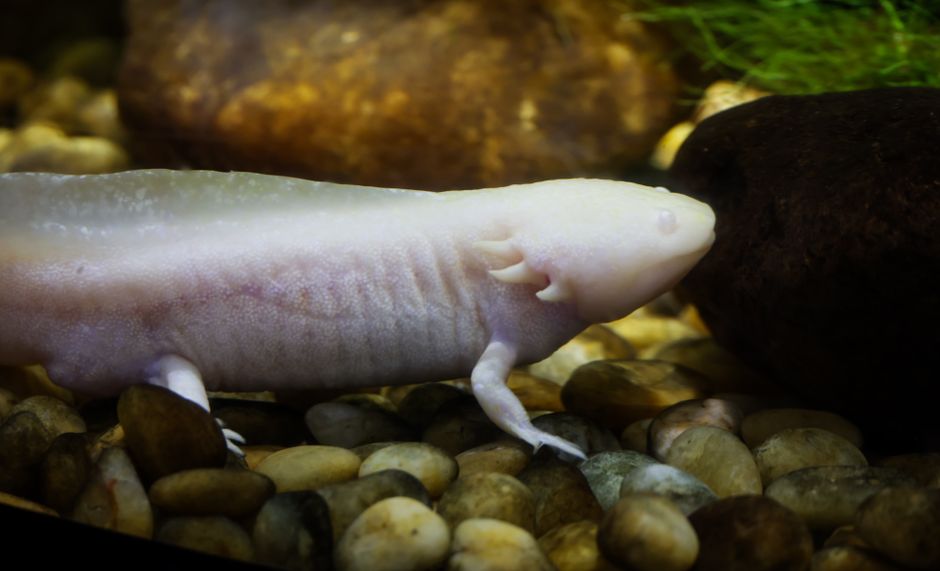
The axolotl, a perpetually juvenile salamander native to Mexico, possesses one of nature's most extraordinary superpowers: the ability to regrow entire limbs, portions of its heart and brain, and even parts of its spinal cord. While many animals can heal wounds, the axolotl regeneration process goes far beyond simple tissue repair, regrowing complex structures complete with bones, nerves, and blood vessels. This remarkable creature has captivated scientists for centuries and continues to offer clues about how we might one day help humans recover from catastrophic injuries.
These pink, frilly-gilled amphibians don't just patch up damage—they rebuild lost body parts with astonishing precision. Scientists have documented axolotls regrowing the same limb dozens of times without any loss of function or formation of scar tissue. The mechanisms behind this regenerative prowess remain one of biology's most intriguing mysteries, with research revealing surprising facts about cellular memory, genetic activation, and developmental biology that challenge our understanding of what's possible in the animal kingdom.
Key Takeaways
- Axolotls can regenerate entire limbs, including bones, muscles, nerves, and blood vessels, in a matter of weeks to months.
- Unlike most animals, axolotls form a blastema—a mass of stem-like cells—at injury sites rather than scar tissue.
- These salamanders can regrow portions of their heart, brain, spinal cord, and eyes throughout their entire lives.
- The same axolotl can regenerate the same body part multiple times without diminishing quality or function.
- Axolotl cells can "reprogram" themselves, with muscle cells contributing to new bone and cartilage during regeneration.
- Scientists have identified specific genes and cellular pathways in axolotls that are largely inactive in mammals, offering potential medical applications.
Understanding Axolotl Regeneration and How It Works
When an axolotl loses a limb, something extraordinary happens at the cellular level. Within hours of injury, skin cells migrate to cover the wound. Then, instead of forming scar tissue like mammals do, specialized cells gather at the amputation site to form a structure called a blastema. This mass of cells behaves similarly to embryonic stem cells, possessing the remarkable ability to differentiate into any tissue type needed for the missing structure.
The blastema acts as a biological construction site. Cells receive positional information—chemical signals that tell them exactly where they are in three-dimensional space and what they need to become. A cell destined to become part of a finger receives different instructions than one that will form the shoulder. This positional memory ensures the regenerated limb matches the original in size, shape, and orientation. The entire process typically takes several weeks to months, depending on the size and complexity of the lost structure.
What makes axolotl regeneration particularly fascinating is the source of these blastema cells. Research has shown that cells near the injury site can actually change their identity—a process called cellular dedifferentiation. Mature, specialized cells revert to a more primitive, flexible state, then redifferentiate into whatever tissue types are needed. Muscle cells might contribute to new cartilage; skin cells might become nerve tissue. This cellular flexibility far exceeds anything observed in adult mammals.
The Seven Most Amazing Facts About Axolotl Regeneration
1. They Regenerate Perfect Limbs With No Scarring
Unlike humans and most other animals, axolotls never form scar tissue during regeneration. When we suffer a serious injury, fibroblast cells rush to the wound and produce collagen fibers that create scar tissue—a quick patch job that closes the wound but replaces functional tissue with less flexible, disorganized material. Axolotls take a completely different approach. Their wound sites form blastemas instead, allowing them to rebuild limbs that are functionally and structurally identical to the originals, complete with properly arranged bones, perfectly connected nerves, and fully functional muscles.
2. Heart and Brain Tissue Can Also Regenerate
The regenerative abilities of axolotls extend far beyond limbs. These salamanders can regrow portions of their hearts after injury, restoring full cardiac function within weeks. They can also regenerate parts of their brain, including sections of the telencephalon and rebuild damaged portions of their spinal cord—injuries that would cause permanent paralysis in mammals. Even more remarkably, axolotls can regenerate portions of their eyes, including the lens and neural retina, maintaining their vision after injuries that would blind most creatures permanently.
3. The Same Limb Can Regenerate Dozens of Times
An axolotl doesn't get just one chance at regeneration. Scientists have experimentally amputated the same limb from individual axolotls more than one hundred times, and the animals continue to regenerate perfectly functional replacements each time. There appears to be no upper limit to regenerative capacity, and the quality of regenerated tissue doesn't decline with repeated regrowth. This unlimited regenerative potential persists throughout the axolotl's entire life, which can span ten to fifteen years in captivity.
4. Cells Remember Their Positional Identity
One of the most puzzling aspects of axolotl regeneration is how cells "know" what to become and where to go. Research has revealed that cells retain positional memory—information about where they originated in the body's three-dimensional structure. If you graft skin cells from an axolotl's back onto its belly and then amputate a nearby limb, those transplanted cells will contribute to regeneration based on their original position, not their current location. This suggests that cells carry a kind of internal GPS that guides regeneration with remarkable precision.
5. Immune Cells Play a Crucial Role
Scientists once believed that a primitive immune system might explain the axolotl's regenerative abilities, but research has revealed the opposite. The immune system actively participates in regeneration, with macrophages—a type of white blood cell—playing an essential role. When researchers experimentally depleted macrophages from axolotls, regeneration failed completely. These immune cells don't just fight infection; they also clear away damaged tissue, release chemical signals that initiate blastema formation, and help coordinate the entire regenerative process.
6. Specific Genes Switch On During Regeneration
Modern genetic research has identified numerous genes that activate during axolotl regeneration, many of which are also present in mammals but remain silent after embryonic development. One key pathway involves a gene called Pax7, which helps maintain the population of muscle stem cells. Other important genes control cell cycle progression, tissue patterning, and the formation of new blood vessels. Understanding which genes turn on—and in what sequence—could potentially help scientists unlock regenerative abilities in humans, where these same genes exist but aren't activated after injury.
7. They Retain Juvenile Characteristics Their Entire Lives
Axolotls exhibit a phenomenon called neoteny, meaning they retain juvenile features throughout their lives and never undergo the typical salamander metamorphosis into a terrestrial adult form. They keep their external gills, live permanently in water, and maintain a suite of embryonic characteristics that may be intimately connected to their regenerative abilities. This perpetual youth might explain why their cells remain flexible enough to dedifferentiate and participate in regeneration—they never fully commit to a final adult state. Interestingly, axolotls can be induced to metamorphose with hormone treatments, but doing so appears to reduce their regenerative capacity.
Comparing Regenerative Abilities Across Species
| Animal | Limb Regeneration | Organ Regeneration | Nervous System Regeneration |
|---|---|---|---|
| Axolotl | Complete, unlimited | Heart, portions of brain | Spinal cord, brain tissue |
| Starfish | Complete arms, sometimes entire body | Digestive system | Nerve ring |
| Zebrafish | Fins only | Heart (up to 20% of tissue) | Limited spinal cord repair |
| Humans | Fingertips (children only, partial) | Liver (regrowth, not regeneration) | Peripheral nerves only, slowly |
Medical Research and Future Applications
The axolotl has become a cornerstone of regenerative medicine research. Laboratories around the world maintain breeding colonies of these salamanders, studying their cellular mechanisms in hopes of translating findings to human medicine. The National Institutes of Health and numerous universities have invested significantly in axolotl research, recognizing that understanding how these animals regrow complex tissues could revolutionize treatment for injuries and degenerative diseases.
One promising area involves understanding how axolotls prevent scar formation. If scientists could identify the molecular signals that direct cells toward regeneration rather than scarring, it might be possible to treat severe burns, heart attacks, or spinal cord injuries more effectively. Some researchers are also exploring whether dormant regenerative genes in mammals could be reactivated, essentially "waking up" abilities that our evolutionary ancestors possessed but that became suppressed over millions of years.
The complete axolotl genome was sequenced in 2018, revealing it to be among the largest animal genomes ever decoded—ten times larger than the human genome. This genetic blueprint has accelerated research dramatically, allowing scientists to identify precisely which genes activate during different stages of regeneration and how they interact. The sheer size and complexity of the axolotl genome suggests that regeneration isn't controlled by a single "master switch" but rather by intricate networks of genes working in concert.
Frequently Asked Questions
How long does it take an axolotl to regrow a limb?
A complete limb typically regenerates in about 40 to 50 days, though the exact timeline depends on the animal's age, size, and overall health. Younger axolotls tend to regenerate faster than older individuals, and smaller structures like toes regenerate more quickly than entire legs.
Can axolotls regenerate their heads?
No, axolotls cannot regenerate their entire heads. While they can regrow portions of their brain and jaw structures, losing the entire head is fatal. However, they can regenerate significant portions of their skull, brain tissue, and facial structures if enough of the head remains intact after injury.
Do regenerated limbs have full function?
Yes, regenerated axolotl limbs are fully functional with proper bone structure, muscle attachment, nerve innervation, and blood supply. Studies have shown that regenerated limbs perform identically to original limbs in swimming, walking, and grasping tasks, with no detectable loss of strength or coordination.
Why can't humans regenerate like axolotls?
Humans evolved different wound-healing strategies that prioritize speed over perfect reconstruction, forming scar tissue that quickly closes wounds but doesn't restore original function. Mammals also have more complex immune systems and cellular specialization that may inhibit the dedifferentiation process essential for regeneration, though researchers continue to investigate whether dormant regenerative abilities might be reactivated.
The axolotl's regenerative abilities remind us that biology still holds profound secrets, and that capabilities we consider science fiction may simply be waiting to be understood and unlocked. These unassuming salamanders, living quietly in laboratory tanks and a few remaining canals in Mexico, carry within their cells the potential to transform how we approach healing and recovery—if we can learn to read the biological instruction manual they've been using for millions of years.