










1 / 10 Questions
0 Points

What gemstone is formed inside oysters?

Opal

Pearl

Moonstone

Coral

Points won
0
Correct score
0%

More Questions

Kraken Legends: What Giant Squid Sightings Inspired Myths

Kraken legends emerged from real giant squid encounters by sailors. Discover how colossal cephalopods inspired centuries of sea monster mythology.

7 Bizarre Facts About How Tornadoes Form and Move

Discover surprising truths about tornado formation and movement patterns. Learn what meteorologists know about these powerful storms and the science

Hummingbird Heart Rate: 9 Record-Breaking Body Facts

Discover amazing hummingbird facts about their incredible heart rate, metabolism, and flight abilities. Learn what makes these tiny birds nature's

More Articles

Did You Know? 12 Facts About The Golem

Did You Know? 12 Facts About The Golem

⏱️ 5 min read

Did You Know? 12 Facts About The Golem

The golem stands as one of Jewish mythology's most enduring and fascinating creations—a being formed from clay or mud and brought to life through sacred rituals and divine names. This legendary creature has captured imaginations for centuries, evolving from ancient mystical traditions into a powerful symbol that resonates in modern literature, film, and popular culture. The golem represents humanity's complex relationship with creation, power, and the consequences of playing god. Here are twelve remarkable facts about this legendary being that reveal its deep cultural significance and lasting impact.

1. The Golem's Ancient Origins in Jewish Mysticism

The concept of the golem originates in early Jewish mystical traditions, particularly within the Talmud and Kabbalah. The word "golem" appears in Psalm 139:16, where it refers to an unformed or incomplete substance. In Jewish mystical texts dating back to the 3rd and 4th centuries, creating a golem was considered an exercise in understanding divine creation, demonstrating the adept's deep spiritual knowledge and connection to God's creative powers.

2. Created from Earth and Clay

According to legend, golems are fashioned from clay, mud, or earth, echoing the biblical creation of Adam from the dust of the ground. This material connection to the earth is fundamental to the golem's nature, representing raw, unrefined matter that requires divine animation to achieve purpose. The specific earth used in creating a golem often came from virgin soil or riverbanks, emphasizing purity and primordial elements.

3. Animation Through Sacred Words

Golems are brought to life through the power of sacred Hebrew words and divine names. The most common method involves inscribing "emet" (אמת), meaning "truth," on the creature's forehead or placing a paper with God's name in its mouth. This linguistic animation reflects Judaism's deep reverence for the power of words and the sacred nature of Hebrew, considered by many to be the language of creation itself.

4. The Most Famous Golem of Prague

The most celebrated golem legend centers on Rabbi Judah Loew ben Bezalel, known as the Maharal of Prague, who allegedly created a golem in the late 16th century to protect the Jewish ghetto from antisemitic attacks and blood libel accusations. According to the tale, the Golem of Prague served as a defender of the Jewish community, performing tasks and guarding against threats until it eventually grew too powerful and dangerous.

5. Golems Cannot Speak

A defining characteristic of golems in traditional stories is their inability to speak or communicate verbally. This speechlessness emphasizes their incomplete nature—they possess physical form and can follow commands, but lack the divine spark of true consciousness that would grant them language and full humanity. This limitation serves as a crucial distinction between human creation and divine creation.

6. Deactivation by Erasing a Letter

The traditional method for deactivating a golem involves erasing the first letter of "emet" (truth) from its forehead, leaving "met" (מת), which means "death" or "dead." This simple act of erasure transforms the animating principle from truth to death, causing the golem to return to lifeless clay. Some versions require removing the divine name from the creature's mouth or destroying the inscription entirely.

7. Growing Increasingly Dangerous

A recurring theme in golem legends is the creature's tendency to grow larger, stronger, and more difficult to control over time. What begins as a helpful servant often becomes a dangerous threat as the golem gains power beyond its creator's ability to manage. This narrative element reflects fears about technology, artificial beings, and the unintended consequences of human ambition—themes that remain remarkably relevant today.

8. Literal Interpretation of Commands

Golems are typically portrayed as extremely literal in following instructions, lacking the judgment and understanding to interpret commands appropriately. This characteristic often leads to problems, as the golem cannot distinguish between the letter and spirit of an order. This aspect of golem legends has influenced countless stories about artificial intelligence and robots that follow programming too rigidly.

9. Created Only by the Spiritually Advanced

In traditional mystical texts, creating a golem was not merely a mechanical process but required exceptional spiritual purity, knowledge, and righteousness. Only the most learned and holy individuals, deeply versed in Kabbalah and the mysteries of creation, could successfully animate a golem. This requirement emphasized that golem creation was a profound spiritual exercise rather than mere magic.

10. Symbol of Protection and Defense

Throughout Jewish folklore, golems primarily serve as protectors of Jewish communities during times of persecution. They represent the hope for supernatural intervention against oppression and violence. This protective aspect has made the golem an enduring symbol of Jewish resilience and the desire for safety in the face of historical persecution.

11. Influence on Modern Science Fiction

The golem legend has profoundly influenced modern science fiction and fantasy, serving as a prototype for stories about artificial intelligence, robots, and created beings. Mary Shelley's "Frankenstein" draws clear parallels to golem tales, as do countless robot and AI narratives that explore themes of creation, control, and the responsibilities creators bear toward their creations. The golem's legacy continues in contemporary discussions about artificial intelligence and biotechnology.

12. The Golem Awaits in Prague's Attic

According to popular legend, the remains of the Golem of Prague still rest in the attic of the Old New Synagogue in Prague, where Rabbi Loew allegedly stored the deactivated clay figure. While this is almost certainly folklore rather than fact, the legend persists, and the synagogue's attic remains closed to the public, adding mystique to the tale. This enduring story demonstrates the golem's continued cultural resonance and the power of legends to shape our understanding of places and history.

Conclusion

The golem remains one of mythology's most compelling creations, embodying timeless themes of power, responsibility, protection, and the dangers of unchecked ambition. From ancient mystical practices to modern artificial intelligence debates, the golem legend continues to offer profound insights into humanity's relationship with creation and the ethical dimensions of bringing new forms of life or intelligence into existence. These twelve facts reveal just how deeply the golem has influenced culture, religion, and storytelling across centuries, ensuring its place as an enduring symbol in our collective imagination.
Why Crows Hold Funerals for Their Dead: The Science

Why Crows Hold Funerals for Their Dead: The Science

Why Crows Hold Funerals for Their Dead: The Science

By Trivia Daily, Animals Desk — Published August 1, 2026

Table of Contents

When a crow dies, something remarkable happens. Other crows gather around the body, calling loudly and appearing to pay their respects. This behavior has earned the name "crow funerals," and while it may look like mourning, the science behind why crows hold funerals reveals something even more fascinating about animal intelligence. These glossy black birds aren't just grieving—they're learning vital survival information that could save their lives.

Crows belong to the corvid family, which includes ravens, jays, and magpies. This family ranks among the most intelligent creatures in nature, displaying problem-solving abilities that rival some primates. Their response to death demonstrates cognitive sophistication that researchers have only recently begun to understand.

Key Takeaways

  • Crows gather around dead members of their species to learn about potential dangers in their habitat, not primarily to mourn.
  • These birds can remember human faces associated with dead crows for years and teach other crows to avoid those individuals.
  • Crow "funerals" involve loud vocalizations called "cacophonous aggregations" that can attract dozens of birds to a single location.
  • Research shows crows form memories linking specific places, people, or animals with the presence of dead crows, treating them as threats.
  • This behavior demonstrates advanced social learning and information sharing unique to highly intelligent wildlife species.
  • Young crows learn dangerous associations from adults during these gatherings, creating a cultural transmission of survival knowledge.

What Actually Happens During a Crow Funeral

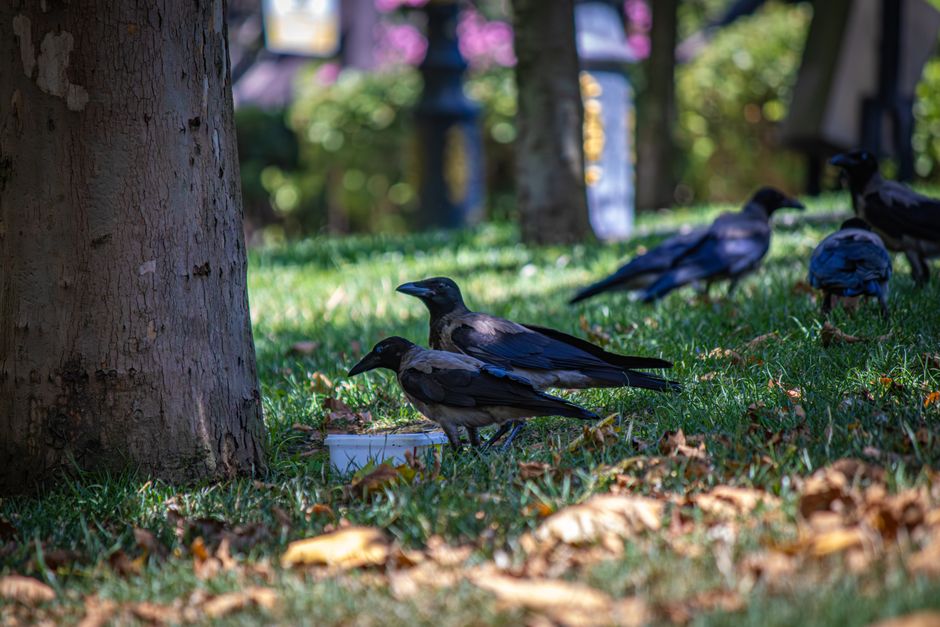
The scene unfolds predictably. A dead crow lies on the ground. Within minutes, living crows begin arriving from the surrounding area. They don't approach the body directly at first. Instead, they perch in nearby trees and on rooftops, calling out with harsh, insistent caws that echo through the neighborhood.

More crows arrive, drawn by the commotion. The gathering can swell to dozens of birds, all focused on the deceased. They may dive-bomb toward the body, circle overhead, or hop closer on the ground before retreating. This intense activity can last fifteen minutes to an hour before the crows gradually disperse.

What looks like a somber vigil serves a different purpose entirely. The crows are conducting a dangerous-scene investigation. Their brains are working to answer critical questions: What killed this bird? Is the threat still present? Who or what should we avoid in the future?

The Memory and Learning Connection

Scientists have discovered that crows don't just observe death—they remember it with startling accuracy. Research involving controlled experiments has shown that when crows see a dead crow while a human wearing a specific mask is nearby, they remember that masked face as dangerous. Months or even years later, those same crows will scold and mob anyone wearing that mask.

Even more impressive: crows who weren't present at the original scene learn to recognize the "dangerous" person from those who were. This represents cultural transmission of information, a hallmark of advanced animal behavior found in few species outside primates, dolphins, and elephants.

The brain structure responsible for this feat is proportionally similar to the primate prefrontal cortex. Crows possess a high neuron density in their pallium, enabling complex cognition despite their small brain size. This neural architecture allows them to form associations, recognize patterns, and share knowledge across their social networks.

Why This Behavior Evolved

From an evolutionary perspective, crow funerals make perfect sense. Crows face numerous threats: hawks, owls, cats, cars, disease, and humans. A dead crow represents valuable data about danger. By gathering and observing, crows essentially crowdsource information about what to avoid.

Consider the advantages this behavior provides:

  • Young, inexperienced crows learn what dangers exist in their habitat without having to encounter those threats directly
  • The entire local population becomes aware of new predators or hazards quickly through social learning
  • Crows can identify specific individual threats, not just general categories of danger
  • Memory of dangerous locations or individuals persists across seasons, protecting crows who return to the same territory
  • The collective response amplifies individual vigilance, creating a neighborhood watch system for the entire crow community

This rapid information sharing gives crows a survival edge. A single death educates hundreds of birds about a potential threat, dramatically reducing the likelihood of repeat incidents.

Comparing Crow Intelligence to Other Species

Species Death Response Memory Duration Social Learning
Crows Gather, vocalize, investigate Years Yes, teach others
Elephants Touch bones, linger at sites Decades Yes, herd knowledge
Chimpanzees Inspect body, quiet behavior Years Yes, observational
Magpies Similar to crows Months to years Yes, within family groups
Dolphins Support dying individuals Unknown Yes, pod-wide communication

Do Crows Actually Mourn?

The question of emotion complicates the picture. While the primary function of crow funerals appears to be danger assessment and learning, that doesn't exclude the possibility of emotional responses. Crows form long-term pair bonds and maintain complex social relationships. They recognize individual crows and remember past interactions.

Some observed behaviors suggest emotional components. Crows have been seen bringing food to injured companions and adjusting their behavior after the loss of a mate. However, separating learned behavior from genuine emotion remains challenging. The scientific consensus emphasizes the learning and memory aspects because those functions are measurable and clearly demonstrated through controlled studies.

What we can say with confidence: crows process death differently than most animals. Whether that processing includes what humans would recognize as grief remains an open question, but their cognitive response to death is undeniably sophisticated.

Frequently Asked Questions

How long do crows remember dangerous people or places?

Crows can remember specific human faces and locations associated with dead crows for at least two to three years, and possibly much longer. Some researchers believe these memories may last the crow's entire lifetime, which can span seven to eight years in the wild and over twenty years in protected environments.

Do other bird species hold funerals like crows?

Other corvids, including ravens, magpies, and jays, display similar gathering behavior around dead birds. However, the behavior is most extensively studied and documented in American crows and appears most pronounced in this species compared to other bird families.

Will crows attack people they associate with dead crows?

Yes, crows will scold, dive-bomb, and mob individuals they associate with danger or death. This behavior can persist for years and spread to other crows who learn the association secondhand, creating a lasting reputation for the targeted person within the local crow population.

Can crows tell the difference between a crow that died naturally versus one that was killed?

Research suggests crows pay particular attention to any potential threat present near a dead crow, whether that's a predator, a person, or an unusual object. They appear to associate whatever is nearby with the death, regardless of actual cause, treating proximity as a potential danger signal.

The next time you see crows gathering noisily around a fallen bird, you're witnessing one of nature's most sophisticated survival strategies in action. These remarkable creatures have turned tragedy into education, death into data, and grief—if that's what it is—into a tool for protecting their community. In the constant struggle for survival, crows have discovered that remembering the dead might be the best way to stay alive.