
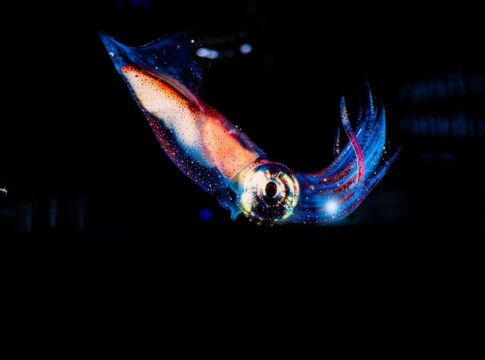
Kraken Legends: What Giant Squid Sightings Inspired Myths
By Trivia Daily, Staff Writer — Published August 6, 2026
Table of Contents
- Key Takeaways
- The Real Creatures Behind Kraken Legends Giant Squid Encounters
- From Folklore to Scientific Discovery
- Comparing Ocean Giants
- How Giant Squid Hunt and Survive
- Why the Myths Persisted So Long
- Frequently Asked Questions
For centuries, sailors whispered of enormous tentacled monsters lurking beneath the waves, capable of dragging entire ships to the ocean floor. These kraken legends giant squid encounters helped create weren’t mere fantasy—they were rooted in real sightings of creatures so astonishing that the truth rivals any myth. The giant squid, a deep-sea dweller that can grow longer than a school bus, remained largely unconfirmed by science until surprisingly recent times, allowing folklore to fill the gaps with terrifying tales.
What’s truly fascinating is how these real animals became mythological beasts. When fishermen hauled up massive tentacles or spotted enormous eyes glowing in dark waters, they had no scientific framework to understand what they’d seen. The result? Stories that grew more fantastic with each retelling, creating one of the ocean’s most enduring legends.
Key Takeaways
- Giant squid can reach lengths of up to 43 feet, with eyes the size of dinner plates—the largest eyes in the animal kingdom.
- No live giant squid was filmed in its natural deep-sea habitat until 2012, despite centuries of kraken legends.
- Kraken myths likely originated from real encounters with giant squid and colossal squid washing ashore or surfacing near ships.
- Sperm whales regularly hunt giant squid in the deep ocean, and their stomachs have revealed squid specimens scientists had never seen alive.
- The scientific name for giant squid, Architeuthis dux, wasn’t formally established until the mid-1800s, long after kraken stories had spread worldwide.
- Giant squid possess eight arms and two longer feeding tentacles lined with hundreds of suction cups ringed with sharp teeth-like structures.
The Real Creatures Behind Kraken Legends Giant Squid Encounters
Giant squid belong to the genus Architeuthis, and they’re genuinely enormous. The largest confirmed specimens have measured over 40 feet from the tip of the mantle to the end of the two longest tentacles. Their eyes can measure up to 10 inches in diameter—an adaptation for detecting faint light in the deep ocean where they live, typically at depths between 1,000 and 3,000 feet.
These cephalopods aren’t the only massive squid species. The colossal squid (Mesonychoteuthis hamiltoni) is heavier and bulkier, though not quite as long. Both species inhabit deep waters and rarely surface, which explains why they remained cryptozoological curiosities for so long. When dead or dying specimens did wash ashore in medieval and early modern Europe, witnesses had no context for what they were seeing. A 30-foot tentacled creature with a beak powerful enough to slice through steel cable? Small wonder the stories turned monstrous.
The kraken of Scandinavian folklore was described as island-sized, capable of creating whirlpools that swallowed ships whole. While giant squid can’t actually sink vessels, imagine a 16th-century sailor’s terror at seeing massive tentacles breaking the surface. Without modern marine biology knowledge, attributing supernatural powers to such creatures made perfect sense.
From Folklore to Scientific Discovery
The transition from myth to confirmed species took centuries. Naturalists in the 1800s began collecting physical evidence—beaks, tentacles, and occasionally whole specimens that washed up on beaches. The Smithsonian and other institutions started cataloging these finds, slowly building a scientific understanding of what sailors had reported for generations.
Yet even with preserved specimens, scientists struggled to study giant squid behavior. These animals live at crushing depths in complete darkness, making observation nearly impossible with early technology. The first photographs of a live giant squid in its natural habitat weren’t captured until 2004, by Japanese researchers who used a baited camera system. The first video footage came in 2012, when a team descended in a submersible to film one in the deep Pacific.
This massive gap between folklore and scientific confirmation is remarkable. Think about it: humans had detailed anatomical knowledge of elephants, lions, and whales for millennia, but one of Earth’s largest invertebrates remained essentially mythical until people alive today were already adults. The ocean keeps its secrets well.
Comparing Ocean Giants
| Species | Maximum Length | Habitat Depth | Distinctive Feature |
|---|---|---|---|
| Giant Squid | Up to 43 feet | 1,000–3,000 feet | Largest eyes in animal kingdom |
| Colossal Squid | Up to 46 feet | 3,000–6,500 feet | Heavier body, rotating hooks on tentacles |
| Humboldt Squid | Up to 6 feet | 600–2,300 feet | Aggressive hunting behavior in groups |
How Giant Squid Hunt and Survive
Giant squid are ambush predators, using their two long feeding tentacles to snatch prey from a distance before pulling it to their eight shorter arms. Their sharp beak, hidden in the center of those arms, can tear through fish and smaller squid with ease. They likely hunt using bioluminescence detection—their enormous eyes can spot the faint glow of other deep-sea creatures against the darkness.
Their primary predator? Sperm whales. These marine mammals dive to astonishing depths to hunt giant squid, and the battles can be epic. Sperm whales often surface with circular scars on their skin—marks left by squid suction cups. Researchers have found giant squid beaks in whale stomachs, providing crucial specimens for study. In a strange twist, the mythical kraken’s real-life counterpart is itself prey for an even larger animal.
Why the Myths Persisted So Long
Several factors kept kraken legends alive even as science advanced. First, the ocean’s vastness meant that sightings remained rare and unpredictable. Second, when giant squid did surface, they were often dying or dead, their bodies already deteriorating—making accurate description difficult. Decomposing squid can look even more alien and monstrous than living ones.
Cultural transmission played a role too. Sailors’ tales spread across ports worldwide, each retelling adding embellishments. By the time these stories reached inland populations, the creatures had grown to impossible sizes with equally impossible abilities. Norwegian accounts described kraken as mile-wide creatures. Italian sailors spoke of multi-headed sea monsters. All likely rooted in the same basic truth: something huge with tentacles lives down there.
The fact that respectable sources sometimes validated these tales helped too. Even some naturalists in the 18th century included kraken in their catalogs of real animals, blurring the line between observation and mythology. When authority figures confirm legends, those legends gain staying power.
Frequently Asked Questions
How big can giant squid actually get?
The largest confirmed giant squid measured approximately 43 feet long, though most specimens are smaller. Females grow larger than males, and much of that length comes from their two elongated feeding tentacles rather than the body itself.
Has a giant squid ever attacked a ship?
There are no confirmed modern accounts of giant squid attacking ships. While dying or disoriented squid have occasionally surfaced near vessels, they lack the size and strength to damage modern craft. Historical accounts likely exaggerated defensive reactions from injured animals.
Why are giant squid so hard to find?
Giant squid live at depths between 1,000 and 3,000 feet in the open ocean, an environment that’s dark, cold, and under immense pressure. They’re also solitary and relatively rare, making chance encounters with submersibles extremely unlikely.
Are colossal squid and giant squid the same thing?
No, they’re different species. Colossal squid (Mesonychoteuthis hamiltoni) are heavier and have rotating hooks on their tentacles, while giant squid (Architeuthis dux) are longer overall. Both inspired kraken legends, though giant squid were more commonly encountered historically.
The next time you hear a seemingly impossible sea story, consider that the ocean still holds creatures we’ve barely glimpsed. Giant squid spent centuries in the realm of legend before science caught up with sailors’ tales. What other “myths” might be swimming in the deep, waiting for their close-up?