







Vampire Legends: 9 Surprising Facts About Their Origins
By TriviaOwl, Staff Writer — Published August 10, 2026
Table of Contents
- Key Takeaways
- The Ancient Roots of Vampire Legends Origins
- The 9 Surprising Facts
- Frequently Asked Questions
Long before sparkly vampires captured modern imaginations, these undead creatures haunted the nightmares of cultures across the globe. The vampire legends origins we know today are far stranger than fiction, rooted in genuine historical fears, medical misunderstandings, and ancient burial practices. What's truly fascinating is how these myths evolved from real events—from unexplained diseases to decomposition processes that terrified our ancestors. Discover the surprising truths behind one of humanity's most enduring supernatural beliefs.
These bloodsucking monsters didn't spring fully formed from a single source. Instead, vampire mythology emerged independently across continents, each culture adding its own terrifying twist to the legend.
Key Takeaways
- Vampire legends appeared in ancient civilizations worldwide, including Mesopotamia, Greece, and China, long before European folklore.
- Rabies symptoms closely mirrored traditional vampire behavior, possibly inspiring many characteristics of the myth.
- Premature burial and misunderstood decomposition led people to believe corpses were returning from the dead.
- Porphyria, a rare blood disorder, may have contributed to vampire folklore through its disturbing symptoms.
- The modern vampire image was largely created by 19th-century literature, not ancient folklore.
- Garlic was believed to ward off vampires because it was thought to have genuine medicinal properties against disease.
The Ancient Roots of Vampire Legends Origins
Vampire-like creatures existed in mythology thousands of years before Dracula ever donned his cape. Ancient Mesopotamian texts describe the Lilitu, demons that fed on blood and preyed on sleeping men. The ancient Greeks feared the vrykolakas, and Chinese folklore warned of the jiangshi, hopping corpses that drained life force from the living. These weren't isolated superstitions—they represented humanity's universal attempt to explain death, disease, and the unknown.
What's particularly interesting is how these legends share common elements despite arising in geographically separated cultures. Blood-drinking, aversion to sunlight, and the undead rising from graves appear repeatedly across continents. This suggests these myths addressed fundamental human anxieties about mortality and the thin boundary between life and death.
The 9 Surprising Facts
1. Rabies May Have Created the Vampire Myth
Medical researchers have identified striking parallels between rabies symptoms and traditional vampire characteristics. Rabies victims experience hypersensitivity to stimuli like garlic and light, aggressive behavior, and hypersalivation that appears as frothing at the mouth. The disease spreads through bites, and infected individuals sometimes display heightened sexual aggression—all hallmarks of vampire behavior in folklore. Before modern medicine understood this viral infection, communities watching rabies spread through animal and human populations might have interpreted these symptoms as supernatural transformation. The timing of rabies outbreaks in Eastern Europe corresponds with some of the most intense vampire hysteria periods.
2. Decomposition Fooled Grave Robbers Into Believing in Vampires
When 18th-century Europeans exhumed suspected vampires, they found "evidence" that seemed irrefutable: corpses with blood around their mouths, longer hair and nails, and bloated bodies that appeared well-fed. We now understand these as normal decomposition processes. Gases build up in bodies, causing bloating and forcing blood out through the mouth and nose. Hair and nails appear longer as skin recedes. But to observers without modern forensic knowledge, these corpses looked disturbingly alive. This misunderstanding led to widespread vampire panics, particularly in Serbia and Romania, where authorities had to issue official statements attempting to calm public hysteria.
3. Porphyria Sufferers Were Mistaken for Vampires
Porphyria encompasses several rare genetic disorders affecting heme production in blood. Severe cases produce symptoms that eerily match vampire descriptions: extreme photosensitivity causing skin to blister in sunlight, receding gums that make teeth appear fang-like, and reddish-brown urine. Some historical medical treatments for porphyria even involved drinking animal blood, as physicians incorrectly believed it might help. While porphyria alone couldn't account for all vampire legends, individuals suffering from this condition in medieval villages would have appeared terrifyingly inhuman to their neighbors, potentially reinforcing existing supernatural beliefs.
4. Premature Burial Sparked Undead Fears
Before modern medical technology could reliably confirm death, people were occasionally buried alive. Catalepsy, comas, and other conditions sometimes mimicked death closely enough to fool physicians. When these individuals awoke underground and clawed desperately at their coffin lids, they left scratches inside the wood. If graves were later opened for any reason, these marks suggested the "corpse" had been active after burial. Some unfortunate souls even managed to partially escape their graves before dying of suffocation or exposure, creating the appearance of bodies that had risen and then collapsed. These tragic cases fueled beliefs that the dead could return.
5. The Plague Created Vampire Scapegoats
During devastating plague outbreaks across Europe, communities desperate for explanations blamed the undead. Mass graves were sometimes reopened to add new victims, and gravediggers would discover older corpses in various states of decay. Bodies buried in shrouds showed evidence of the fabric around the mouth being eroded by decomposition fluids—which observers interpreted as the corpse "chewing" its way out. These "shroud-eaters" were thought to spread plague by mystically consuming their burial clothes and then attacking the living. Archaeological evidence from plague burial sites shows some bodies were pinned down with stones or staked, clear anti-vampire measures taken by terrified populations.
6. Vampires Had No Fangs in Original Folklore
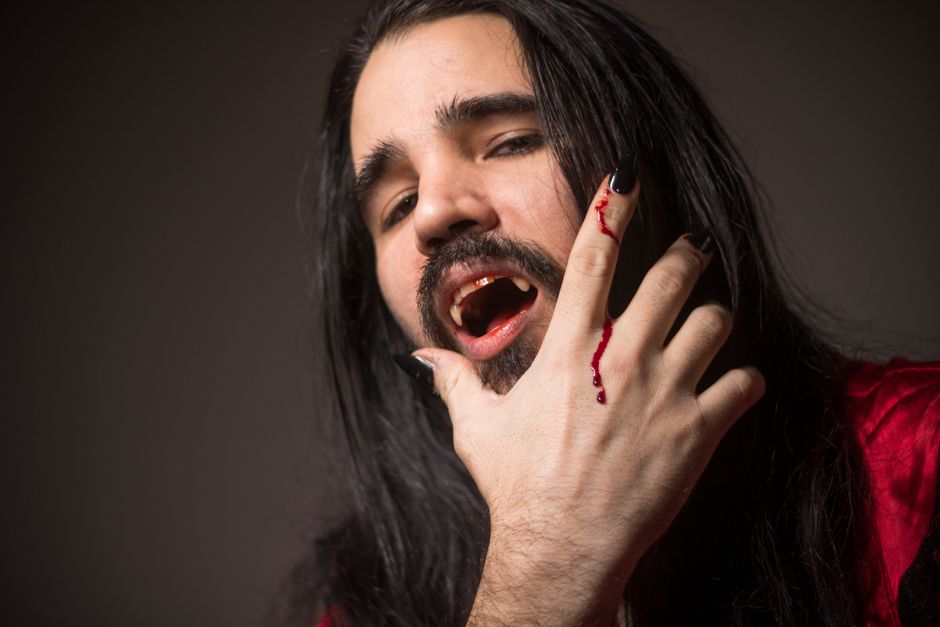
The iconic image of a vampire with prominent fangs is a relatively modern invention. Early European vampire legends rarely mentioned elongated canines. Instead, these creatures were often described as bloated, ruddy-faced corpses—quite unlike the pale, aristocratic figures we picture today. The fang detail became standardized largely through 19th and 20th-century literature and film. Bram Stoker's Dracula featured sharp teeth, but even this description was subtle compared to later interpretations. Cinema, particularly the 1922 film Nosferatu and subsequent Hollywood productions, created the fang imagery now inseparable from vampire identity.
7. Garlic Protection Had Practical Origins
The belief that garlic repels vampires wasn't purely superstitious—it stemmed from garlic's genuine use as a folk medicine. For centuries, people correctly observed that garlic had antiseptic properties (we now know it contains allicin, which has antibacterial effects). During disease outbreaks, garlic was worn or hung in homes as protection against illness. Since vampires were often blamed for spreading disease, the logical extension was that garlic would repel them too. This practical health measure became woven into supernatural protection rituals, merging medical folklore with monster mythology in a way that made perfect sense to pre-scientific communities.
8. Tuberculosis Families Inspired New England Vampire Panics
The 19th-century tuberculosis epidemic in New England triggered America's own vampire fears. The disease, then called consumption, spread through families in ways that seemed supernatural. One family member would waste away, and shortly after their death, another would fall ill. Desperate families sometimes exhumed deceased relatives suspected of draining the living from beyond the grave. The most documented case involved Mercy Brown of Rhode Island in 1892, whose body was exhumed and her heart burned in a ritual intended to save her dying brother. These incidents occurred not in medieval Europe but in relatively modern America, showing how persistent vampire beliefs remained even in the industrial age.
9. Vampires Were Originally Peasants, Not Aristocrats
Count Dracula established the vampire-as-nobleman archetype, but original folklore painted a completely different picture. Traditional European vampire legends described undead peasants and commoners, not wealthy lords. These were local people—farmers, tradesmen, or outcasts—who returned from death to plague their own villages. The aristocratic vampire emerged from Romantic literature's fascination with decadent nobility and exotic foreigners. This transformation reflected 19th-century anxieties about class, sexuality, and foreign influence more than it preserved authentic folklore. The shift from shambling peasant corpse to sophisticated count represents how vampire legends evolved to mirror each era's particular fears and fascinations.
Frequently Asked Questions
What was the first recorded vampire legend?
Ancient Mesopotamian and Assyrian texts from around 4,000 years ago describe blood-drinking demons like Lilitu and Lamashtu, making them among the earliest documented vampire-like entities. However, the word "vampire" itself didn't appear in European languages until the early 18th century.
Why do vampires supposedly fear sunlight?
Sunlight vulnerability is actually a modern addition to vampire lore, popularized by the 1922 film Nosferatu. Traditional folklore rarely mentioned sunlight harming vampires; they were often active during the day in early legends, though they preferred nighttime.
Were vampire hunters real historical figures?
Yes, during vampire panics in 18th-century Eastern Europe, some individuals gained reputations as vampire hunters or experts. Local priests and officials were sometimes called upon to perform exorcisms or recommend anti-vampire measures, though these weren't full-time professions as fiction suggests.
Why are vampires associated with Transylvania?
Bram Stoker set his novel Dracula in Transylvania partly because the region seemed exotic and remote to Victorian English readers. While Eastern European folklore did include vampire legends, Transylvania wasn't uniquely associated with vampires until Stoker's novel made it famous in 1897.
The vampire legends that haunt our collective imagination were born from very human fears—of disease, death, and the mysteries of the body after life ends. What started as attempts to explain medical phenomena we now understand became one of mythology's most adaptable monsters, forever evolving to reflect whatever terrifies us most. Every generation reinvents the vampire, but those original misunderstood corpses remain at the dark heart of the legend.