
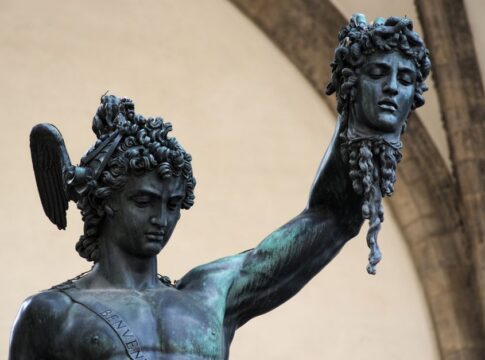
The Truth About Medusa Being a Gorgon Rape Victim Symbol
By Trivia Daily, Staff Writer — Published November 20, 2026
Table of Contents
- Key Takeaways
- The Truth About Medusa in Ancient Greek Sources
- How Ovid Changed the Story in Roman Times
- Comparing Ancient Versions of Medusa’s Origin
- The Modern Reinterpretation as Survivor Symbol
- Why the Distinction Between Versions Matters
- Frequently Asked Questions
The story of Medusa has been told and retold for thousands of years, but the truth about this famous Gorgon is far more complex than most people realize. While many modern retellings cast Medusa as a tragic rape victim transformed by vengeful gods, the ancient sources paint a very different picture. The facts reveal a surprising evolution in how cultures have interpreted this snake-haired monster over millennia, and the contemporary symbolism attached to her story represents a dramatic reimagining rather than historical accuracy.
Understanding what the Greeks actually wrote about Medusa—and how her myth changed across centuries—offers fascinating insights into how mythology adapts to serve different cultural needs. The distinction between ancient fact and modern interpretation matters when exploring why Medusa resonates so powerfully today.
Key Takeaways
- The earliest Greek sources, including Hesiod’s Theogony from around 700 BCE, describe Medusa as born a monster, not transformed into one as punishment.
- The rape narrative appears in Ovid’s Metamorphoses, written by a Roman poet approximately 800 years after Hesiod, during a very different cultural period.
- Ancient Greeks primarily used Medusa’s image as an apotropaic symbol—a protective charm to ward off evil—rather than as a representation of victimhood.
- The modern interpretation of Medusa as a feminist symbol of survival emerged largely in the 20th and 21st centuries, particularly gaining momentum in contemporary discussions about assault and victim-blaming.
- Medusa was one of three Gorgon sisters in Greek mythology, but she alone was mortal, which made her vulnerable to Perseus.
- The transformation story reflects Roman literary tastes for tragic metamorphosis tales rather than original Greek religious beliefs about the Gorgons.
The Truth About Medusa in Ancient Greek Sources
The earliest surviving accounts of Medusa come from Greek sources that describe her very differently than popular culture suggests. Hesiod, one of the oldest Greek poets whose works survive, presents Medusa and her sisters Stheno and Euryale as daughters of ancient sea deities Phorcys and Ceto. They were Gorgons from birth—monstrous beings with snakes for hair, bronze hands, golden wings, and a gaze that turned living creatures to stone. No transformation. No punishment. No assault.
This version of the myth treats the Gorgons as primordial creatures existing in the world’s dangerous margins, similar to other monsters Perseus encounters. Medusa’s mortality among her immortal sisters made her the target for the hero’s quest, but her origins were divine and monstrous from the beginning. Ancient Greek vase paintings and temple decorations consistently show Medusa as a fearsome, often grotesque figure—powerful and terrifying rather than sympathetic.
The protective power of the Gorgoneion, Medusa’s severed head, appears throughout ancient Greek culture. Warriors painted it on shields. Temples displayed it on pediments. People wore it as jewelry. This apotropaic use—employing a frightening image to repel evil—dominated how Greeks actually engaged with Medusa imagery in daily life. The face that could turn enemies to stone became a guardian symbol.
How Ovid Changed the Story in Roman Times
The rape narrative that many people now associate with Medusa comes from the Roman poet Ovid, writing around 8 CE. In his Metamorphoses, Ovid presents a radically different origin story: Medusa was once a beautiful maiden whose hair was her most remarkable feature. Poseidon (Neptune in Roman mythology) assaulted her in Athena’s temple, and the goddess, outraged by the desecration of her sacred space, transformed Medusa’s lovely hair into serpents and made her face so hideous that anyone who looked upon it turned to stone.
Ovid was writing poetry, not religious doctrine. His work specialized in transformation tales that explored themes of divine cruelty, human suffering, and the arbitrary nature of godly punishment. The Metamorphoses compiled hundreds of stories, many of which he adapted or invented to fit his literary purposes. Roman audiences eight centuries after Hesiod had different tastes and different relationships with Greek myths than the original Greek worshippers did.
This timing matters enormously. By the time Ovid wrote, Greek religion as a living practice had evolved significantly, and Roman adaptations often emphasized different aspects of myths than earlier Greek versions. Ovid’s portrayal reflects Roman literary interests in psychological complexity and moral ambiguity rather than the starker, more archaic Greek characterizations of monsters and heroes.
Comparing Ancient Versions of Medusa’s Origin
| Source | Time Period | Medusa’s Nature | Cultural Context |
|---|---|---|---|
| Hesiod’s Theogony | ~700 BCE | Born as a Gorgon monster | Early Greek religious poetry |
| Homer’s references | ~750 BCE | Monstrous head, protective symbol | Epic poetry describing warrior culture |
| Classical Greek art | 600-300 BCE | Apotropaic guardian figure | Temple decoration, shields, jewelry |
| Ovid’s Metamorphoses | ~8 CE | Beautiful woman transformed by Athena | Roman literary poetry emphasizing transformation |
The Modern Reinterpretation as Survivor Symbol
The contemporary reading of Medusa as a symbol of survival, particularly for victims of sexual assault, represents a powerful modern reimagining rather than a recovery of ancient meaning. This interpretation gained significant traction in feminist discourse during the late 20th and early 21st centuries. Survivors and advocates found resonance in the image of a woman punished for her assault, transformed into something feared rather than supported, yet still possessing the power to protect herself and petrify those who would harm her.
This symbolic use has real value for many people. The image of Medusa has appeared in survivor support movements, artistic expressions of trauma and resilience, and discussions about victim-blaming. When someone identifies with Medusa’s story as told through Ovid’s lens, they’re engaging with mythology in exactly the way humans always have—adapting ancient stories to address contemporary needs and truths.
However, recognizing this as modern interpretation rather than ancient fact matters for historical accuracy. The Greeks who painted Medusa on their shields weren’t thinking about assault survivors. They were invoking a monster’s terrifying power to protect themselves in battle. Both uses are valid, but they serve completely different purposes across vast stretches of time.
Why the Distinction Between Versions Matters
Understanding which elements come from which sources helps us appreciate how mythology actually works. Myths aren’t static. They evolve, adapt, and transform across cultures and centuries. The Medusa story demonstrates this beautifully—from archaic monster to Ovidian victim to modern survivor symbol, each iteration reveals something about the people telling and retelling her tale.
Claiming Ovid’s version as “the original” or “the true” story erases eight centuries of earlier tradition. It also misunderstands how Roman poets worked. Ovid was a sophisticated literary artist creating emotionally complex narratives, not a religious authority documenting sacred truths. His genius lay partly in his willingness to innovate and reimagine traditional stories.
The ancient apotropaic use of Medusa’s image—as protection rather than as cautionary tale—reveals fascinating aspects of Greek magical thinking. The Gorgoneion worked because Medusa was powerful and dangerous. Her monstrousness was the point. This protective function appears in archaeological evidence across the Mediterranean world, from grand temples to humble household items.
Frequently Asked Questions
Was Medusa actually assaulted in the original Greek myths?
No. The earliest Greek sources, including Hesiod writing around 700 BCE, describe Medusa as born a Gorgon monster, not transformed into one. The assault narrative appears in the Roman poet Ovid’s work from approximately 8 CE, roughly 800 years later.
Why do Medusa’s sisters appear in fewer stories than she does?
Medusa was the only mortal Gorgon among the three sisters, making her vulnerable to being killed by Perseus. Her sisters Stheno and Euryale were immortal, so they couldn’t be defeated by heroes, making them less useful for heroic quest narratives that required a conquerable monster.
Did ancient Greeks view Medusa as a victim or a monster?
Ancient Greek sources consistently portray Medusa as a fearsome monster and protective symbol. The sympathetic victim interpretation comes from much later Roman and modern retellings, not from the culture that originated her myth.
Is it wrong to use Medusa as a symbol for assault survivors?
Using Medusa as a modern symbol for survival and empowerment is a valid contemporary interpretation of mythology, which has always evolved to serve cultural needs. However, it’s historically inaccurate to claim this represents her original meaning in ancient Greek culture.
The truth about Medusa reveals how mythology serves as a living conversation across millennia. Whether she’s an archaic monster warding off evil, a Roman victim of divine cruelty, or a modern emblem of survival, each version tells us something profound about the cultures that shaped her story. Perhaps that’s the real power of the Gorgon—not her petrifying gaze, but her ability to reflect whatever truths we need her to hold.